
From Amazon to Meta, how artificial intelligence and robotics dictate layoffs and new hires
Two stories telling two faces of the same transformation: a progressive replacement of human labour by intelligent systems

These are no longer the days of the post-pandemic, when American technology companies initiated mass layoffs in response to a digital boom that grew too fast. But workforce movements are still happening. And they are making headlines. This time, it is no longer just about cutting costs, but redesigning the very structure of work, integrating automation, robotics and artificial intelligence into production processes.
In the last few hours, two cases have emerged: that of Amazon and that of Meta. And they are two stories that tell two faces of the same transformation: a progressive replacement of human labour, at least in part, with intelligent systems capable of replicating, optimising or even overtaking certain functions traditionally performed by people.
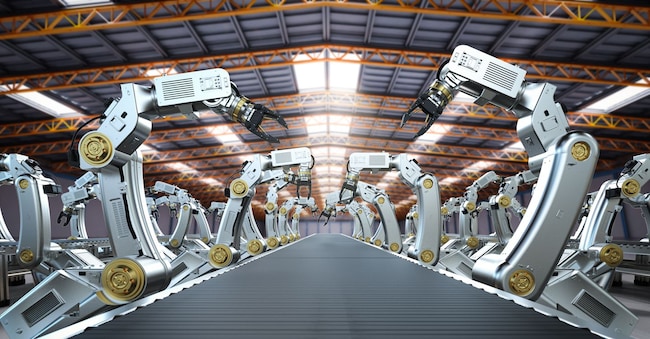
But let's go in order. According to internal documents quoted by the New York Times, Amazon aims to avoid hiring more than 600,000 workers in the United States by 2033 thanks to automation. We are not talking about direct redundancies, but about jobs that will never be created because they will be replaced by robots and automated systems. By 2027, the estimated reduction would be around 160,000 roles. In essence, the giant led by Andy Jassy imagines a future in which three quarters of its operations will be managed by machines. A change that concerns above all warehouses, sorting lines and the logistics sector, where robots are assuming an increasingly important role.
Amazon spoke of a technological evolution aimed at 'freeing workers from repetitive and physically demanding tasks'. But the scale of the change is clear: fewer people in warehouses and more robots working 24 hours a day, without shifts or breaks. Clearly, technology aside, the implications for global employment and labour policies are enormous. And they tell of the need for different skills in the future, roles related to control, maintenance and supervision of machines. But the overall amount of employment is still likely to shrink.
Meanwhile, Meta, the parent company of Facebook, Instagram, and WhatsApp, also announced a new intervention in its workforce, this time aimed at artificial intelligence. Mark Zuckerberg's company will cut around 600 positions within the Meta Superintelligence Labs division, which brings together the FAIR research teams, those dedicated to products, and those dealing with AI infrastructure. On the other hand, the researchers of the TBD Lab, the small group that is working on future next-generation foundational models, will not be affected.


