Collecting

From Ferrari to Pagani: a lively year for collector car auctions

Yearbook reveals a strong US market and demand for cars less than 20 years old

by Giovanni Gasparini

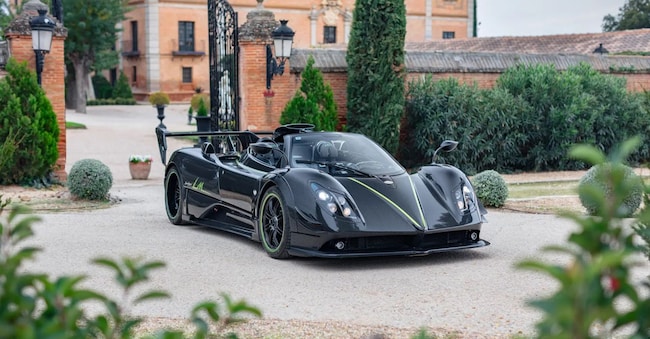
2014 Pagani Zonda LM Roadster, venduta da RM Sotheby’s per 11.086.250 $

5' min read

Translated by AI
Versione italiana

5' min read

Translated by AI
Versione italiana

The Auto e Moto d'Epoca trade fair in Bologna from 23 to 26 October was not only an opportunity to find the car of one's desires thanks to the offerings of dozens of international operators, but it also provided an opportunity to take stock of the season that had just ended with the American auctions in mid-August at Pebble Beach.

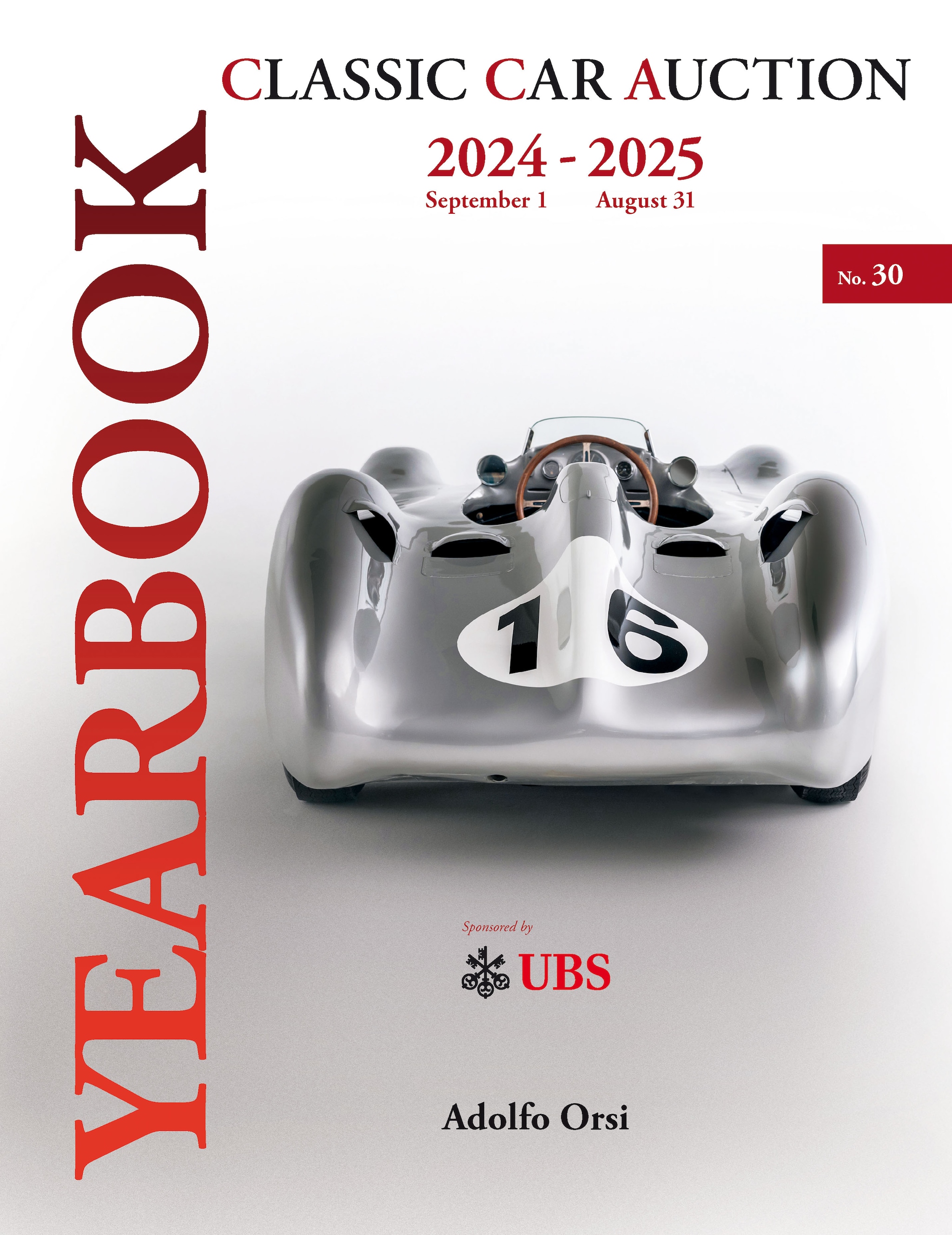
The most eagerly awaited appointment for those who experience the market as intermediaries or major collectors was held on the evening of Thursday 23rd, when Adolfo Orsi, Maserati's historical memory and international Concours d'Elegance judge, presented his 'Classic Car Auction Yearbook 2024-25', published by Historica Selecta and sponsored by UBS.

Loading...

Now in its 30th edition, this English-language publication has established itself as the benchmark for market dynamics and prices, collecting data from auction houses and analysing the time series of more than 140,000 cars sold over the decades.

The rise of online auctions, which are now worth almost a third of the total, has seen the market double in supply over the past five years, and with it overall sales, which now stand at almost 12,000 cars on offer, 73% of which are sold for a value of $2.2 billion, and an average price of $255,000, which has fallen back to the 2020-21 level due to the 10% drop in millionaire cars to 281. As has been the case for a number of years now, online growth is accompanied by the offer of unreserved lots accounting for a quarter of the total in terms of number and value, which is favourable to buyers but is reflected in many cases in a drop in prices. Going beyond this background data, a deeper reading reveals the progressive dividing of the market along two increasingly distinguishable fracture lines.

American Predominance

The first is geographical, political, regulatory and economic in nature, with North America reinforcing its market dominance on the one hand, while the old continent and especially the UK lags behind. The concentration of wealth in the US and the light hand of the regulator extending to tax regimes are unrivalled, although global uncertainty, particularly over tariffs and import/export, suggest caution in the medium term.
North American auctions are worth 76.5% of the market, UK auctions less than 6% (a third of the pre-Brexit value), while France leads the European 15% by more than 6%, and Italy stands at just over 2% at $52 million in transactions. The main online operators are US-based, and online sales below the $200k threshold involve 2,000 cars and over $250m in revenue. Noteworthy is the absence of Asian countries, which are instead key players in other collectibles markets, such as art, jewellery and watches.

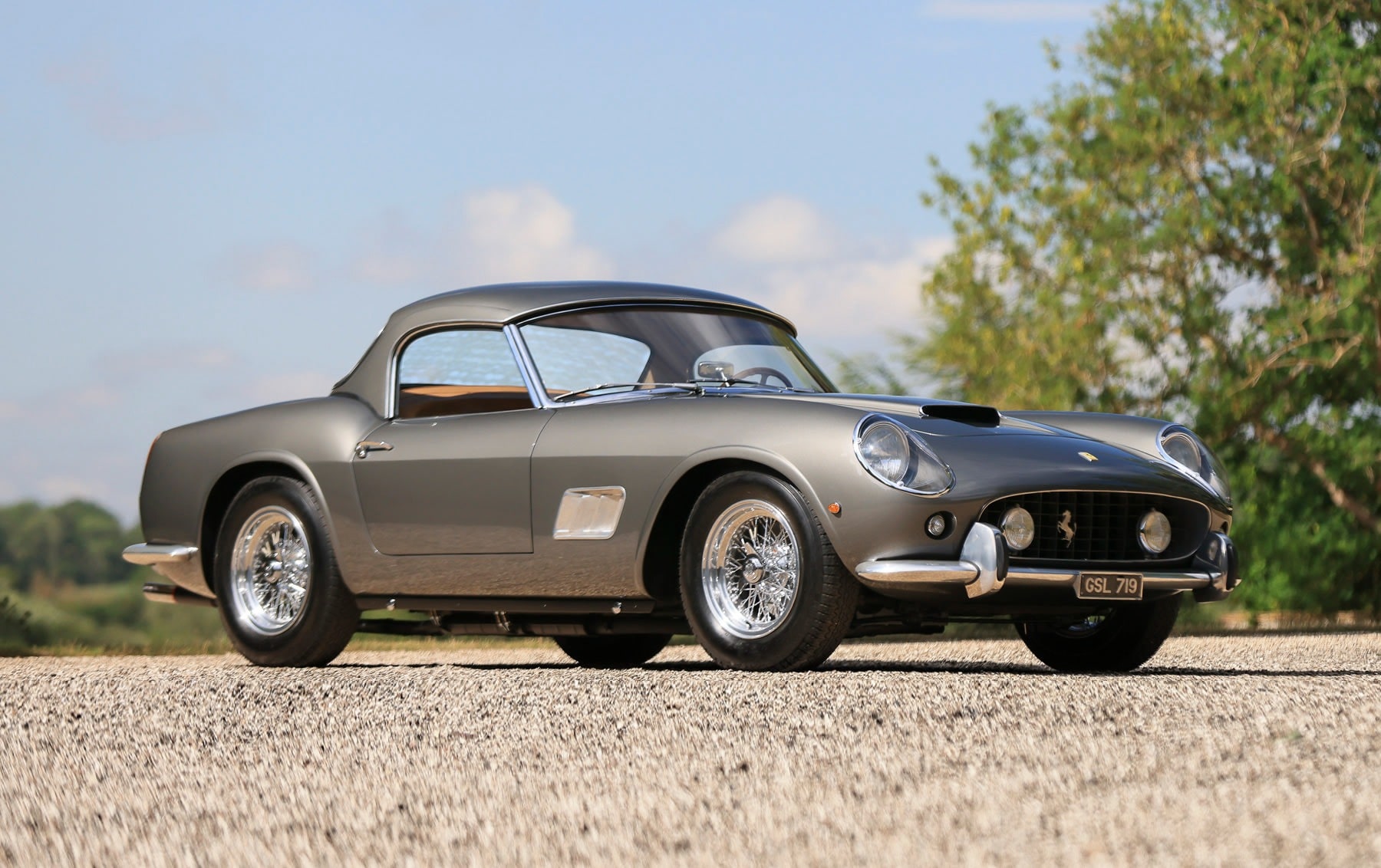
Ferrari 250GT California TOP4 GC Mathieu Heurtault

The competition between auction houses

Market fragmentation is reflected in increased competition between auctions. The news of the year is the return to the market of Christie's, which acquired Californian Gooding & Co and will make its European debut in Paris RetroMobile at the beginning of 2026, refreshing the duopolistic clash with Sotheby's that has long been present through Canadian RM. Even rivals Bonhams, Broad Arrow and Artcurial are not standing at the window, and are already crowding the autumn and winter period with a flurry of European events.

Between October and November, two sales were held in Switzerland for a total of CHF 92 million, thanks mainly to a collection of recent supercars at RM Sotheby's, one in London for a realisation of over £22 million, and three in Germany and Belgium for over €65 million, with a sell-through rate of over 80 per cent, while on 7 December, France's Artcurial will hold a major and controversial multi-million dollar auction dedicated to cars from the Renault collection.

The new generation of buyers

The second fracture is generational: while the 'old guard' is gradually retiring by selling important collections focused on the 'sartorial' period of production between the post-war years and the late 1970s, the new generations are turning to the 'Instagrammable' cars of the new millennium, and are increasingly making use of online channels to purchase. And so the average age of the cars on offer stands at 1975, with almost 3,500 cars less than 20 years old, 10 times the number in 2015, and 1,250 cars in the 20-30 year bracket, the transition from 'used car' to 'collector's item'. Cars of the new millennium are now worth 39 per cent of the market compared to 53 per cent in the second half of the 20th century.
The often speculative nature of these transactions, not yet fully supported by an adequate judgement of historicity and relevance that only time can provide, increases price volatility. The gradual move away from the 1950s-60s, hitherto considered the golden age, leads to price revisions in favour of more recent cars, even if they are less rare or historically interesting.

Two ways of looking at the market

A clear example of this duality was offered recently at American auctions in August, when a new 'Tailor Made' Ferrari Daytona SP3, offered to raise charitable funds, was fetched up to a dozen times its dealer price at $26 million, while an elegant and rare 1961 Ferrari 250GT California Spider one of the two 'short wheelbase Competizione' cars stopped at $25.3 million: similar prices for cars so different that they do not even seem to come from the same manufacturer.

Maranello therefore remains at the top of the list of brands, and is worth half a billion dollars, almost a quarter of the market, followed by Porsche at 16%, while the other Italians stop at 4% for Lamborghini and less than 1% for Maserati and Alfa Romeo, historic brands that deserve more. These marques are missing out on million-dollar awards: half the market is due to awards over half a million dollars, and the 26 awarded over 5 million bring in an impressive $330 million in revenue.

The Pagani phenomenon

If one looks at the market from the perspective of six individual manufacturers, a new player emerges that is destined to change the historical dynamics of the past decades.
The average price of a collector's car stands at $255,000, but there is one manufacturer who achieves a value 17 times the average: it is not Ferrari, which stands at $578,000, not even twice as much, nor Bugatti, which for many years led this particular ranking, which now stands at $1.3 million: the leader is Pagani, whose 7 cars sold (out of 11 offered in the period 2024-25) averaged $4.3 million!

For a manufacturer that has only existed since the late 1990s, it is an extraordinary result, due to six Huayra models, but above all to the 2014 Pagani Zonda LM Roadster sold at RM Sotheby's in Dubai for over $11 million. How do you explain this niche phenomenon also acclaimed by the general public of enthusiasts, especially the younger ones?

The gradual expansion of Ferrari production into the realm of luxury without craftsmanship, where rarity is artificially achieved through the imposition of 'special editions' and waiting lists, has given way to the small manufacturer born of Horacio Pagani's tenacity. The end of the Pininfarina period at Maranello also saw an abandonment of design destined to be 'eternal' for the pursuit of the sensation of the moment. Pagani's obsessive attention to construction and search for original, sculptural lines, evident to anyone who visits the museum and the production facility in San Cesario sul Panaro near Modena, naturally impose production numbers limited to a few dozen, with no need for artifices such as numbered series (in the hundreds, by the way) typical of other brands, and are the best guarantee for value retention over time.

Collectors and the market are taking note, and the upward competition can only be in the millions, as confirmed by the recent sales in Zurich at RM Sotheby's on 11 October: 4.5 million Swiss francs for a 2021 Huayra Roadster BC, 2.4 million Swiss francs for a Huayra R, and 3.3 million Swiss francs for a very recent 2024 Utopia.

Copyright reserved ©

Brand connect

Loading...

Newsletter

Notizie e approfondimenti sugli avvenimenti politici, economici e finanziari.

Iscriviti