
From Icom a new grammar for evaluating museums
The Icom Italia 2025 Annual Members' Meeting provides an opportunity to reflect on the social, cultural and intangible impacts of museums. The importance of having a strategy and economic sustainability emerges

4' min read
Key points
4' min read
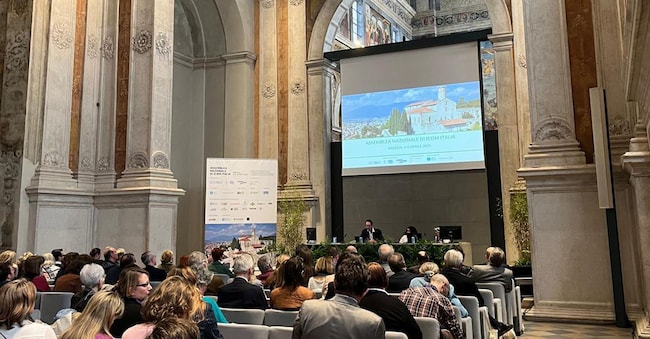
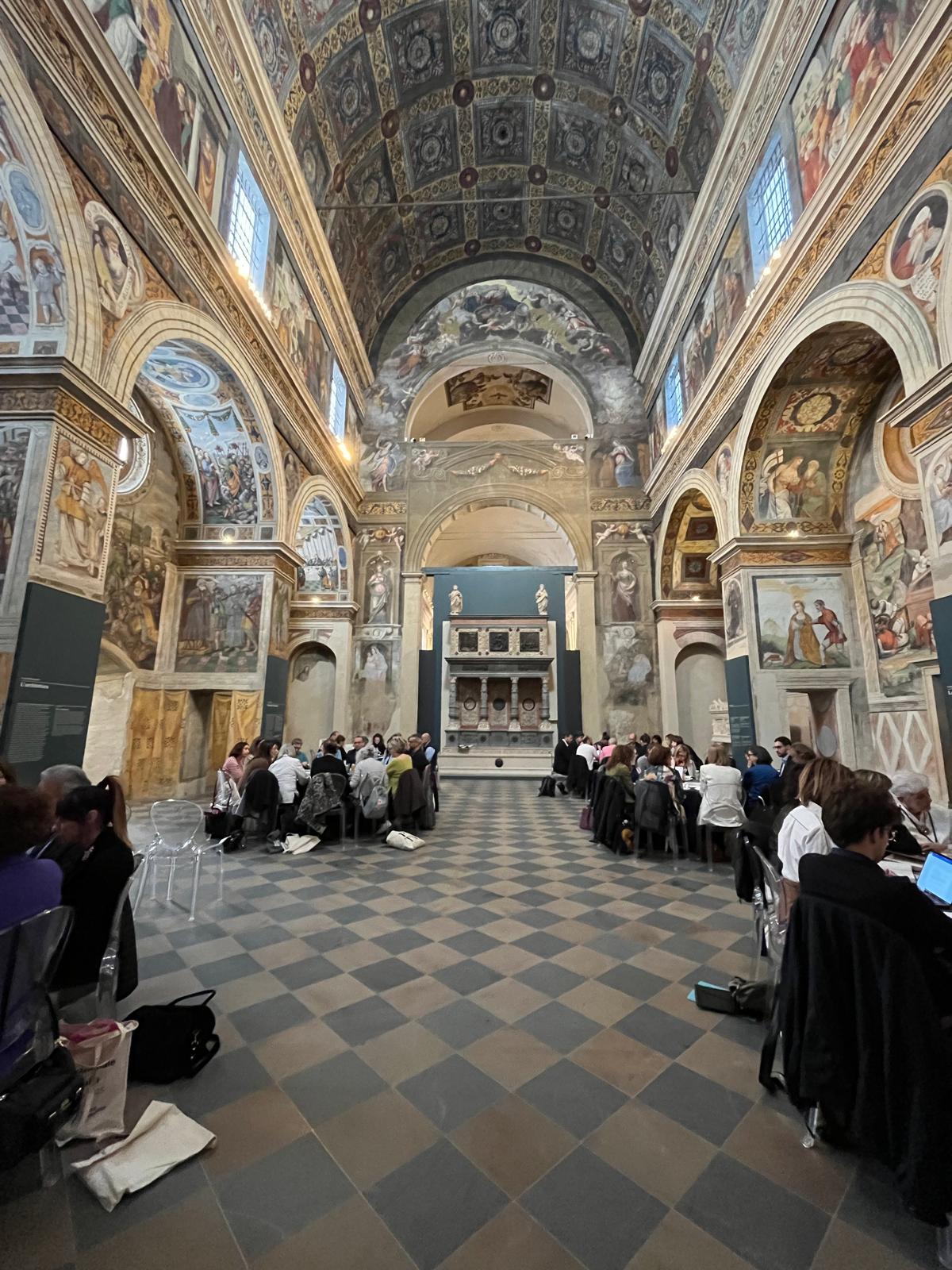
The Annual Meeting of Icom Italia 2025 members (Brescia 4-6 April) was an opportunity to reflect on the important topic of assessing the social impacts of museums and on what the methodologies and criteria for reporting on their activities might be. The three-day event made up of meetings, debates, working tables of regional coordinators and experts was inspired by the definition of a museum approved in 2022, which includes social participation among the objectives for the generation of inclusive and innovative systems and as a condition for an open, multicultural and multidisciplinary vision of cultural heritage. The event was realised also thanks to the contributions of Fondazione Brescia Musei and the Municipality of Brescia, Intesa Sanpaolo, Fondazione ASM, Fondazione CAB, while as a scientific partner there was the commitment of the National School of Heritage and Cultural Activities, which broadcast live some phases, and as main donor Feralpi Group.
What emerged from the three days of intensive work? There are three levels of impact, the first concerns the macro level, in the sense that museums are a landmark of the area and contribute to economic and social development and strengthen the local identity of a place; the second is an intermediate level and concerns the organisational change of the museum itself: this generates an impact on its structure and the surrounding environment. The third concerns the impact on the individual and the implication in the participation in activities that enrich and contribute to cultural growth. Unlike a company, the museum by the mere fact of its existence and functioning, for example with its workshops and guided tours, has an effect on the community; however, unlike a business, it is complicated, if not impossible, to define a system of numerical balance sheet indicators, such as ROE or ROI.
The museum is a very complex and multifaceted system and therefore its impact is difficult to trace back to a dashboard of values expressed by a numerator over a denominator. What can be done is to identify the different aspects of the museum, such as social, economic, cultural, and then tell the multifacetedness through stories, testimonies and narratives. We need to act on the culture of data and the system of competences.
A New Grammar of Museums
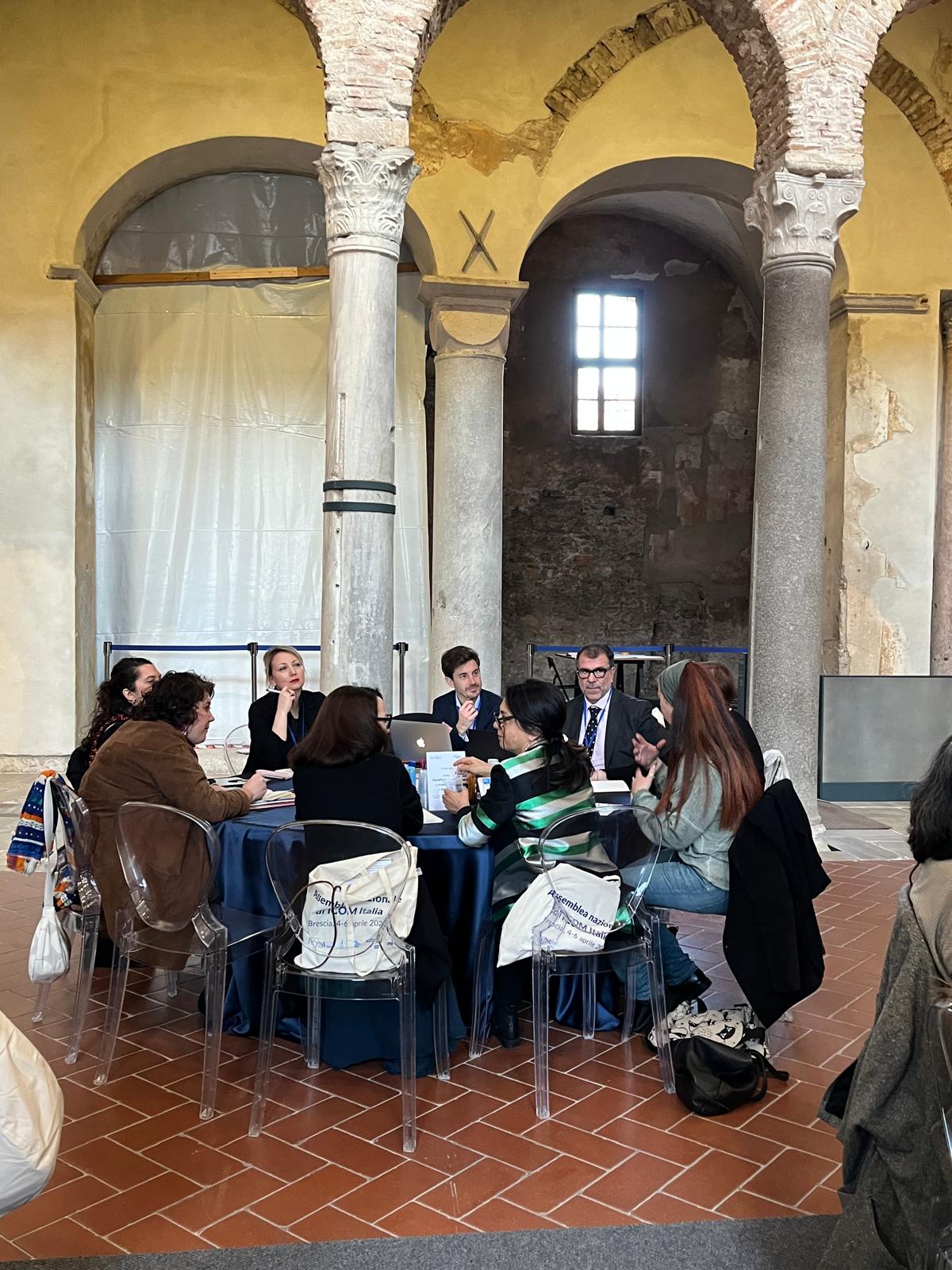
.Very interesting was the day on Saturday 5 April, when hundreds of experts from the cultural sector took part in 15 thematic tables where all the implications concerning the meaning and content of the term impact were debated. From the tables emerged a new museum model with clearly defined characteristics, namely a role as a community activator, a social innovation laboratory and a driver of sustainable and participatory development. Four areas were identified, the first related to the impact dimension of sustainability and accountability where the use of ESG criteria, social and sustainability reporting and impact measurement were emphasised. The need for new professionalism and tools was highlighted. In the second node, the issues of community, accessibility and wellbeing emerge strongly, and thus the role of a museum that takes up these challenges and promotes co-design approaches with fragile communities. A third aspect relates to innovation and new technologies, which returns centrality to the public and implies governance oriented towards audience development and the measurement of engagement, thanks also to the use of Artificial Intelligence. The fourth junction referring to the public-private partnership sees a museum as a social hub, capable of building alliances also in an innovative way with businesses and the urban territory.
The four macro-themes have as an enabling condition the need to have a strategy and, therefore, to have strategic planning. The planning of activities creates the conditions for data analysis and impact communication activities. The Icom Assembly sends out a strong message, i.e. it is necessary to build a new grammar that adds to, or replaces outdated terms such as valorisation, promotion, and that does not only use quantitative indicators such as number of admissions and ticket receipts. Only with a strategic vision will it be possible to give exact meaning to words such as inclusion, acculturation, development, well-being, social cohesion, skills, policy, network, intentionality, relationships, social transformation, which remain the reference points for the construction of impact tools.
Economic Sustainability
.The Assembly's concluding remarks draw a new vision of the museum, which through a strategic plan, new skills and technological tools and more, evaluates and monitors its impact in the ecosystem. Such reasoning, although shareable, risks, however, to remain only ideal and valid in academic circles and among professionals. It is felt that this debate should be enriched by a further topic: economic sustainability. This topic is fundamental because alongside the pre-existing cultural heritage, formed thanks to the NRDP and European and national funds, a new material and digital cultural heritage has been created. Numerous studies on the business model of the main autonomous museums show a revenue composition of 40%-47% from ticketing revenues and 50%-52% from state contributions, while alternative revenues from fundraising or digital services are struggling to take off. For a museum to assess its social impact, it is necessary to broaden the revenue base to actually have the means to do so. It would be appropriate, therefore, to extend the debate to rethinking the business model and governance of museums. In the opinion of the writer, there could be two paths to take in order to have alternative revenues, the first is to enhance digital services for a fee, while the second is to open up to the private sector with a view to collaboration and co-planning.

