Business

From Shein to Temu, cheap Chinese fast fashion disrupts air cargo

Transportation. The giants Shein and Temu are competing on delivery times with daily shipments now exceeding 9 thousand tonnes Fast fashion is taking up increasing space in the hold at a time when the crisis in the Red Sea is pushing many sectors to rethink logistics

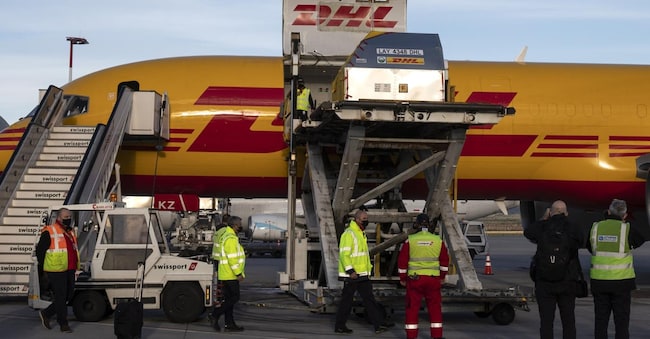
Aviotrasporto. Un aereo cargo di DHL

4' min read

4' min read

There is a fairly new factor that is disrupting air cargo transport. And it has mainly Chinese origins. It is that of the fast fashion, a huge growth sector, where two Chinese giants are battling it out for low-priced products.Shein and Temu have very similar histories and habits, although the former is more focused on clothing and has a few more years of presence behind it.Both are colonising the cargo sector, driven by competition that forces them to improve their services and thus speed up delivery times.

Quick delivery

.

Whereas a few years ago an order on a Chinese eCommerce site could take up to a couple of months before it arrived at the address of any European user, today the scenario has changed and a T-shirt costing a handful of euros arrives in just a few days. Because today Shein, TikTok Shop and Temu ship most of their products directly from factories in China to buyers by air, in individually addressed packages.

Loading...

Shock for cargo flights

.

A change of direction has shaken up the air cargo market, which has gone from a depressed phase to one of growth. Figures from DHL's latest report say that global air cargo volume has increased by 10% (year-on-year) since February 2023, thanks mainly to the Chinese boost and disputes in the Middle East.

According to aggregated data provided by Cargo Facts Consulting, Temu ships around 4 thousand tonnes of products per day, Shein 5 thousand, Alibaba one thousand and TikTok 800. This is equivalent to about 108 Boeing 777 freighters per day.

The Domain of Shein

.

Dominating, therefore, is Shein, driven by strong demand for its low-priced clothing, such as the EUR 5 biker shorts. The Chinese giant alone accounts for one fifth of the global fast fashion market, measured in terms of sales, and has fuelled the growth of the eCommerce sector in China, according to analyst firm Coresight Research. While, according to a Reuters report, fast fashion now accounts for half of China's total cross-border eCommerce shipments and about a third of global long-haul cargo planes.

The boom is due to the smooth growth of Shein and Temu, therefore.Growth that is taking space away from other sectors in air cargo transport, just as global companies are rushing to find alternative logistical options due to the disruptions in the Red Sea, where attacks by Houthi militiamen on Western ships have created quite a few problems for shipping.

"When the Suez Canal crisis broke out, there was no buying capacity, because eCommerce bought everything," an executive of a cargo airline told the Reuters agency. And confirmations also arrive at Il Sole 24 Ore, with Damiano Frosi, director of the Contract Logistics 'Gino Marchet' Observatory of the Politecnico di Milano, who says: 'We seem to be seeing the same pattern already experienced during the pandemic, when sea and air freight rates for international traffic had grown incredibly and prices had increased tenfold. Unfortunately, we are increasingly witnessing exogenous phenomena that have a major impact on business and logistics (pandemic, stranded ships, pirates, wars and geopolitical tensions). The different modes of transport are closely interrelated and a strain on one mode has an immediate reverberation on the others'.

Frosi says that 'many companies participating in our Observatory's work are reporting to us that they are using (or attempting to use) air cargo as a result of the worsening sea level of service and the uncertainty of the near future scenario. This is leading to a significant growth in air cargo costs, which in many cases simply cannot be 'passed on' to end customers, be they companies or consumers'.

According to Reuters data, the strong demand for air freight by fast fashion began to increase dramatically in the second half of last year. And now it cannot be ruled out that large technology companies such as Apple are also facing limited transport capacity. Moreover, this sudden increase in demand has raised tariffs for air freight from China and is raising concerns about long-term capacity shortages.

Also Malpensa on the upswing

Andrea Cappa, secretary general of Anama, the National Association of Air Freight Agents, a member of Fedespedi and Confetra, confirms the growth of the market at the beginning of the year: "In January 2024 cargo traffic at Malpensa grew significantly, driven in particular by general cargo, also due to the Red Sea crisis". Cappa recounts that Malpensa is the Italian airport of fast fashion: "Yes, this type of eCommerce traffic is concentrated at a national level on the Malpensa airport; according to the estimates of some operators (forwarding companies) that manage imports of these products, in the first two months of 2024 traffic quadrupled, a sign of the strength of the market for B2C eCommerce platforms".

Cappa also explains that 'this is a particular type of traffic that differs from general cargo, starting with the packaging factor. It is cargo that travels on all types of flights, cargo and passengers, that requires even faster transit times, and that can impact on the operations of cargo terminals and airport handling, especially in the 25% of cases where eCommerce goods do not arrive 'palletised' in the aircraft holds'.

Anama's secretary general also points out a number of difficulties: "The critical situation in terms of performance at Malpensa airport (+50% of handling times for import goods compared to the standard set by the Service Charter) has also had a negative impact on the eCommerce market," he says. "The airport has recently lost the opportunity to grow further in this traffic because 5 dedicated weekly charter flights are operated to Brussels airport and the goods arrive in Italy by truck. Those who manage this traffic have therefore preferred to shift some of the traffic to other European airports'.However, eCommerce volumes at Malpensa remain 'increasing' because, Cappa explains, 'this is a traffic that is experiencing explosive growth dynamics'.

Copyright reserved ©
Loading...

Brand connect

Loading...

Newsletter

Notizie e approfondimenti sugli avvenimenti politici, economici e finanziari.

Iscriviti