Innovation and human capital

Di Stefano: ‘Business and education: a strong and lasting partnership’

For the vice-president of Confindustria, the relationship between the public and private sectors is the key challenge facing the country.

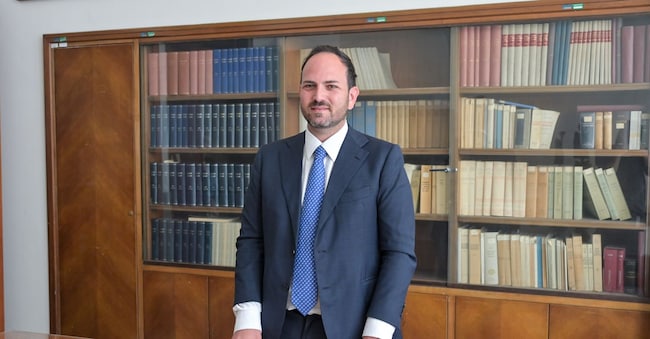
Riccardo Di Stefano  Imagoeconomica

4' min read

Translated by AI
Versione italiana

4' min read

Translated by AI
Versione italiana

“The only way forward for the country is an alliance between businesses and the education sector. An alliance that is already strong and enduring must now take off.” This is the message put forward by Riccardo Di Stefano, Confindustria’s vice-president for Education and Open Innovation, on the eve of the second meeting between Confindustria and CRUI, the Conference of University Rectors.

Vice-President: is the dialogue between universities and businesses continuing?

Loading...

In fact, there has been an ongoing dialogue between CRUI and Confindustria, which has received a further boost in recent months in the run-up to this second joint meeting, with the launch of working groups on strategic issues for the country. Today, for the production system – and in particular for an advanced manufacturing sector such as ours – being able to rely on a dynamic university is not merely a ‘hope’, but a genuine industrial priority. Businesses are facing unprecedented transitions, and the speed with which a country develops skills and transfers knowledge directly determines its global competitiveness. For businesses, a dynamic university means, first and foremost, alignment and timeliness: the ability to train young people in the skills of the future (starting with STEM disciplines and enabling technologies), reducing the skills mismatch and accelerating the entry of talent into the world of work, whilst also stimulating the creation of new businesses. Together with Minister Bernini, we are working towards a third mission that is finally effective, measurable and geared towards delivering real impact in local communities.

What has the NRRP achieved for universities, and what will happen next?

Meanwhile, we must acknowledge the achievements in doctoral programmes, which did not come about by chance, given that this was one of the first areas of collaboration between CRUI and Confindustria in the past: over 6,000 innovative doctoral programmes and 9,000 new researchers joining those already in place are forming a critical mass that we must collectively harness. We have demonstrated that we know how to work together and, moving forward, we will need to do so even more – for example, in support of new businesses – within an ‘open innovation’ framework, where we must continue to create infrastructure dedicated to innovation and implement more targeted measures to encourage patient capital to invest in existing start-ups, thereby fostering the creation of new ones. We must also strengthen the focus of patents towards industrial application and broaden business participation in patent committees, involving not only large companies but also innovative SMEs.

And what about the link between universities and ITS? 

Together with CRUI, and following the agreement signed with INDIRE and ITS Italy, we are exploring links between ITS programmes and degree courses, with mutual recognition of credits and the piloting of jointly designed pathways, including apprenticeships; the sharing of laboratories; joint careers guidance and, for example, the appointment of young researchers and PhD students as lecturers at ITS institutions. Data and models show that universities can help ITS institutions to grow, just as ITS institutions can play a decisive role in fulfilling universities’ third mission, and we are working precisely to find concrete, system-wide solutions. We are lagging behind the rest of Europe and must forge every possible alliance; this is why we are delighted with the excellent dialogue between CRUI and Confindustria, a strategic partnership that benefits businesses.

The mismatch remains a cause for concern. Is this why we are also looking abroad? 

The skills mismatch is also exacerbated by the demographic winter, but this is a concern for which decisive and multifaceted solutions are being developed, ranging from the 4+2 programme to university-business partnerships. The 4+2 scheme is the most far-reaching reform in the field of education in recent years, and this is recognised across Europe too; indeed, we will be discussing it in greater depth with Minister Valditara and EU leaders in November at the European Parliament in Brussels; Similarly, in Italian universities, the focus on STEM subjects is yielding positive results, with an increase in enrolments in engineering and computer science, whilst we are climbing the international rankings. It is precisely beyond our borders that the main prospects for the ‘4+2’ model are evident: we must continue the major investment in internationalisation launched through the NRRP, which is enabling us to establish fully-fledged ITS campuses in Egypt, Tunisia and Ethiopia – and then, who knows, perhaps even in Argentina, where human capital will be one of the key themes of Confindustria’s Mercosur mission. In universities, meanwhile, through ‘Italia chiama India’, we are profiling the more than 4,000 Indian students studying in Italy – particularly in STEM subjects – to support their development and encourage them to stay here after their studies. It is the first project of its kind and could be extended to other target countries. The aim is to attract and retain young talent. And here, Italia is playing its ‘World Cup’ of education to great effect, whilst also being able to count on the support of a housing scheme offering homes at affordable prices.

Is a strong public-private partnership the challenge for the autumn?

Loading...

This is the crucial challenge facing us as early as this summer. And thanks to the NRRP, we have established a framework, a common language and clear boundaries. Businesses have proven themselves to be a reliable partner for the education system, and we will continue to play our part in the future. Tomorrow’s event, with the CRUI here in our ‘home’, will be further proof that we are a system that functions as a system.

Copyright reserved ©
Loading...

Brand connect

Loading...

Newsletter Scuola+

La newsletter premium dedicata al mondo della scuola con approfondimenti normativi, analisi e guide operative

Abbonati