
From Ucbm LockBox: 'active disconnection' to foster students' concentration, relationships and well-being
More concentration in study, quality relationships and psychophysical well-being: this is how the university promotes digital awareness

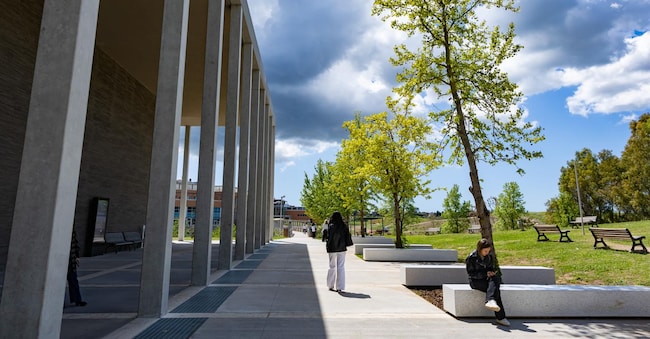
In the attention economy that characterises the contemporary world, time represents a scarce and increasingly contested resource. It is on this ridge that the initiative of the University Campus Bio-Medico of Rome (UCBM) lies, which introduces into its academic ecosystem LockBox, an application designed to promote the so-called 'active disconnection'.
Data
The data clearly outline the phenomenon: we spend on average about three hours a day on our smartphones, with more than 100 accesses per day. At the same time, awareness of the risks associated with excessive use is growing among young people: 77% of Italian students declare a form of addiction, while over 90% recognise a direct impact on their psychophysical well-being. Internationally, studies by the Digital Wellness Lab at Boston Children's Hospital and Harvard Medical School show that more than half of adolescents perceive the device as a significant distraction in the educational context.
Advanced Workshop
It is within this framework that UCBM presents itself as an advanced laboratory for experimentation, integrating technology and training in a digital equilibrium perspective. LockBox does not impose constraints, but activates motivational levers: through an approach based on the Self-Determination Theory, the application encourages autonomy, responsibility and relationality. The student voluntarily chooses to 'pause' notifications, monitoring his or her own progress and participating in collaborative dynamics with peers.
The implementation is capillary and structural: more than 120 physical locations distributed throughout the University buildings allow the activation and deactivation of the service, transforming the digital experience into a conscious and contextualised gesture. The gamification system - with rewards, incentives and rankings - strengthens engagement, fostering positive competition geared towards wellbeing.
Integration of experiential education and teacher-student relationships
In academic terms, the initiative fits coherently into UCBM's educational model, which is characterised by a strong integration of experiential teaching and the teacher-student relationship, with a one-to-seventeen ratio and immersive environments such as the Simulation Centre. The quality of education, in this sense, is not divorced from the quality of attention.
The Rector
"We believe that a healthier relationship with one's devices is the basis of a broader concept of well-being," says the Rector, Rocco Papalia. "In our university, we have always invested in tutoring and the centrality of interpersonal relationships, including through structured initiatives dedicated to student well-being, such as the Proben project, which offers psychological counselling services and support in difficult moments of the university course. Together with Campus Life, sports, volunteering and international cooperation activities, these initiatives contribute to building an environment that is attentive to the individual, to forming aware and responsible men and women. With the introduction of LockBox we further strengthen this commitment, offering students a concrete tool to live their university and relational path in a more conscious way".

Brand connect


Newsletter Scuola+
La newsletter premium dedicata al mondo della scuola con approfondimenti normativi, analisi e guide operative
Abbonati