
From Vance to the nuclear talks, Rome becomes the crossroads of world geopolitics
On Friday the visit of US Vice President JD Vance. And on Saturday the second round of US-Iran nuclear negotiations

3' min read
Key points
3' min read
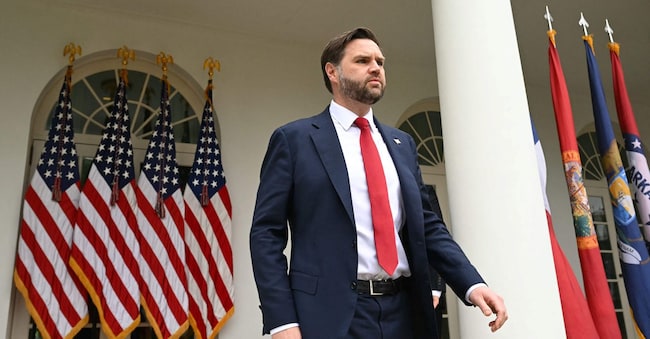
Rome this weekend will be an important hub of international geopolitics. With two major appointments. On Friday, the visit of US Vice President JD Vance. And on Saturday the second round of US-Iran negotiations on the nuclear issue will probably take place at the Oman embassy.
Vance's meeting with Meloni
.Rome is preparing for the events of the Easter festivities that will coincide this year with the visit of US Vice President JD Vance. The security plan is ready for the next few days, which will be particularly demanding in terms of public order. With sharpshooters, no-fly zones, sweeps, road closures and filtering with metal detectors. The Vice President of the United States, accompanied by his wife Usha, will land at Ciampino on Friday morning. Then there will be the first institutional appointments. His agenda, like that of the second lady, remains armoured for security reasons, but the White House has let it be known that a meeting with Prime Minister Giorgia Meloni (returning from her meeting with Donald Trump at the White House) is scheduled for Friday lunchtime at Palazzo Chigi. During the three days he will also see the Vatican secretary of state, Cardinal Pietro Parolin. It also goes without saying that during their visit to the capital, Vance and his wife will take advantage of the artistic sights, starting with the Colosseum.
In Rome, the second round of negotiations on the Iranian nuclear issue
.After Iranian announcements and denials, the die is cast: the second round of indirect negotiations between US envoy Steve Witkoff and Iranian Foreign Minister Abbas Araghchi on the nuclear issue will take place on Saturday in Rome. This was confirmed by Iranian state TV, which explained that "Oman's Foreign Ministry will host the talks", probably at the embassy in the capital. It was Araghchi himself who had brought the negotiations back to Muscat (the Omani capital) despite the fact that the parties had initially agreed to meet in Rome on the eve of Easter. A retreat that, according to some Iranian media, stemmed from Tehran's reluctance to hold the talks while US Vice President JD Vance was also present in the Italian capital. And indeed, the decision on the change of venue was described by the Foreign Ministry spokesman, Esmail Baghaei, as "a move that could be seen as a lack of seriousness and goodwill" while "we are still in the experimental phase". Foreign Minister Antonio Tajani had immediately confirmed the Italian government's readiness to host the talks in Rome: 'Italy simply wants to be a bridge for peace, we have no ambitions of any kind,' Tajani had explained.
The difficulties of negotiation
.The first meeting between Witkoff and Araghchi, who had exchanged ten messages through Omani Foreign Minister Badr Albusaidi, had ended without any real breakthrough, despite the fact that at the end of the indirect talks in Muscat a week ago there had been a very brief face-to-face, first direct contact in a long time. And the new round of negotiations also starts with red lines clearly demarcated on both sides and in an atmosphere of mutual distrust. 'We are ready to build trust over possible concerns about our nuclear programme but the issue of uranium enrichment is non-negotiable,' Araghchi clarified. In an interview with Fox News, Witkoff hinted that the US goal is to prevent the ayatollahs from acquiring a nuclear weapon, while tolerating a certain margin of uranium enrichment (at 3.67% as envisaged in the 2015 Jpcoa agreement later abandoned by Trump, as opposed to the current 60%).

