
From the Washington Post to the Los Angeles Times: newspapers in the storm over Harris-Trump neutrality
On the owners of numerous newspapers, Jeff Bezos in the lead, the shadow of 'early obedience' to avoid revenge from the Republican leader. Resignations and disturbing background

6' min read
6' min read
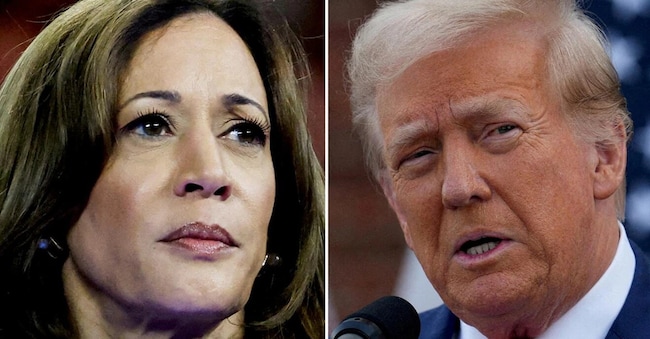
First the Los Angeles Times. Then the Washington Post. In the final sprint towards the presidential vote for the White House among the big American newspapers, or rather their owners, a race backwards has begun. A flight towards agnosticism at the ballot box that has raised a crescendo of alarm, due to the risk of intimidation, or interested disengagement, in the face of the spectre of a new possible success of one of the two candidates. Of that Donald Trump who has apostrophised the media not aligned with him, today as yesterday, 'enemies of the people'. Who has flaunted the use of the army and federal prosecutors against social protests and opponents or critics identified as 'domestic enemies', as more dangerous fifth columns of opposing nations. That at rallies he calls for actions such as taking away the TV licence of the Cbs network, guilty of not accommodating his demands.
The Washington Post's 'neutrality'
.The last person accused of genuflecting before the wrath of Trump was also the most influential: the emblazoned newspaper that brought the Watergate scandal to light and wrote the word end tough president such as Richard Nixon. He announced the end of a more than 30-year tradition, dating back to 1976, of 'endorsing' presidential candidates. And he did it in extremis, a few days before the vote, after the editorial endorsement of the columnists had already been written... to Kamala Harris. Circumstances that made it difficult for the journalists of the same paper, as well as analysts and observers, to give credence to nobler reasons than the desire for truces or disturbing pacts between the rich and powerful: the Post and the Los Angeles Times, which made such a decision, are now in the hands of billionaires with extensive government interests. The decision to abstain triggered a series of resignations from the opinion and editorial pages at both the Los Angeles Times and the Washington Post, which continued over the weekend. At the Post, 19 columnists signed an open letter denouncing what they described as 'a terrible decision'.
Nor is neutrality only made up of excellent and isolated cases, aggravating the signal sent. Earlier still, in August, the Minnesota Star Tribune had followed the same path, also under the aegis of a graphic communications tycoon, Glen Taylor, despite the fact that in its management ranks it has a former collaborator of the Democratic vice-presidential candidate Tim Walz. Into play, with the succession of reversals, came the controversial concept, quoted by the Columbia Journalism Review, of 'anticipatory obedience', i.e. obedience in advance of any ballot box result, as a show of obsequiousness to guard against revenge.
The advance of social media
.It has to be said that the golden age of media endorsements of competing political leaders has generally long since waned in the United States, hand in hand with their diminishing influence and reduced readership, and the advance rather of social media as an unbridled and effective bass drum of opinion and political promotion. A reality that has prompted newspapers large and small to try not to further irritate any part of the remaining subscribers, especially since opinion pages are considered among the least read (an analysis by Gennett). And all the more so when newspaper owners have often become financiers or financiers, no longer pure publishing dynasties. In recent years, the group of newspapers belonging to the hedge fund Alden Global Capital, from the Chicago Tribune to the Boston Herald, had been among the pioneers of political defections, intensifying the trend. And already in 2020 only 54 of the top 100 US newspapers decided on an 'endorsement', compared to 92 in 2008, a decline that took place while 2,500 newspapers in the country disappeared altogether. Similar figures had already prompted Penelope Muse Abernathy of Northwestern University to speak of a "loss for grassroots democracy".
But now the sudden neutrality declared by brands such as the Post on the front of an electoral battle now in its twilight years and unanimously considered to be among the most consequential ever goes far beyond this historic erosion, which had seen the New York Times itself indicate in recent months that it would refrain from commenting on local but not presidential races in the future. It may seem a quantum leap that lends credence to the controversy: a poll by the New York daily, coincidentally released in the same days, showed almost half of Americans disappointed with a democracy they say does not represent them and 76% calling democracy itself in danger.


