
BYD from Chinese to European, 250 million for headquarters in Hungary
The Shenzhen giant takes a further step: it turns Orbán's Hungary into a real bridgehead, creating a decision-making and commercial centre for the area

4' min read
4' min read
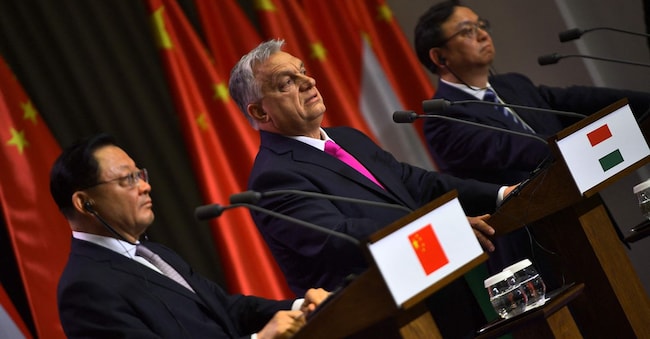
In a Europe questioning how to respond to China's rise in the electric car business, the new global leader in the sector, BYD, is relaunching its strategic offensive right from the heart of the continent. It did so through the mouth of its top executive, Wang Chuanfu, founder, chairman and ceo of the Chinese giant, in Budapest on Thursday evening alongside Hungarian Prime Minister Viktor Orbán.
The announcement is clear and ambitious: BYD will establish its European headquarters (currently in Amsterdam) and a research and development centre in Hungary. Not a production plant, then, but the operational and strategic headquarters designed to root the brand in the Old Continent, with sales, service, testing and localised model development functions. The facility involves an investment of 248 million euros and will employ 2,000 people.
From Szeged to Europe
The news came just a few months after the start of work on the gigafactory in Szeged (a city less than 200 km south of Budapest), BYD's first European car factory, with a maximum capacity of 250,000 cars per year (when fully operational), intended to employ up to 10,000 workers, a fifth of whom will be engineers. A plant that will be operational by 2025, designed not only to produce but to shape vehicles designed for European needs and regulations. Next to this infrastructure, already operational since 2016, there is the electric bus plant in Komárom. Then there is the battery assembly plant in Fót, in the Budapest metropolitan area, an investment of around 27 million. Finally, in Páty, about 20 km from the capital, is the headquarters of BYD Smart Device Hungary, whose main activity is the production of electronic components and semiconductors.
BYD thus transforms Orbán's Hungary into a true European bridgehead, making the Danube nation not only a production hub, but also the decision-making and commercial centre for the Emea region, since another plant of equal capacity will be operational in Turkey, near Izmir, in the first quarter of 2026.
The timing (not random)
.The move comes at a delicate time. In October 2024, the European Union initiated protectionist measures (the customs tariff on BYD is 27.4 per cent overall) against imports of electric vehicles from China, which are accused of benefiting from state subsidies, upsetting the balance of healthy competition. In this context, taking physical roots in the mainland - with local staff, development centres and value-added infrastructure - is a strategic response. A way of saying: BYD is a fully-fledged European manufacturer.


