
Byd to invest €2 billion in Europe for a network of ultra-fast charging points
Flash charging technology allows electric cars to be charged in just a few minutes
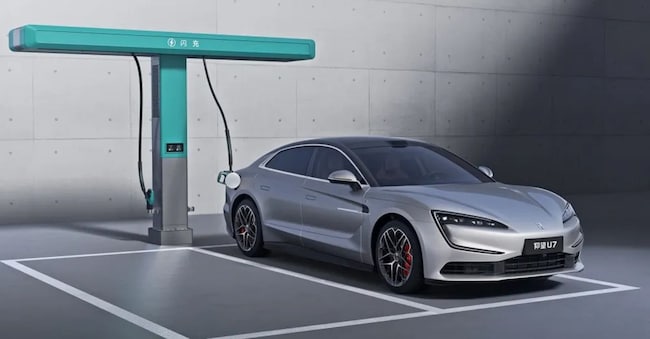
Charging times have always been one of the biggest obstacles for those considering buying an electric car. Of course, there are now very fast charging points. And cars with technologically advanced batteries.
Yet charging times remain the industry’s Achilles’ heel (at least in psychological terms). That is why the race to build ever more efficient infrastructure shows no sign of slowing down. That is why the Chinese giant BYD has allocated nearly €2 billion to build a network dedicated to ultra-fast charging in Europe. The aim, which in fact has actually been discussed for a year now, is to support the roll-out of ‘flash charging’ technology (we had written about here) which allows hundreds of kilometres of range to be regained in just a few minutes, and to strengthen its position in an increasingly strategic European market.
The Chinese group plans to install 3,000 charging points across Europe by 2027. Each station will require an investment of around €580,000. This project effectively follows the plan announced in China, where BYD intends to build 20,000 ultra-fast charging points by the end of 2026.
“The priority is to build a very robust infrastructure network,” said Stella Li, executive vice-president and head of the group’s international operations, during the opening of the first flash-charging station in the UK.
Technology is one of the key elements of Byd’s European strategy. The new stations have a power output of 1,500 kW, well above the approximately 500 kW of Tesla’s latest Superchargers. According to the company, compatible models can regain up to 400 kilometres of range in around five minutes.


