
Byd, new batteries and 1,500 kW super powerful and fast charging arrives
New batteries capable of going from 10% to 97% in nine minutes. The power of the column? The one needed to power a neighbourhood.

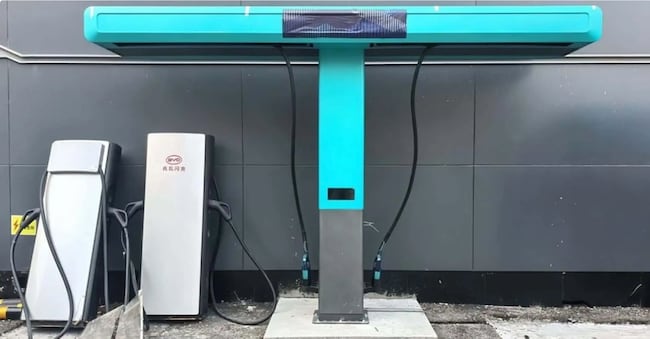
Byd continues to innovate to make the electric car comparable to the thermal car, at least on paper. Because after becoming the world's leading manufacturer of new energy vehicles, a decidedly cunning classification in which plug-in and electric cars are combined, advertising campaigns bordering on legality, the Chinese manufacturer is announcing a novelty that could really change the use of an electric car: a battery capable of being recharged from 10 to 97 per cent in nine minutes thanks to a 1,500 kWh column. Power 'dreamt of at night' by every electric car user in Italia, where 400 kWh is already a mirage in most regions.
Byd Blade Battery 2.0
It all starts with the new Blade Battery 2.0, where energy density has been increased by 5% and charging speed significantly increased. The technical advances in energy density and charging speed did not come at the expense of safety and durability. On the contrary, Byd's battery passed a series of new benchmark safety tests, including the world's first simultaneous Flash charging and Nail Penetration Test, with no thermal runaway, smoke or fire, even after 500 Flash charging cycles. The battery also passed a thermal runaway test after simultaneous forced short-circuiting of four cells, without fire or explosion, even when the temperature exceeded 700°C. In addition, the Blade Battery 2.0 introduces a further improvement in LFP battery life: compared to the original Blade Battery, overall capacity degradation is reduced by 2.5 per cent.
Flash Charger Byd
the second key element for such fast charging times is the Flash Charger, capable of delivering up to 1,500 kW through a single connector (specific for the Chinese market), and featuring a suspended T-shaped design that eliminates many of the less practical aspects of charging. Translated into numbers, 1,500 kW of charging power makes it possible to go from 10 per cent to 97 per cent in just nine minutes; in extreme conditions at -30°C it recharges from 20 per cent to 97 per cent in just 12 minutes. Conventional charging stations are often criticised for being bulky and unhygienic, with heavy connectors and cables that get dirty or wet on contact with the ground. The T-shaped design of the Flash Charger relieves these elements of possible contamination, while the lighter connector and cable on a rail-guided pulley make it much easier to connect the vehicle, regardless of the location of the charging outlet. To date, Byd reported that it has installed 4,239 Flash Charging stations in China and aims to reach 20,000 operational units by the end of the year. To overcome grid problems, each station is integrated with ultra-rapid discharge energy storage systems, designed to optimise peak demand management and reduce dependency on local power grid capacity. The grid will also arrive in Europe, like the Blade 2.0 battery brought to debut by the Denza Z9GT, with the RWD Long Range version, which will adopt a 1000V architecture and will be able to offer up to around 800 km of autonomy. The three-motor version will have an estimated range of 600 km Wltp.
Production of the Long Range version is scheduled to start in August, with the first deliveries to customers by the beginning of the last quarter of the year.

