
The team led by Hegemann, winner of the Nobel Prize in Medicine, also includes the Italian Roberta De Zio
She is a researcher at the University of Bari. In Freiburg, as a visiting researcher, she worked on a device that uses light to switch off brain and heart cells

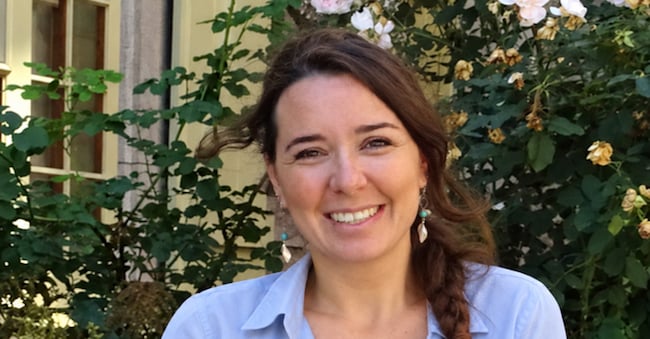
‘I learnt how to use this technique in Freiburg, whilst working with a group from Hegemann’s school. Today I can bring those skills to Bari, where the Department has just launched a dedicated platform.” Roberta De Zio, an Italian researcher at the University of Bari “Aldo Moro”, is among the scientists who have worked with Peter Hegemann on the scientific study of optogenetics, the neuroscience technique that earned the German biophysicist, Georg Nagel and Karl Deisseroth the 2026 Nobel Prize in Medicine.
The scientist’s career
The Italian scientist is one of the co-authors, alongside Hegemann, of the international study on the RoCK system published in *Science Advances*. The research was carried out as part of a collaboration with Franziska Schneider-Warme’s group at the University of Freiburg in Germany.
Roberta De Zio’s training as a researcher began under the supervision of Andrea Gerbino, associate professor, and Maria Svelto, professor emerita of Physiology. Her career, however, has also taken her abroad, specifically to Germany, where she worked as a visiting researcher at one of the leading international centres for cardiovascular research: the Institute for Experimental Cardiovascular Medicine in Freiburg, headed by Peter Kohl.
It was during this experience that she had the opportunity to work with the group led by Franziska Schneider-Warme, head of the Cardiac Optogenetics section at the German institute. This collaboration has enabled the scientist to co-author two international scientific publications, with further papers currently in preparation.
The role of Uniba
Roberto Bellotti, Vice-Chancellor of the University of Bari, is immensely proud: “A young researcher who came through our university has worked in an international research group and is now bringing those skills back to Bari, whilst also raising the university’s profile in a publication co-authored with a Nobel Laureate. This is the sort of career path we want to support to promote our researchers and raise the profile of our university around the world.”

