Current Affairs

Council of Ministers: preliminary meeting on Monday; AI and the Court of Auditors among the 13 items on the agenda

Palazzo Chigi is preparing for the meeting on Tuesday 4 August. Also on the agenda are public administration, defence, tax justice, corporate responsibility, digital VAT and air quality

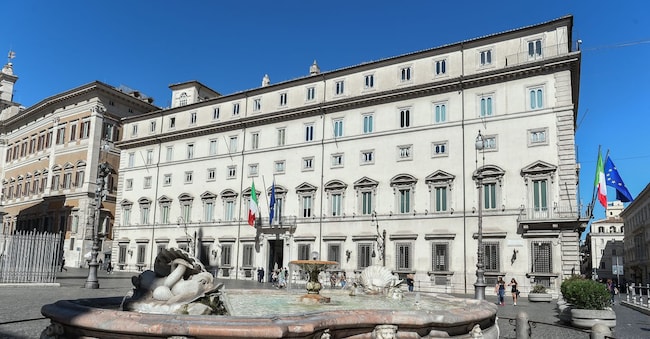
PALAZZO CHIGI DURANTE IL CDM BANDIERE ESPOSTE TRICOLORE IMAGOECONOMICA

3' min read

Translated by AI
Versione italiana

3' min read

Translated by AI
Versione italiana

Artificial intelligence in policing, new powers to oversee AI, and the reorganisation of the Court of Auditors. These are the most contentious issues in the package that the Government will present to the Council of Ministers on Tuesday 4 August. These are politically sensitive issues for Giorgia Meloni, who is called upon to strike a balance between security and safeguards, control of public spending and the executive’s scope for action.

Before the political debate, however, the final technical hurdle must be cleared. Palazzo Chigi has convened a preparatory meeting of the Council of Ministers for next Monday. This pre-Council meeting will have to scrutinise thirteen measures and resolve the outstanding issues before the draft texts are tabled before the ministers twenty-four hours later.

Loading...

Thirteen measures on the government’s agenda

The agenda for early August is packed: one decree-law, three bills and nine legislative decrees. This covers a substantial part of the Government’s agenda: public administration, local authorities, civil protection, maritime policy, defence, corporate governance, artificial intelligence, the Court of Auditors, taxation, disability and the environment.

At the top of the list is the sole decree-law – the measure set to come into force immediately and then be submitted to Parliament for conversion. The text contains provisions concerning the functioning of the public administration and local authorities, including measures relating to civil protection and maritime policy.

The dossier has been jointly signed by the Prime Minister’s Office and the Ministry for Public Administration. The decision to issue a decree-law highlights the urgency the Government attaches to maintaining the functioning of the administrative system, particularly at a local level.

Defence, business and European regulations

Three bills complete the part of the package that will still have to go through the full parliamentary process.

The first is the 2026 European Delegation Act, under which the Government requests from Parliament the powers necessary to transpose European directives and implement other EU acts.

The second proposal concerns the administrative liability of legal persons and aims to revise Legislative Decree No. 231 of 8 June 2001. This legislation sets out the circumstances in which a company may be held liable for offences committed in its interest or for its benefit. The Ministry of Justice is responsible for this dossier.

The third bill contains provisions to strengthen and adapt the country’s defence capabilities. The bill comes at a time when military spending continues to be a key issue in the European debate.

Artificial intelligence: the two decrees under final review

The political core of the package lies in the nine legislative decrees, through which the Government exercises powers already approved by Parliament.

Loading...

Two of these concern the alignment of Italian law with European Regulation 2024/1689 of 13 June 2024, the AI Act. This is the most politically sensitive issue for Palazzo Chigi: artificial intelligence is being integrated into the work of law enforcement agencies, into training and into the oversight mechanisms entrusted to national authorities.

The first decree regulates the use of artificial intelligence systems in policing and the civil and criminal liability associated with their use.

The second, on the other hand, addresses the powers of the national authorities responsible for overseeing artificial intelligence and the use of AI.

The measures under final consideration are rounded off by the decree on the organisation of the tax courts, drawn up by the Ministry of the Economy. The text makes changes to the system responsible for resolving disputes between taxpayers and the tax authorities, as previously reported in recent months by Il Sole 24 Ore.

The Court of Auditors: a politically charged dossier

Five legislative decrees, however, are still at the preliminary review stage.

Among these, the reorganisation and restructuring of the functions of the Court of Auditors – as provided for in Article 3(1) of Law No. 1 of 7 January 2026 – stand out. This is the other politically sensitive issue for Meloni: the reform affects the body that oversees public spending and carries out audit and accounting oversight functions.

Disability and liability for defective products

Another decree transposes European Directive 2024/2841 of 23 October 2024, which establishes the European Disability Charter and the European parking card for people with disabilities.

The Ministry of Justice has also introduced the decree implementing European Directive 2024/2853, also dated 23 October 2024, on liability for damage caused by defective products.

Digital VAT and air quality

Also on the agenda is the implementation of Article 2 of European Directive 2025/516 of 11 March 2025, which amends the common rules on VAT set out in Directive 2006/112/EC.

Rounding off the set of five draft texts is the decree implementing European Directive 2024/2881 of 23 October 2024 on ambient air quality, drawn up by the Ministry for the Environment and Energy Security. The measure aims to bring national legislation into line with European standards for cleaner air.

Copyright reserved ©
  • Ivan Cimmarustigiornalista

    Luogo: Roma

    Lingue parlate: Italiano, inglese

    Argomenti: Sicurezza, giudiziaria, inchieste, giustizia tributaria

    Premi: Nel 2011 tra i vincitori del Premio Internazionale Antimafia Livatino-Saetta

Loading...

Brand connect

Loading...

Newsletter

Notizie e approfondimenti sugli avvenimenti politici, economici e finanziari.

Iscriviti