
Cadastral maps can now be consulted online: here's how to get the information and the areas not covered
New free service made available by the Agency on the institutional website and aimed at all citizens. To use it, all you have to do is log in with your Spid, Cie or Cns credentials, select the map sheets of interest and the desired format
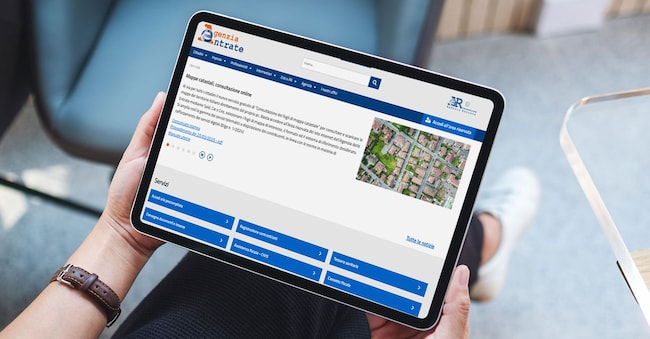
A new free service has arrived on the Agenzia delle Entrate website: citizens can consult and download cadastral maps of the Italian territory directly from their PC. All they have to do is log in with their Spid, Cie or Cns credentials, select the map sheets of interest and the desired format. Until now, access to cadastral cartography was reserved to professionals via the Sister platform.
How to access information
In order to use the new 'Consultation of cadastral map sheets' service, it is sufficient to access the Reserved Area of the Agenzia delle Entrate website by means of Spid, electronic identity card (Cie), national services card (Cns). Each user can choose between two functionalities: one allows obtaining vector files of the updated cadastral map sheets, in various formats and in the different reference systems; the other, instead, allows obtaining image files of the entire original map sheets (i.e. the unique specimens drawn by hand when the cadastral cartographic system was implanted) or an extract thereof, limited to certain parcels of interest.
The areas not covered
The service is active throughout the country, with the exception of areas where the Cadastre is managed by the Autonomous Provinces of Trento and Bolzano.
File formats and reference systems
Map vector files can be downloaded in CXF, CML, DXF and even GeoJSON (an open geospatial data interchange format) formats, with the relevant metadata information (in TXT format). The maps are available in different reference systems: Cadastral Original, Rome 40 Gauss-Boaga and ETRF2000. The image files of the Plant Originals, which have already been georeferenced and any deformation recovered, are released in JPG format, together with the georeferencing data (in JGW format) and metadata (in TXT format). The extract of the Plant Original is released in PDF format.

