
Cesar Kitchens, new governance and range expansion
Ownership returns 100% to the family. New general manager appointed but continuity in growth strategy
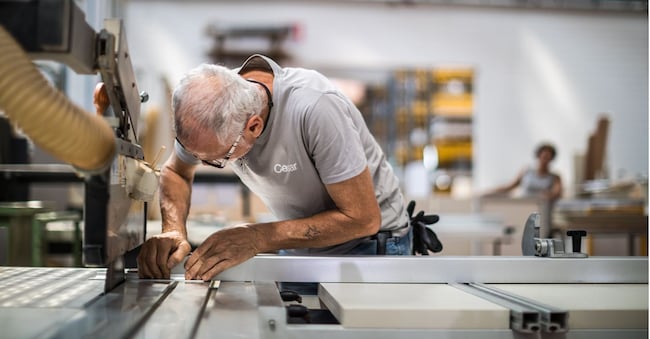
Strengthening of the corporate structure (with the return of 100% of shares in the hands of the Cester family), consolidation abroad and expansion of the product range. Cesar Cucine, the historical brand of high-end kitchens founded in 1969 in Pramaggiore (Venice) by Sante Cester, accelerates the path of managerialisation and growth started about a decade ago with the opening of the capital to an external partner, Michele Dalla Libera, who led the company together with the CEO and sole administrator Gina Cester, until her death last December.
Hence the need for a quick but painstaking reorganisation: 'The ownership is now fully back in the hands of my family, since Dalla Libera left his shares to me by will. But the strategic line taken has not changed,' explains Gina Cester. This is confirmed by the appointment, effective from 2 March, of a new general manager, Maurizio Vianello, who will help carry on the process of internal reorganisation and growth.
"Cesar is a historical company that has made an important development path over the last ten years, supported by impressive investments in technology and production processes. I believe that today it is one of the most advanced realities in the sector,' says the manager. Some 8.5 million euros have been invested in production development and technology, of which 7 million in machinery and 1.5 million in digitisation and integration of production processes. In terms of brand and product, the company has also invested to strengthen its positioning in the high-end segment.
Today Cesar is a company with 140 employees and a turnover of 37.4 million (2024 figure, basically stable in 2025), 60% of which is generated abroad, a very high percentage compared to the average for the kitchen sector. "We export mainly to Europe, 30%, and North America, 15%," adds Cester. The objective is to consolidate the international presence, without neglecting Italia, which remains fundamental in the growth strategies, as demonstrated by the important investment underway on the Milan shop.
"We are starting from a good base," says the CEO, "We have five flagship shops, in Milan, Miami, Paris, Seoul and Toronto; 14 mono-brand shops and a distribution network in over 40 countries. We will continue to diversify our markets, investing in flagship and mono-brand shops, which guarantee better brand recognition, but also in strengthening the contract business in some strategic markets'.

