
Cages without bars. Philip Pettit and freedom as non-domination

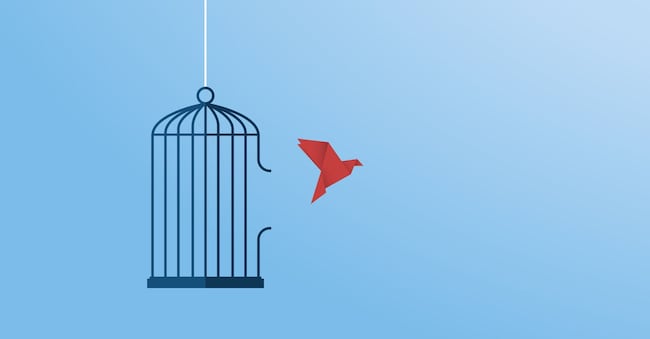
What does it really mean to be free? Certainly the most immediate answer to that question refers to a condition of absence of coercion. I am free if no one can influence my decisions or can force me to do something I do not want to do. This is what Isaiah Berlin called 'negative freedom', freedom 'from'. Focusing on this idea of freedom leads us to think about how we can prevent the actions of others from restricting our spaces of freedom. There is another aspect, however, of freedom that has to do not so much with what others might do to restrict us but with what others do not do. A dimension that has to do not with action but with inaction, not with decisions but with omissions. Freedom is also about this. It is about not only what others do, but what they could do and do not do. That is, it is about the kind of power others have over our lives, even when they choose not to exercise it. In this sense, the question of freedom is not only about who prevents me from acting, but also on whom depends, ultimately, what I can do.
Imagine a digital creator who works well, sees his follower traffic grow, and monetises his content. The platform on which he operates treats him favourably. Yet, all it would take is a small change to the algorithm, a reinterpreted rule, a removal of content for opaque reasons, that his professional world would be drastically downsized.
Imagine a working woman. She has a good contract, a secure salary, a nice manager. She does not suffer humiliation, she does not receive orders. And yet she knows that a promotion, a renewal, a transfer, sometimes even keeping the job itself, depend on the judgements of her manager that will never be fully explained to her.
Consider, finally, a small local newspaper. Its activity depends on access to sources, accreditation, publicity and relations with local administrators and economic groups. No one imposes explicit prohibitions. No one calls to order that an article not be published. And yet it is clear to everyone that there are balances, environments and people that it is better not to put too much under the spotlight.
In all three cases, the question is the same: can we claim that the digital creator, the worker and the editor of the newspaper are truly free people? Or is their freedom somehow 'policed' and guaranteed, as long as things go well, as long as the power around them does not change its face?


