
Calabria studies the merger of municipalities but postpones the Grande Cosenza project
Open debate after Region President Roberto Occhiuto's proposal: 'Calabria has more than 400 municipalities and as many mayors, action should be taken to merge them. And for the city of the Bruzi, there is talk of this in 2025

4' min read
4' min read
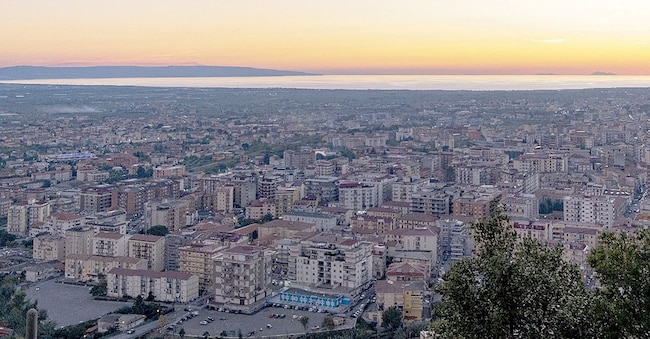
n little more than half a century, the city of the Plain of Sant'Eufemia has changed physiognomy: on 4 January 1968, Sambiase, a small centre with an agricultural vocation, Nicastro, a territory with a marked commercial aptitude, and the autonomous municipality of Sant'Eufemia, reclaimed and then transformed into an area for infrastructure (airport, railway station, motorway junction), merged to create a new urban entity, that of Lamezia Terme. Today, the city, forerunner of administrative mergers in Calabria, has 67,000 inhabitants, as many as, for example, Cosenza, and a vast area, 160 square kilometres, from the mountains to the sea. It is also an expanding industrial area, where Callipo operates, with its canned food plant, Ecosistem and other companies in the transport, logistics and waste sectors. Not insignificant even a certain cultural effervescence.
Over time, Lamezia has become a model, demonstrating how the amalgamation of contiguous municipalities produces advantages in services, for schools, transport, waste, and greater political weight. It is also a change of mentality, a thinking big, which has allowed, for example, the construction of a futuristic sports hall, 'located near the motorway junction precisely because we considered it to be at the service of the entire region,' explains mayor Paolo Mascaro. With the same resourcefulness, the municipality has activated, within the framework of the Pnrr's innovative programme for the quality of living, a grant of 115 million: 'The objective is to make urban development and community life more harmonious, without forgetting,' Mascaro continues, 'that Lamezia is multifaceted and multiform by nature. And that certain now attenuated manifestations of parochialism keep identity and traditions alive'.
And it is more or less with this in mind that the president of the region, Roberto Occhiuto, is moving: 'Calabria has more than 400 municipalities and just as many mayors,' the governor recently said, 'so action should be taken to merge them. Some very small municipalities and many urban centres could come together to become metropolitan areas'. A new administrative architecture, therefore, which cannot, however, rely on experience already gained in the area. In Calabria, after Lamezia, there have only been two mergers, that of Corigliano and Rossano, on the Cosentine Ionian, the largest municipality in the region and the third largest in terms of population, with almost 80,000 inhabitants. And that of Casali del Manco, in the Cosenza area, five small municipalities under 10 thousand inhabitants - Casole Bruzio, Pedace, Serra Pedace, Spezzano Piccolo and Trenta - which merged on 5 May 2017: they cover an area of 170 square kilometres, 120 of which are in the Sila National Park. Just over 9,000 residents. 'Thanks to the merger, we will receive a State contribution of 1.9 million for 10 years,' explains the mayor of Casali del Manco Francesca Pisani. 'These are free resources that we can invest to improve services, including social projects for children with disabilities, or the upgrading of schools. We are proud, for example, of our municipal kindergarten with 22 children. With 780,000 euro from the Pnrr we will expand the facility and build a new one. While with a loan of 2.5 million we have just taken out we will capture water from the Sila springs to solve the water shortage problem'. The merger of the municipalities of Casali del Manco, 40 years after that of Lamezia Terme, and in particular that of Corigliano Rossano, a municipality led by the mayor Flavio Stasi, in his second term of office, followed a different regulatory process, in which the territorial reorganisation of municipal districts started with a resolution of the municipal council and ended with a referendum: 'A democratic procedure, respectful of the autonomy of municipalities,' says Mario Oliverio, former president of the Region, under whose government the only two mergers in Calabria took place. Mergers are certainly useful when there is a conurbation to improve the quality of services. Greater Cosenza, for example, has already been mature for some time,' Oliverio continued, referring to the merger planned for Cosenza, Rende and Castrolibero. 'It would have been enough to apply the same procedures adopted for Corigliano-Rossano to avoid a mess. Above all, the construction of important infrastructures that would have really given sense to the single city should not have been interrupted, starting with the new hub hospital in Vaglio Lise, a crossroads in the urban and extra-urban mobility system, and the light metro that was supposed to connect the centre of Cosenza with Rende and the University of Calabria, as far as Settimo di Montalto, where a new station on the Ionian-Tyrrhenian railway axis was planned. Unfortunately, in recent years, there have been forces that have obstructed this design through short-sightedness and shopkeeping calculations, delaying its progress'.
The merger in the Cosenza area - a municipality that is, moreover, in crisis - is the result of a bill presented by eight centre-right regional councillors, but is contested by mayors and associations in the area. The critical point is an amendment to paragraph 3 of Article 5 of Law 15 of 2006 that allows the municipalities to be bypassed, transforming the referendum from binding to advisory and putting the decision entirely in the hands of the Region. Meanwhile, the constitution of Greater Cosenza, scheduled for February 2025, following an amendment tabled by the Democratic Party, slips by two years 'to ensure better planning'.
Which is exactly what is missing, whenever the issue is limited to political and administrative aspects. This is pointed out by entrepreneur Fortunato Amarelli, managing director of the historic Amarelli Liquorice Factory, in Rossano, and president of the Union of Italian Centenary Companies. He has always believed in the Corigliano-Rossano merger: 'The outcome of these processes, however, is never a foregone conclusion, especially if the vision, the project, is missing. This happened in my city, but it seems to me that it is also happening in Cosenza. A long preliminary investigation is needed and the benefits are not immediate. Corigliano and Rossano have chosen in 2018 to become a city, to count over 8,000 inhabitants, but some fundamental steps have been missing. What city,' Amarelli concludes, 'does Corigliano-Rossano want to be, what social and cultural fabric does it want to build, and therefore what services does it want to provide itself with? This must be planned and the starting point is work and economy'.

