
Calabrian farmers take to the streets: the crisis is also down to Hormuz
From a local protest to a national demonstration with global implications: solutions (and risks) for agricultural businesses in Calabria in the face of rising prices for diesel, fertilisers and energy

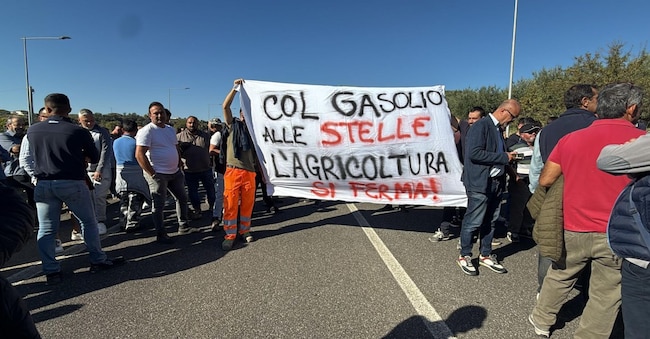
They are completely broke. Some have already closed down their businesses, whilst others have been forced to make staff redundant. Still others are afraid of going bankrupt. Restructuring the company’s debts, benefiting from subsidies for livestock farming, and revising the ministerial price scales downwards for the purchase of diesel have not been enough. Calabrian farmers are out on the streets, blocking squares, motorway junctions, ports, airports, industrial estates and government buildings with their own vehicles. Exhausted, frightened, outraged. They are protesting relentlessly alongside lorry drivers against the rising fuel prices that are weighing heavily on the agricultural sector and on daily travel.
Sit-in and rally venues
A fierce protest, which has been taking place across various parts of the region for the past eight days and will culminate tomorrow in a national demonstration in Piazza Loreto in Cosenza. Later this afternoon, the gathering will take place in Cosenza once again, but in Piazza Europa.
In Francavilla, Cerchiara, Villapiana, San Marco Argentano, Vibo, Lamezia, in the Pollino and Sila regions, and in the upper Ionian area of Cosenza, Calabrian farmers have publicly shed tears and told stories of emigration and return, of unsustainable sacrifices made to protect their farms. They poured the milk from their tankers onto the tarmac – a product sold at 38 cents per litre, compared with the cost of agricultural fuel at 1.68 euros, which has practically doubled.
‘Shall we buy wheat or diesel?’
“We’re operating at a loss. Every day we’re forced to choose: do we buy wheat or diesel?” “We’re selling our produce just as we did 20 years ago; what used to be worth 1,000 lire is now worth 50 centesimi.” “Our production costs are rising all the time; the drought is forcing us to irrigate the fields and pump water constantly.” “At least leave us our dignity.” Their voices overlap, merging with those of the lorry drivers who, in the meantime, are negotiating with the regional authorities to initiate talks with the Government. Trade unions, mayors and students are also supporting the protest.
The role of Zangari
In the early days of the protest, the public display of despair by a man from Polistena, Antonio Zangari, caused a stir. He had been sentenced in the first instance by the Court of Vibo Valentia to four years’ imprisonment for simple criminal association and handling stolen goods as part of the Olimpo Maestrale mega-trial. Yet he is not the symbolic face of the crisis facing Calabrian farmers, although he was one of the driving forces behind the National People’s Movement leading the mobilisation.

