
Calabrò: 'Europe is the new Harvard'

2' min read
2' min read
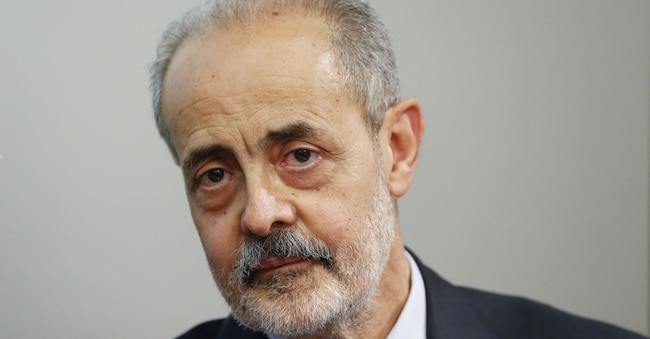
At a time when a great democracy and cultural power seems to have lost the polish it once had, the provocation comes welcome and is even appropriate: are they cutting funding at Harvard and threatening to ban foreign students? "Let Europe be the new Harvard, let it be able to attract talent and young people from all over the world", because this is the power of a culture. On the stage in Trento, the words of Antonio Calabrò, newly re-elected president of Museimpresa, arrive at a round table discussing Europe's cultural richness and how it can become a driving force, for the continent's role, its historical legacy and the central role Italy can play.
Time to regain the centrality that belongs to our country and to the Old Continent, which, on these issues, is able to compete (if we do not want to say excel) with everyone. Although care must be taken. "There is no 'department' of culture at the European level," warns Filippo La Rosa, Deputy Director General for Public and Cultural Diplomacy at Maeci, and this can certainly be a problem. As, he reiterates, 'we must be careful about the mechanism of cultural supply and demand. Italy plays an important game, but we must never forget the audience we address and the different cultural experience has at different latitudes'. This is what Marco Sammicheli, director of the Design Museum at the Milan Triennale and a kind of 'ambassador' of Made in Italy, experiences all the time. "Italy is recognised worldwide for its design, a true mark of our way of life, also because Italian design has always produced beautiful objects, yes, but 'civilised', in the sense of civilisation. It is no coincidence that the great masters of the best design, evoked and revered, are an effective testimony to the driving force of Italy. And they are even more so because there is an aptitude for 'training' that makes our products even more (more) current. Education (together with dialogue, which all speakers emphasised as inseparable from culture) is a word that resonated in the speech by Martina Mazzotta, curator and art historian, currently working at the Warburg Institute in London. "Our students and culture professionals are recognised around the world. We still have the strength of words like 'humanism' and 'renaissance' that are full of meaning and this is recognised abroad. If we then combine these qualities with a healthy business culture, which at various levels all the speakers mentioned, the cards that Italy and Europe have to play are even greater. Art, economy and culture together trace a path along which to produce the future.

