From 1 July

From item-by-item calculations to refunds: the EU’s guidance on the €3 tariff on small parcels

Furthermore, a few days ago, the Customs and Monopolies Agency published a circular setting out the requirements

by Lorenzo Pace
PACCHI USA EUROPA BANDIERA SPEDIZIONE COMMERCIO DAZI LOGGISTICA SCATOLE EUROPEA STATUNITENSE GENERATE AI IA IMAGOECONOMICA

3' min read

Translated by AI
Versione italiana

3' min read

Translated by AI
Versione italiana

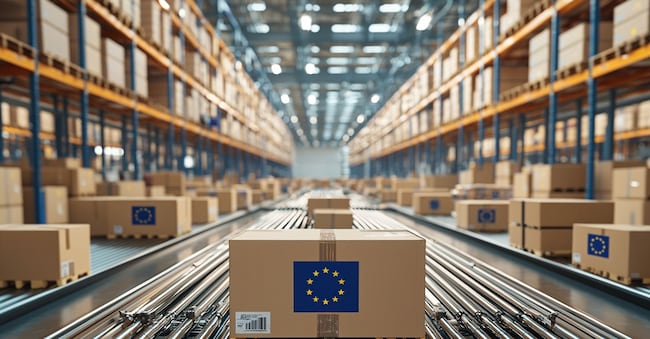
How are tariffs calculated, who pays them, and what happens in the event of a return? With just a few hours to go before the new €3 tariff on mini-parcels from outside the EU comes into force, the guidelines — in a question-and-answer format — published by the European Commission are proving useful.

These guidelines were also reiterated by the Customs and Monopolies Agency in Circular No. 17/2026 of 25 June, which translated those instructions into specific requirements for Italian operators. The picture that emerges clarifies certain points that had remained in the shadows during the public debate.

Loading...

The calculation mechanism

The first concerns the calculation method. Tariffs are not applied to the parcel but to the individual item, identified on the basis of its tariff classification. The Commission’s guidelines illustrate this with an example: a consignment containing five identical T-shirts is subject to a charge of 3 euros, as it consists of a single product category; a consignment containing one T-shirt and one watch is subject to a charge of 6 euros, as these are two distinct categories. The relevant distinction is therefore not the number of items but the variety of product categories contained in the consignment.

The Adm circular specifies that the levy is linked to the declaration lines: where several goods can be correctly traced back to a single item in accordance with the rules of the customs dataset, the tariffs are applied only once. From a technical perspective, the Q&A clarifies that operators must use one line for each group of goods with the same tariff classification in field H7, with the option to specify the quantity in the ‘description of goods’ field.

Who pays

The second point concerns the party liable for payment. The party responsible for payment is the declarant: the seller or importer of the goods, whether they are an IOSS holder, a beneficiary of special arrangements or their indirect representative. Only in cases defined by the Commission as ‘extremely rare’ does the payment fall to the end consumer, in Member States that offer a free online declaration system for private individuals.

However, classifying this charge as a tariff has a significant practical effect: for consignments outside the IOSS scheme, the tariff is included in the VAT taxable amount, leading to a knock-on increase in the final price. For those operating under the IOSS scheme, however, the €3 tariff is excluded from the VAT taxable amount on importation.

Guarantees

The third point concerns guarantees. A comprehensive guarantee is mandatory when it covers several transactions or customs declarations, and may be provided in various forms: a cash deposit, a bank guarantee or other forms permitted under national law. The reference amount may be estimated and adjusted dynamically between the customs authorities and the operator, with the option of interim payments to reduce the administrative burden.

There is, however, one restriction that applies to everyone: the reduction of the guarantee to 30 per cent of the reference amount — generally provided for in the Customs Code for certain categories of operators — does not apply to guarantees for low-value e-commerce transactions.

Refunds

The fourth point, which has been less widely discussed, concerns refunds. The Commission’s Q&A makes it clear that the amendment introduced to Article 148 of the Delegated Regulation does not remove the other grounds for invalidating customs declarations already provided for in the Code, nor does it affect the ordinary procedures for refunds or remissions.

However, the Adm circular goes further and stipulates that, once the goods have been released, it is no longer possible to invalidate the customs declaration in the event of a return or failure by the consignee to collect the goods. Tariffs already paid will not be refunded solely on the basis of the parcel being returned.

The only viable options are those generally provided for in Article 116 of the Union Customs Code: tariffs charged in excess or not legally due, or goods that are defective or do not comply with the terms of the contract. Returns due to the consumer changing their mind do not fall under either of these categories. In practice, for e-commerce platforms with high volumes of returns, the tariffs paid on returned parcels are definitive and non-recoverable costs.

Technical requirements

From 1 July, those operating under the IOSS scheme will also be required to populate the data element relating to deferred payment, which is necessary for the correct accounting of the tariffs. However, Product Identifiers — the codes linking each declared item to its actual identity — remain optional until 1 November, when they will become mandatory for all distance sales, regardless of value.

Copyright reserved ©
Loading...

Brand connect

Loading...

Newsletter

Notizie e approfondimenti sugli avvenimenti politici, economici e finanziari.

Iscriviti