
Minneapolis and beyond. What Ice is and why Americans are protesting
Between recent news, historical precedents and institutional conflicts, the federal immigration agency returns to the centre of the debate on security, civil rights and state powers in the US

Key points
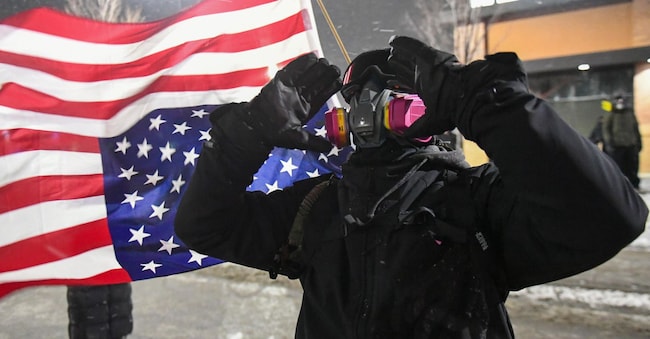
The death of Alex Pretti, the arrests of dozens of clerics, a series of lawsuits filed against the federal government for alleged constitutional violations. Ice is back in the news. The city of Minneapolis is currently the scene of heightened tensions after a federal agent killed Alex Pretti, a 37-year-old intensive care nurse, during a checkpoint operation related to a large deployment of federal immigration enforcement forces. The case reignited protests in multiple states, recalling other times when the action of Immigration and Customs Enforcement had already become a detonator of national mobilisations. As in 2018 with the policy of separating families at the border and, in 2020, during the deployment of federal agents in cities crossed by protests against police violence.
Once again, the street demonstrations were accompanied by the mobilisation of religious leaders and a flurry of lawsuits against the federal administration. Similar dynamics to those that occurred after the major raids on Mississippi workplaces in 2019, which had led to the arrest of hundreds of workers and raised widespread debate about the social impact of the agency's operations.
What is Ice
?Immigration and Customs Enforcement is a federallaw enforcement agency under the Department of Homeland Security (Dhs). Its main task is enforcing federal immigration laws within US territory, as well asinvestigating transnational crimes such as human trafficking, smuggling and fraud. Unlike the Border Patrol, which operates along the borders, ICE operates in cities, neighbourhoods, workplaces, and courthouses, directly affecting the daily life of local communities and the relationship between citizens, government, and federal authorities.
Birth
ICE was established in 2003, following the Homeland Security Act, the law reorganising the federal apparatus after the attacks of 11 September 2001. It was in that passage that the Department of Homeland Security was created and the old Immigration and Naturalization Service (INS) was dismantled, whose functions were divided between three new entities: the ICE, Customs and Border Protection (Cbp) and the U.S. Citizenship and Immigration Services (Uscis). The aim is to strengthen internal security by improving the coordination of controls, investigations and immigration enforcement.
The two souls of the agency
Since its creation, ICE has been structured into two major divisions. The Homeland Security Investigations (Hsi) is the investigative branch, responsible for complex investigations into organised crime, trafficking and federal offences. The Enforcement and Removal Operations (Ero), on the other hand, is the branch responsible for identifying, arresting, detaining and repatriating people without legal immigration status.


