Interview

Callery: 'Digital euro must be done quickly, launch in 2028 too late'

The CEO of GFT Italia, one of the groups chosen for the trial: 'No need for two years of trials while Trump accelerates on stablecoin and crypto'

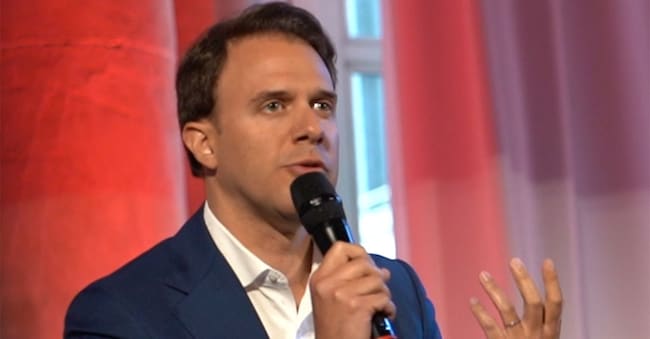
by Isabella Bufacchi

Fabrizio Callery, amministratore delegato di GFT Italia

5' min read

5' min read

'Do the digital euro and do it fast. The ECB's roadmap must be accelerated: the launch of the digital euro in 2028 will be too late. The digital euro must start much earlier, with less ambition in the initial launch but also without clipping its wings. The ECB e-money can start circulating in the first half of 2026, and then scale up in the second half. There is no need for two years of testing while Donald Trump accelerates on stablecoin and crypto'.

Pushing the digital euro accelerator is Fabrizio Callery, CEO of GFT Italia, one of the 70 pioneers chosen by the ECB, including banks, digital service providers, start-ups and fin tech, to test the digital euro's functionality and use cases and test the type of infrastructure and conditional payments.

Loading...

'The typical European approach is to analyse and regulate all the possible ramifications, and then move on to all the leaves: I say it clearly, for me this approach is wrong for the digital euro,' he says in this exclusive interview with IlSole24Ore. We should not regulate all applications from the outset, solve all potential problems a priori, and implement 100 per cent of the options and possible cases. In doing so, the digital euro will arrive too late compared to the US and China, which are moving ahead very quickly. We cannot wait: the Alpha and Z generations are already buying crypto assets and stablecoins in US dollars to make payments in Europe. They must be discouraged with a European alternative'.

How will it be speeded up?

The digital euro may initially debut in the 20 euro area Member States only. Later it will be extended to the EU. And then to the rest of the world. It does not need to be used from the start by 300 million European citizens in all the smallest POS, online and offline. Let us get there step by step.

What infrastructure for the digital euro does not need to be tested for at least two years?

UDPN, Universal Digital Payment Network is ready to launch the digital euro: it is the world's most advanced digital and interoperable payments network for digital currencies, stablecoins and asset-backed and regulated tokens. It is a blockchain-based network. GFT is one of the founding members of this accelerator, which is already operational in Singapore.

How can the launch of the digital euro be speeded up?

The digital euro could enter into circulation through an agreement between the ECB, the euro area banks and an initial select group of companies operating, for example, in large-scale distribution, telephone networks and tolling, sectors with a high volume of daily transactions, which are already highly digitised and widespread.

What will be the role of banks in the digital euro?

Commercial banks will be a central player. The digital euro account will be opened at banks. Banks should not fear it but on the contrary should see it as a business opportunity because through the digital euro they will be able to offer more services. Banks and other intermediaries are pondering how they can boost business with the digital euro: they are trying to understand what their role will be in a business model that is still to be written, that is all new and that will leverage the digital euro. Banks are reflecting on the digital euro as a potential business opportunity: for example, disintermediating international circuits.

Is there a top-down approach?

Social design will also be needed. The digital euro should ideally be used by citizens in the Eurozone, the target is 300 million users. But how is it possible to teach everyone, regardless of age and previous financial education, how to use the digital euro wallet? Better then to start with generations Z and Alpha.

GFT is part of the team of 70 'pioneers' on the digital euro chosen by the ECB: what was your contribution to this brainstorming session?

We participated in this innovative experiment led by the ECB: some 70 stakeholders, including pioneers and visionaries. I expect that the ECB will soon publish the results of this teamwork on how to realise the digital euro. We discussed the various options on the type of infrastructure: it is not clear whether the digital euro will use a public or private blockchain, centralised or decentralised, an interoperable platform. GFT proposed a Distributed ledger technology network, which is not centralised and has data distributed over several 'nodes'. GFT, which has been offering digital solutions in the banking and insurance sectors for forty years and operates in some twenty countries worldwide, has leveraged UDPN.

How to go about conditional payments?

We proposed to start with conditional and targeted payments for some specific use: for example, road tolls, or the use of public transport. The technology behind the digital euro, with its technicalities, should not scare us. The attitude of the ECB and European Commission is cautious, it is understandable. One certainly does not want to do in Europe the imposition that there was in China on the digital yuan, which has completely different purposes of control from ours. But over-regulation will slow the project down too much.

Beyond China and the US, who are the rivals of the digital euro at home?

Some companies will launch their own currencies, tokens for programmable payments. These tokens will not be legal tender like the digital euro and will not guarantee maximum accessibility, interoperability and resilience. They will only be used for one purpose, to build customer loyalty: by large retail chains, or by luxury brands. An example: the customer of company x will only be able to buy tokens-x to buy products of company x: these tokens will not have a value of 1 euro for 1 token but say for example, 0.80 euro for 1 token. By using these tokens, the loyal customer will have an indirect discount on the company's products for loyalty purposes. All this without reducing the list price.

The digital euro cannot be used for these programmable payments. It is anything but....

Yes, the digital euro will be something else entirely. It will be accessible to everyone to buy everything. The ECB wants to create a digital euro that works exactly like cash. But why copy cash, which is used less and less? The digital euro in my opinion should not be a photocopy of the banknote. Cash is often associated with underground forms of economy. I will gladly do without privacy if I can guarantee fiscal transparency with the digital euro. The motto of the digital euro should not only be 'let's protect privacy', but also 'let's fight the black economy'. And then there is the issue of sovereignty: the digital euro will protect our monetary sovereignty.

How?

Those who do not pay in cash use international circuits, which in Europe are mostly run by American operators. And now we find that our great transatlantic ally is suddenly isolationist. This means that it is no longer just a question of different US and EU rules: the question now is whether that American financial service provider operating in Europe will always be reliable, whether the costs for Europeans will remain the same, whether there is a risk that the services on which our economy is based will suddenly be shut down in Europe.

Copyright reserved ©
  • Isabella Bufacchi

    Isabella Bufacchivicecaporedattore corrispondente dalla Germania

    Luogo: Francoforte, Germania

    Lingue parlate: inglese, francese, tedesco, spagnolo

    Argomenti: mercato dei capitali, ECB watcher, fixed income e debito, strumenti derivati, Germania

    Premi: Premio Ischia Internazionale di Giornalismo per l’analisi economica, Premio Q8 per giovani giornalisti economici

Loading...

Brand connect

Loading...

Newsletter

Notizie e approfondimenti sugli avvenimenti politici, economici e finanziari.

Iscriviti