
Campania Region: the Regional Council rejects automatic extensions for street traders
An end to the ‘postponement’ until 2032 and no changes to price advertising. The provisions of the regional law, which encroach on the state’s remit, are unlawful

Key points
The regulations of the Campania region extending the deadline until 2032 certain market concessions, introduced benefits for traders already allocated stalls and amended the rules on price advertising and Sunday opening hours. In Judgment 192, the Constitutional Court partially upheld the State’s appeal against Regional Law 20/2025, which had amended the Consolidated Law on Trade. The provisions on authorisations for large retail outlets remain in force.
No to the extension
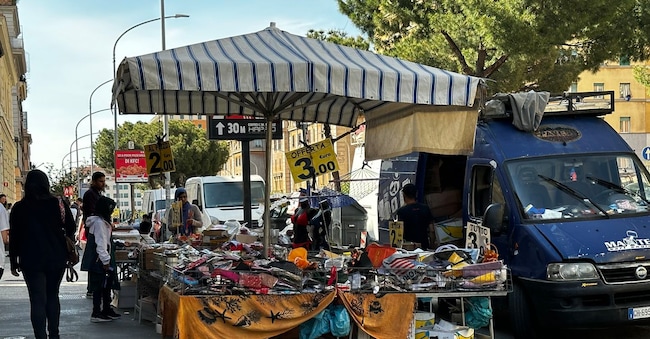
The Constitutional Court has rejected the extension, until 31 December 2032, of street trading licences for on public land, which had expired at the end of 2020, for which a renewal application had been submitted. The regional provision mirrors the national legislation, which provided for the automatic renewal until 31 December 2032 of concessions that had expired on 31 December 2020 (Article 181, paragraph 4-bis, of Decree-Law 34/2020 and Article 11, paragraphs 4 and 5, of Law 214/2023). This has thus violated the prohibition on novation of the source, constituting an encroachment on the exclusive competence of the State.
Allocation of parking spaces
The provisions that had amended the procedures for the allocation of parking spaces were subsequently repealed. The Court struck down the so-called ‘improvement tenders’, intended to traders holding a stall within the same market. Consequently, the procedure by which local authorities allow traders, who already hold a market stall concession within the market, to change their location and choose another space that has become vacant.
Advertisement: regulations scrapped
No, too, to the 25 per cent bonus on the score for those who had not submitted a renewal application. The regulations that amended the rules on the advertising of product prices should be repealed, as they allowed prices to be indicated, for reasons of public order, in a catalogue available to customers, whilst exempting ‘perishable, spoilable or soon-to-expire products’ from the obligation to indicate, during end-of-season sales, the lowest price charged over the previous thirty days.
Opening hours and days
Finally, it is on a collision course with the principle of liberalisation of opening hours and days for retail outlets, the provision that permitted Sunday markets, special markets and those dedicated to antiques and collectables, whilst denying the same possibility to second-hand goods. This is despite the fact that national regulations do not impose any limits or requirements on commercial activities regarding opening hours or days of opening and closing. By excluding, without justification, Sunday markets for second-hand goods, the provision implements differential treatment compared with operators in other sectors.

