
Campania’s economy grew by 0.9%, outperforming the Italian average
The Bank of Italia’s report on the region’s economy in 2025 has been presented: exports are picking up, and employment is growing, particularly in the case of permanent contracts
by Vera Viola
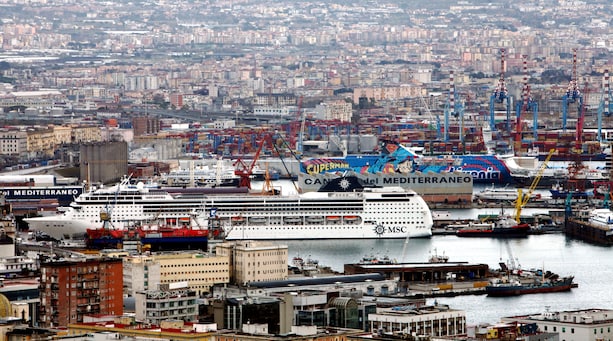
In 2025, economic activity in Campania continued to expand, albeit at a modest pace. The quarterly regional economic indicator (ITER) compiled by the Bank of Italy showed GDP growth of 0.9%, in line with the previous year but higher than the Italian average and that of the South. The services sector improved, as did industry, albeit slightly; construction also continued to grow.
In fact, according to the Bank of Italia, which presented its report on the region’s economy, the difficult period for industrial firms that had characterised last year has come to an end: the balance between the proportion of firms with rising turnover and those with falling turnover has returned to positive territory. Among the sectors, the agri-food sector recorded widespread improvements in sales, whilst in the automotive sector, production at plants in Campania fell further, due to a decline in both domestic and foreign demand. The proportion of service sector firms reporting an increase in turnover has grown; it now exceeds by more than a quarter that of firms which recorded a decline. The tourism sector benefited from an increase in foreign visitors, which boosted airport traffic; port activity expanded in terms of both passenger numbers and volumes of goods in transit, with the exception of rolling stock. In construction, the boost provided by projects under the National Recovery and Resilience Plan (PNRR) and by local authorities’ spending on public works in Campania continued to underpin activity in the sector.
According to the Bank of Italia, investment grew over the past year. However, this was not the case for all businesses: the proportion of firms in industry and services where investment rose was roughly equal to that where it fell. Forecasts for the current year suggest that capital expenditure will remain virtually unchanged compared with 2025.
Exports from Campania, which had fallen in 2024, began to grow again in 2025, driven by the pharmaceutical sector but also supported by the aircraft and metallurgy sectors. Foreign sales in the automotive sector fell significantly, particularly in the United States, where they had already declined substantially in 2024, whilst agri-food exports stabilised.
The moderate expansion of economic activity has had a positive impact on the labour market. In 2025, employment in Campania grew further, outpacing both the rest of Southern Italy and the national average. The increase affected all sectors, and to a greater extent the services and industrial sectors. The number of employees grew, predominantly on permanent contracts, whilst the number of self-employed workers fell, bucking the national trend. The number of hours worked and the proportion of full-time workers also increased, although the incidence of involuntary part-time work remains high. The employment rate improved further, as did the labour force participation rate; however, both indicators remain at levels significantly below the national average. The unemployment rate fell by just under two percentage points. However, there was an increase in the use of social safety nets, particularly the extraordinary redundancy fund, concentrated mainly in the transport and retail sectors.


