
Campiello 2026 between Einaudi stories and successes

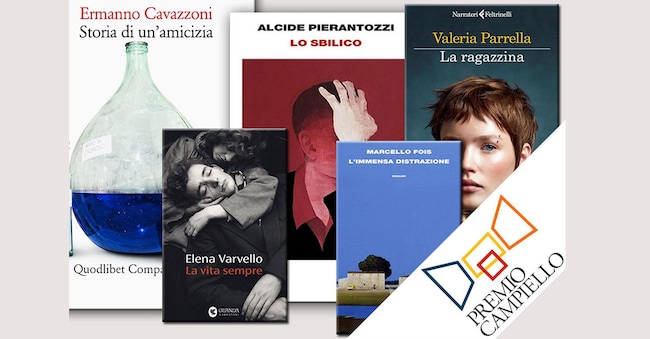
An undoubtedly excellent result for the Einaudi publishing house, which on Friday 29 May, in the Aula Magna of the University of Padua, at the selection ceremony for the five shortlist for the 64th edition of the Campiello Prize, won two of the five winning places, in addition to winning the Campiello Opera prima prize with Acqua sporca by Nadeesha Uyangoda, an Italian-language writer born in Sri Lanka.
Under the Einaudi brand are L'immensa distrazione by Marcello Fois and Lo sbilico by Alcide Pierantozzi. They are joined by Storia di un'amicizia by Ermanno Cavazzoni (Quodlibet), La ragazzina by Valeria Parrella (Feltrinelli) and La vita sempre by Elena Varvello (Guanda).
These choices are the result of the reading of more than five hundred titles that the jury chaired by Venetian film producer Roberto Cicutto handed over to the three hundred anonymous and popular readers who will decide the winner of the Campiello prize on Saturday 3 October at the Palazzo del Cinema on the Venice Lido.
The literary jury's indications were predominantly in the direction of works that document, narrate and discuss history, present and past. As many as four out of five novels do so, with the exception of Sbilico by Alcide Pierantozzi, which with expressive mastery narrates the bewilderment and physical and psychic turmoil of a forty-year-old man returning from Milan to San Benedetto del Tronto. It is in fact the story of a diffuse present, which the author claims to have 'written in direct contact, almost like a logbook of illness, and tells a truth that is very often altered by drugs and my emotional decompensations'. A dramatic face-to-face with ghosts, obsessions, fears and the need to be reborn.
The book by Ermanno Cavazzoni, a writer who has already earned a solid place in contemporary Italian literature after his surprising debut in 1987 with Il poema dei lunatici (The Poem of the Lunatics), which Federico Fellini translated into the visionary cinematographic images of Voce della luna (1990, with Roberto Benigni and Paolo Villaggio), focuses on the 'story of a friendship'. In Storia di un'amicizia Cavazzoni recounts forty years of familiarity with the writer Gianni Celati, which not even Celati's death (on 3 January 2022) has interrupted, but transformed. It is a tale of affection, knowledge and sharing, a literary and historical biography and autobiography, a chivalrous fable, of those so deeply loved by both authors, connoisseurs of Ariosto and Boiardo, of medieval novellas and the comic plays of last century's silent films. It is both a personal and a collective story, a significant moment of literary invention in our country, of comic and "surreal comic" (Nunzia Palmieri), in the line at once picaresque and tragic of Swift and Melville, Palazzeschi and Malerba.


