
Campolo to receive 21.5 million euros to make its cultural heritage a driving force for development in the Apennines
“Da Campolo l’Arte fa Scola” is the urban regeneration project for the historic village in the municipality of Grizzana Morandi, which in 2023 was awarded funding under the National Recovery and Resilience Plan (PNRR) for the Enhancement of Village Attractiveness

(Il Sole 24 Ore Radiocor) - A village in the Bolognese Apennines at risk of depopulation is being revitalised thanks to an investment of almost 21.5 million euros to transform tradition into new opportunities for living, working and business in the area. This is the story of Campolo’s revival, a village in the municipality of Grizzana Morandi at the heart of one of the most significant territorial regeneration projects carried out in the Emilia-Romagna Apennines. Specifically, the project “Da Campolo l’Arte fa Scola” – implemented directly by the local council and supported by the Emilia-Romagna Region in collaboration with the Ministry of Culture – was awarded, in 2023, the €20 million in funding provided for under the National Recovery and Resilience Plan (PNRR) as part of the ‘Attractiveness of Villages’ measure, funded by the European Union, NextGenerationEU and the Ministry of Culture, emerging as the winner of the regional selection process.
These resources were supplemented by 1 million from the Fund for Urgent Works and 420,000 euros from the GSE Conto Termico scheme (with more than 250,000 euros in grants earmarked for local initiatives). Over the last four years, the initiative has involved the entire local community, with its most significant projects including the establishment of the Scuola della Pietra and the Palens cooperative, the restoration of the Giorgio Morandi House Museum, and the progress made on the restoration of the Rocchetta Mattei. Long a focal point of an extensive restoration programme overseen by the Carisbo Foundation, the former residence of Count Mattei is now one of the most visited sites in the region, as well as a symbol of the rebirth of this stretch of the Emilia-Romagna Apennines.
The regeneration of public spaces
To date, 32 major projects have been completed. Alongside the restoration of historic heritage and public spaces, new permanent initiatives have been established, such as the Casa delle Arti and the Scuola della Pietra e del Costruito Storico dell’Appennino, with the aim of combining heritage conservation, innovation and local development. Furthermore, approximately 13 hectares of land have been acquired for the public domain, in addition to 23 unoccupied or derelict properties which have been restored and will be used for rent-controlled accommodation, temporary housing and community-based accommodation. In Campolo, a series of new venues and initiatives have also been established to support economic activities and local services. The village also features a multi-purpose space comprising a hostel, a community workshop, a shop and a café, whilst the former ‘Anna’ restaurant – a symbolic landmark in the area’s collective memory – has been restored to house a catering business that showcases the region’s traditional specialities and local produce.
“It is not just a matter of restoring historic or derelict buildings, but of giving our Apennines a future again,” explained Gessica Allegni, Councillor for Culture, Parks and Forestry, Biodiversity Protection and Enhancement, and Equal Opportunities for the Emilia-Romagna Region - “Fully in line with the objectives of the National Villages Plan, the approach we have taken has focused first and foremost on rebuilding the community, creating new opportunities for living and working so that people, skills and businesses can choose to live and invest in these places once again.” ‘This is the result of a participatory process,’ she continued, ‘which has involved associations, institutions, local residents and key local partners in a collaborative effort capable of fostering relationships and services that focus on the younger generations, with an emphasis on quality of life.’
Rocchetta Mattei
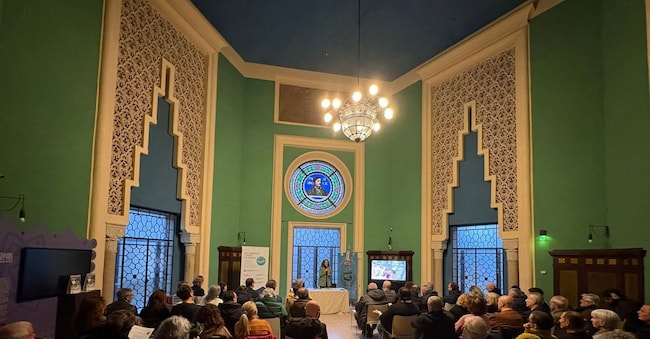
The restoration of the Rocchetta Mattei – owned by the Carisbo Foundation and managed under an agreement with the Municipality of Grizzana Morandi – was one of the flagship projects of the wider “Da Campolo l’Arte fa Scola” initiative. The historic garden, the Arab-Moorish wing and numerous monumental rooms have been restored. The works included the restoration of the historic rooms on the ground floor, the Corridor, the Loggia delle Uri and the Scala Araldica, as well as the structural consolidation and restoration of rooms of extraordinary value such as the Loggia Carolina, the Turkish Salon, the Turkish Chamber, the Pope’s Room and the Hall of Mirrors, and the safety measures implemented in the rooms of the Count Cesare Mattei wing. The refurbishment of this monumental complex is also linked to the revitalisation of the network connecting Campolo, La Scola, the Palagio and the Giorgio Morandi House Museum, creating a cultural ecosystem that brings together heritage, creativity, education, tourism and services.


