Trade war

Canada responds ‘dollar for dollar’ to Trump’s tariffs

Mark Carney’s government takes on the US: tariffs worth 20 billion on imports of 700 American products

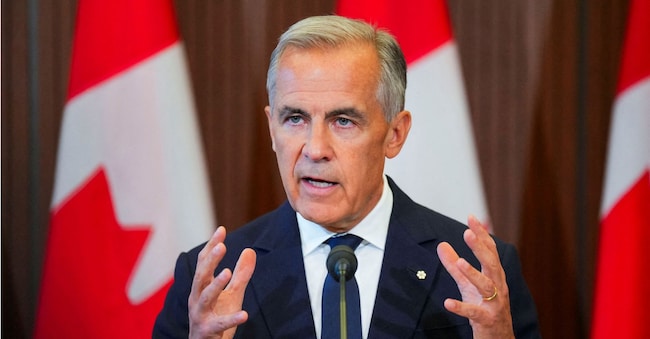
Il primo ministro del Canada Mark Carney REUTERS

3' min read

Translated by AI
Versione italiana

3' min read

Translated by AI
Versione italiana

Mark Carney had promised: ‘We will respond to the threats and tariffs from Donald Trump, blow for blow, dollar for dollar,” said the Canadian Prime Minister, calling on the whole of Canada to make sacrifices to bear the consequences of a “trade war” against the United States.

And the response – following a couple of days of meetings within the Ottawa government and further attacks from Trump – has come: in the form of resistance to the overwhelming power of the US, which until now few countries – perhaps only China, with the strength of its strategic raw materials – have had the courage to organise.

Loading...

Canada will impose tariffs ranging from 15 per cent to 50 per cent on 700 products imported from the United States, with a total value of around 20 billion dollars: Canadian Finance Minister François-Philippe Champagne announced this, adding that to help the sectors hardest hit by this trade war, the government in Ottawa has already allocated 5.4 billion US dollars to support businesses’ liquidity and boost unemployment benefits.

The measures decided by the Carney government will come into force on 8 September to counter the 50 per cent tariffs imposed by the United States – following the breakdown of trade negotiations – on $20 billion worth of Canadian goods. To this, Trump has added the threat of doubling tariffs on Canadian-made cars and steel to 50 per cent from next year.

“This is an unprecedented challenge facing Canada. But Canada will rise to the occasion,” Champagne emphasised. “I think what Canadians can see at the moment is that we are united. We are united in our response,” he added.

The new tariffs have been designed to be a ‘like-for-like’ response to the United States and – as the Carney government has made clear – to minimise the impact on Canadian consumers and businesses, whilst still affecting the United States. The 50 per cent tariffs will apply to certain key sectors such as steel, aluminium, furniture and clothing. Those at 25 per cent will apply to cheese, household appliances and certain fish products. Meanwhile, the 15 per cent tariffs will apply to electronics and tools. Overall, the tariffs will cover around 7.3 per cent of Canada’s imports from the United States.

Analysts, however, warn of the risk of a further escalation involving mutual retaliation. Ontario Premier Doug Ford has criticised Trump’s threat regarding cars, telling him to ‘go to hell’ and in turn threatening to impose a surcharge on electricity exports. Earlier in the dispute, Ontario had temporarily imposed a 25 per cent surcharge on electricity exported to three US states.

Trump reacted harshly towards Ford, threatening ‘much worse’ consequences. The US President also referred to Carney as ‘a governor’, thereby reviving his provocative proposal to turn Canada into the 51st state of the United States.

To further emphasise this hostility, Trump stated on Tuesday that he was considering renaming Lake Ontario ‘Lake America’, in a ridiculous move very similar to the one that saw the Gulf of Mexico become the ‘Gulf of America’ last year.

Trump’s latest tariffs do not exempt products covered by the USMCA free trade agreement between the United States, Mexico and Canada. According to estimates by Oxford Economics, they raise the average effective US tariff rate on imports from Canada from 5.1 per cent to 6.9 per cent. The main contributors to this increase are tariffs on plastics, electrical machinery, and wood and paper products.

Loading...

The United States and Canada, historic allies with closely integrated economies, recorded trade worth nearly 900 billion dollars in 2025. “But something has changed. ‘Trump’s United States,’ Carney had explained, rejecting the proposals put forward by the American negotiators, ‘is no longer a reliable ally: they demand everything and are unwilling to give anything in return. We must find other ways forward and build our own autonomy.’

Copyright reserved ©
Loading...

Brand connect

Loading...

Newsletter

Notizie e approfondimenti sugli avvenimenti politici, economici e finanziari.

Iscriviti