
Canned tuna, production on the upswing but tension over costs. Sustainability Manifesto arrives
Last year, turnover grew by 2% to 1.68 billion after a difficult period Ancit president Valsecchi: 'A breath of fresh air, but now we are concerned about the continuing uncertainty'

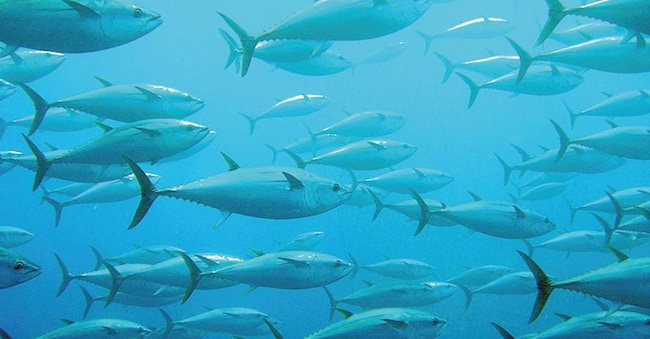
The classic can of tuna remains a must-have and essential product in the pantries of Italians, who over the past year have returned to prefer quality and more sustainability-conscious products, on which the industry is relaunching a European Manifesto. Indeed, in 2025, the fish canning industry's production and domestic consumption started to grow again, after a couple of years of difficulties.
Critical issues due to the rising costs of raw materials (initially those of steel, cans and glass driven up by the high energy prices caused by the war in Ukraine, then those of oil) and consequently of consumer prices, have at the same time taken away margins from companies and purchasing power from households.
According to Ancit (National Association of Fish Preserves) in 2025 the sector - which includes tuna, mackerel, anchovies, sardines, salmon and employs about 1,500 people - has recorded a value of more than two billion (+2.15% on 2024).
Tuna remains the leader, with 1.68 billion (+2%): national production stood at 72,494 tonnes (+0.7% on the previous year), with a volume of the total product available for the Italia market of 140 thousand tonnes (+0.4%). This equates to approximately 2.37 kg of annual consumption per capita, a slight increase compared to 2024. In the same time frame, exports reached 37,031 tonnes (+11.3%) after the double-digit growth already recorded in 2024. The market for other canned fish in 2025 can be estimated at around EUR 360 million.
"After years of significant increases, costs have come down, although they have not returned to the pre-crisis level, so 2025 has brought a breath of fresh air,' comments the president of Ancit, Giovanni Battista Valsecchi. What worries us most now is the uncertainty: for too long now people have been saying that this umpteenth international crisis will be resolved shortly and meanwhile months pass, freight rates increase and some suppliers are starting to say that they will have to change their price lists. In spite of this, however, the recovery in consumption and the good results of premium products are positive factors, with canned or jarred tuna being less and less considered a commodity and more and more a food to be valued and appreciated. After all, in order to defend itself against foreign competition and continue to assert itself in international markets, the Italian industry can only focus on quality and sustainability.
"Sustainability must not be seen as an extra cost but as an investment," says Valsecchi, "it must enter into the governance of companies and their development path. It is also for these reasons that Ancit was the promoter of the Sustainability Manifesto for the European Fishing Industry, published by Seafood Europe. Innovation, respect for the environment and workers, safety, communication and responsibility, and healthy eating are the pillars of the Manifesto, which is intended to have a twofold value: to be a tool for discussion with political-institutional interlocutors and a useful guide for operators in the sector.


