
Canticle of Creatures, Assisi Custos Moroni: St Francis sang and played to praise God
The work, written by the Saint in 1225, is a prayer and praise to God for creation, life and redemption
3' min read
Key points
3' min read
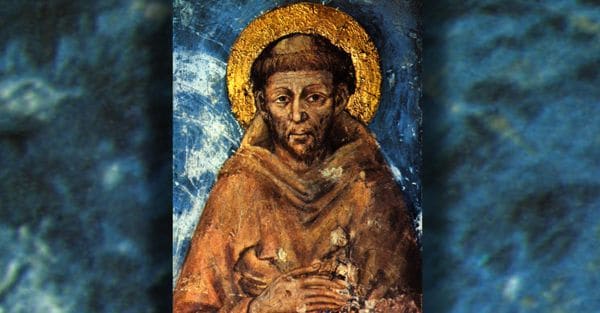
In schools, the study of the Canticle of Creatures will be deepened. The work, also known as "The Canticle of Brother Sun and Sister Moon", written by St Francis of Assisi in 1225, is a prayer and praise to God for creation, life and redemption. It is considered the oldest poetic text in Italian literature of which the author is known, although doubts remain as to whether it is really the oldest. The Culture, Science and Education Commission of the Chamber of Deputies unanimously approved a resolution, which commits Italian schools to promote in-depth studies on the Canticle of the Creatures by Saint Francis of Assisi, transmitting its universal values to the new generations. Italian schools, therefore, on the occasion of the 800th anniversary of the creation of the Canticle of the Creatures, are invited "to reflect, to think, to make known and to comment on this extraordinary work that has a worldwide scope". The resolution, on which the government has given a favourable opinion, presented by the vice-chairwoman of the Chamber of Deputies Culture Committee Giorgia Latini (Lega), was recalled by the Minister of Education and Merit Giuseppe Valditara, during the presentation in Assisi of the project "Uto Ughi for young people".
Fra Moroni (Basilica of Assisi custodian): the Canticle is not just a prayer, it is a poem
"St Francis also sang and played. The biographers tell us this. They tell us that when he was in the woods praising God, he would take two sticks of wood he found on the ground and play like a violin. He would hold one like a violin, the other like a bow and play. He imagined he was playing while singing, of course. This year marks the eighth centenary of the Canticle of the Creatures, which is indeed a canticle, not just a prayer. It is first of all a prayer, but it is also a poem," Brother Marco Moroni, Custos of the Sacred Convent of St Francis of Assisi, explained to Sole 24 Ore. "Francis had taught his friars to sing. Unfortunately we no longer have the music. We do not know how it was set to music, but it was certainly there. So Francis, who was a jester, had and felt in his heart, the desire to express the praise of the Lord through music and song".
Loading...
Valditara: the Canticle is back in schools
"In the year of the Eighth Centenary since its composition, the Canticle returns to the schools. It is a cornerstone of our literature and carries an extraordinarily timely message. St Francis teaches us to look at the world with gratitude and respect, recognising in nature a precious gift to take care of,' Valditara stressed. 'A concrete step,' he said, 'towards an education that rediscovers the roots of our history and forms aware citizens'. And he recalled that, together with Maestro Uto Ughi, he wants to 'restore centrality to musical culture in our schools, because music stimulates sensitivity, gets people used to listening, and educates respect'.
Frassinetti, a contemporary work that looks to nature
"The Canticle of the Creatures is a very timely work that looks at nature, the environment and all living beings, including animals," recalled Undersecretary for Education and Merit Paola Frassinetti. "I am certain that our young people will be passionate about deepening their understanding of this work, which will affect their sensitivities. "This act commits Italian schools to promoting in-depth studies on the Canticle of the Creatures, a fundamental work by St. Francis of Assisi, so that universal values can be passed on to the new generations. This is all the more significant because it is the eighth centenary since its composition. The Canticle of the Creatures is a very timely work that looks at nature, the environment, and all living beings, including animals,' states the Undersecretary for Education and Merit, Hon. Paola Frassinetti.
Latini, a tribute to the vernacular poetic text
"An important act to give the poetic text in the vernacular, the oldest known author, the right prominence and role not only as the origin of Italian literary production, but also to convey and update the high moral content it carries with it, starting from Francis' profound compassion for human nature, as well as the celebration of a creation to which the saint refers with the titles of 'brother' and 'sister'," commented the first signatory of the resolution Giorgia Latini (Lega). "With this resolution, in view of the celebrations for the eighth centenary of the death of St Francis of Assisi, we will be able to actively involve our children in a work and in the legacy that has been handed down since 1200".
Copyright reserved ©


Brand connect
Loading...
