
Chaos in the skies, flight from the Gulf through Oman and Arabia
Tourists look for any means to leave and reach Muscat or Riyadh by taxi and bus. Private jet flights boom at stellar prices

Key points
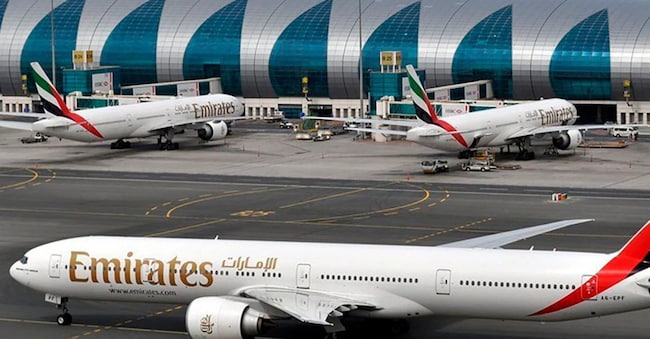
The chaos in the skies does not subside with airspace over the Gulf still closed except for repatriation flights. A few airlines are trying to give signs of a return to normality as in the case of Emitates, the Dubai-based company, and Ethiad of Abu Dhabi: both are operating a limited number of flights through safe air corridors, 87 from Dubai when normally a thousand a day depart, including destinations in Sydney, Paris, Amsterdam, Toronto and Mumbai and 15 from Abu Dhabi.
Since the start of the conflict 25 thousand flights have been cancelled
No flights are scheduled from Bahrain and Doha in Qatar. The Gulf airline itself, Qatar Airways, said it would operate limited rescue flights for stranded passengers from Muscat in Oman to six European destinations, including London, Berlin and Rome, as well as from Riyadh to Frankfurt. Flights cancelled since the start of the conflict on 28 February have risen to 25,000, according to aviation analysis agency Cirium, and it is unclear when the situation will unblock.
Airspace in the Caucasus is also at risk
Making flight management even more difficult is the news of the attack on Azerbaijan's Nakhchivan International Airport by an Iranian drone near a school. For international aviation this could be particularly worrying. With airspace closed over much of the Middle East and Russia for many airlines, Azerbaijan has become a key air corridor connecting Europe and Asia.
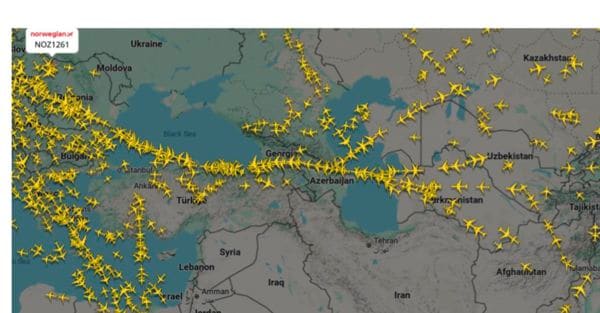
The Caucasus corridor is now the only safe passage between Russia/Ukraine and Iran/Gulf. This is not the first time that Azerbaijan has seen war spread from neighbouring conflicts. At the end of 2024, Russian air defence shot down an Azerbaijan Airlines plane on its way to Chechnya. Vladimir Putin formally apologised to Azerbaijan in 2025.
Air spaces opened in Oman and Saudi Arabia
Leaving the Gulf at the moment is not easy and repatriation flights are not for everyone. Some rely on private jets, as in the case of the Swiss operator LunaJet, which received 800 requests for evacuation from individuals and governments in a few hours, managing to organise only two flights from Muscat, Oman to Istanbul and Athens, each with 200 passengers, at a cost of more than two thousand dollars per ticket.


