
Capital of Culture, ten cities in the running between funds and sponsors
Hearings of the finalists for the 2028 title this week. Mix of public and private resources: the challenge is to launch long-term development

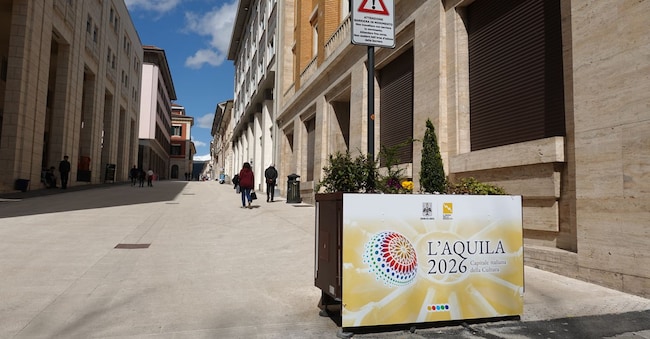
They are the ten finalist cities in the running for the title of Italian Capital of Culture 2028. The public hearings, where the candidates will be called upon to present their project and answer questions from the commission, are scheduled for the end of this week, Thursday 26 and Friday 27 February. The winner will be known at the end of March.
Up for grabsone million euro from the Ministry of Culture. A loot that is more symbolic than substantial, in addition to the more substantial resources raised by the cities. For example, in the economic and financial sustainability plan of the project of Pordenone, winner of the 2027 edition, other local authorities of the territory appear, with the Friuli Venezia Giulia Region at the forefront thanks to an endowment of 1.5 million, alongside national and European funds, private sponsors and partnerships.
Application preparation
In general, the process of preparing for candidacy requires the study of a city governance plan that looks to the long term, with the consultation of public administration and the social fabric. Fundamental, in order to convince the jury, "the robustness of the dossier, the ability to interpret the needs of the territory and the feasibility," explains Salvatore Adduce who, after having led Matera to the nomination as European Capital of Culture 2019, has served on the jury for several editions of the Italia title. "Cities must articulate a general vision of the territory - from urban regeneration, to mobility and accessibility - using culture to improve the quality of life and attract visitors. This is not a secondary issue, especially if we are talking about small towns like Procida, because in the plan we have to prepare adequate infrastructures to accommodate the increased flow of tourists". The competing municipalities are therefore called upon to think no longer in terms of ordinary administration, but in terms of inter-territorial cooperation.
Catania and Ancona
In the case of Catania, among the ten finalist candidates for the 2028 title, regardless of the outcome, the work done to prepare the dossier will leave a legacy a Participatory Plan for Culture 2038, "the starting point for a shared planning with a ten-year perspective," explains Paolo Giuseppe Di Caro, the city's culture director. "The idea of our candidacy was that it could stand on its own feet. In the dossier, there are also activities taken care of directly by the sponsors who, instead of providing money, become in effect the protagonists of the candidature. However, there is no shortage of infrastructural interventions already in the pipeline or nearly so. The declared funds amount to 45.7 million and see the use of 3.3 million from the Ministry of Culture for the 'Strategic Plan Major Cultural Projects', 6.6 million from the Fund for Development and Cohesion 2021-27, as well as 15 million from the National Plan Metro Plus and Medium-Sized Cities of the South 2021-27, 10.5 million from the European Fund for Regional Development and 9.5 million from the 'Infrastructures and Networks' Action and Cohesion Programme.
Another city in the running for the title is Ancona, which for the candidature has put up some 7 million euro between municipal resources, structural investment funds and current funds, as well as contributions from other institutional and territorial entities (including the Marche Region, Anci Marche, the Chamber of Commerce, Confindustria, banking foundations and other companies in which the municipality has a stake). "We have made an analysis of the dossiers of cities that have won in the past and of the best practices," says Anghela Alò, creative director of the candidacy. "Our dossier is based on a multi-actor governance, of a city that wants to take its role as the hub of the Marche region and dialogue with the Balkans. For us, the best legacy is to enhance and valorise what we have received from the past, in a process of urban and cultural regeneration'.

