
The exhibition ‘Naples: from the Bourbons to the Belle Époque’ has opened at Capodimonte
An initiative by the Fondazione Mezzogiorno and the Capodimonte Museum, selected by the Neapolis 2500 Committee and co-funded by the Ministry of Foreign Affairs

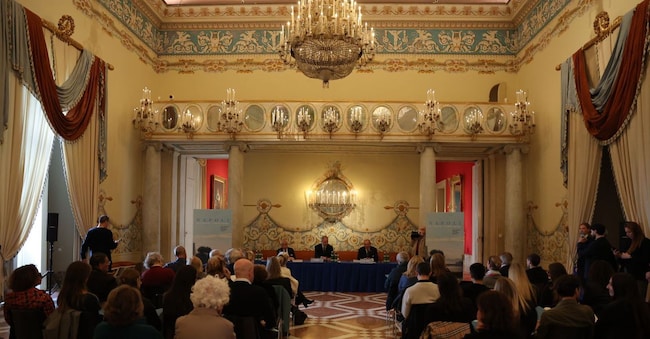
The close relationship between cultural and artistic development and economic, industrial and social development is a constant feature in the history of Naples, a city which, over the centuries, has played the role of a cultural and political capital. A role that we would now like to revive. This is precisely the message conveyed by the exhibition ‘Naples between the Bourbons and the Belle Époque: Art and Enterprise, the Birth of a Modern Capital’, which opened yesterday at the Capodimonte Museum and Royal Park.
There are 147 works – including paintings and sculptures – by seventy-seven artists, which chronicle the extraordinary period of Neapolitan art from the Age of Enlightenment to the eve of the Great War. In the Sala Causa of the Museum (until 28 February 2027), the exhibition offers a historical and thematic journey spanning over a century of artistic and social transformation, linking the flourishing of the arts with the rise of an entrepreneurial, financial, commercial and manufacturing middle class. The works highlight the contribution of those who, alongside the artists, supported artistic endeavour, fuelled the market and promoted the city’s international profile. Among the key figures in this cosmopolitan collecting scene – characterised by an increasingly influential entrepreneurial and financial middle class – are the Rothschilds, the Aselmeyers, the Meuricoffres and Giovanni Vonwiller: figures through whom the history of these collections is intertwined with that of Neapolitan economy and society.
The initiative was organised by the Fondazione Mezzogiorno and the Capodimonte Museum and Royal Park, and forms part of the programme of the Neapolis 2500 National Committee, promoted by the Ministry of Foreign Affairs and International Cooperation. The Committee’s aim is to promote Naples’ cultural heritage and strengthen its international profile through initiatives focused on culture, business and diplomacy. The event’s main partner is Intesa Sanpaolo.
“This exhibition,” explains Eike Schmidt, director of the Capodimonte Museum and Royal Park, “highlights Naples’ central role in 19th-century international culture. The city enjoyed three golden centuries, establishing itself above all as a centre of cultural and philosophical life. Today, Naples can reclaim that legacy.” This statement ties in well with the observations of Antonio D’Amato, president of the Fondazione Mezzogiorno and a patron of the arts. ‘This is an important initiative,’ says D’Amato, ‘as it reveals the close relationship between the world of culture and the industrial middle class. Today, however, Naples is no longer realising its potential. This exhibition is intended as a spur to a ruling class that is failing to restore to the city the role as a capital that it deserves.’
The aim of the Neapolis 2500 programme is to showcase the city’s grandeur. “The Committee has co-funded the initiative,” explains the Prefect of Naples, Michele Di Bari, who is also the Committee’s chairman. “We intend to leave a legacy for future generations that reflects the importance and vast resources of this city.”


