
Caporalato: 13 brands in fashion investigations, carabinieri from D&G, Prada, Gucci and Versace
Fashion houses appear in files on clandestine Chinese factories as principals who outsource production to those who do not apply labour and safety laws

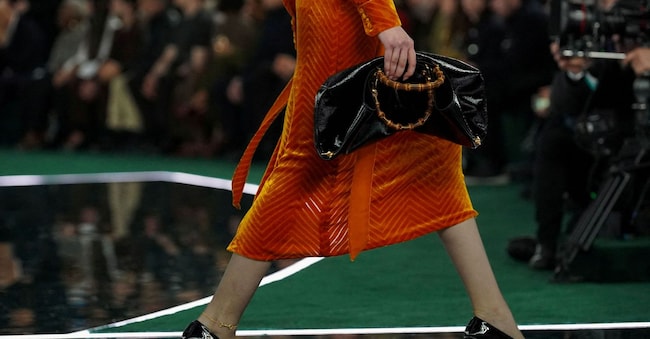
From Versace to Gucci, from Prada to Dolce & Gabbana, the number of luxury fashion brands involved in various capacities in the Milan Public Prosecutor's investigations into forced labour along the Made in Italy supply chain has risen to 13. From dawn until the evening of Wednesday, the public prosecutor Paolo Storari, with the Carabinieri of the Labour Inspectorate Unit, served orders to hand over documents to Dolce & Gabbana, Prada, Versace, Gucci, Missoni, Ferragamo, Yves Saint Laurent, Givenchy, Pinko, Coccinelle, Adidas, Alexander McQueen Italia and Off-White Operating. Fashion houses appear in the dossiers on clandestine Chinese factories as principals who entrust production to contractors and subcontractors operating in violation of labour and safety laws.
In each act, the Public Prosecutor's Office indicates the critical suppliers already identified in the supply chain of the individual brand, the number of workers found in exploitative conditions and in a state of need, and the branded articles seized in the factories, stored and ready to return to the parent company to be placed on the market. The same brands are asked, for now on a voluntary basis, to deliver their own organisational prevention models and internal or commissioned audits to advisors and consultants, tools that on paper should prevent crimes from being committed. It is a 'light' formula that gives companies time to remove corporations from production lines and restructure the chain of contracts and subcontracts, avoiding the heavy measures of judicial administration for the time being.
This softer approach comes after the controversy of recent weeks with Tod's and Diego Della Valle in the crosshairs of an investigation in which Tod's spa is under investigation on charges of having acted with full knowledge of themselves and their managers certifying the production lines of contractors. In front of the judge for preliminary investigations Domenico Santoro, for the request for an interdiction order, Tod's and Della Valle said they were willing to cooperate with the judicial authorities for the 'dignity' of all workers. But the line of the Public Prosecutor's Office could stiffen with requests for receivership and interdiction orders if the brands do not change the current structure of contracts and a work organisation deemed illegal.
The decision to use the instrument of prevention measures is not a new one: since March 2024, the Court of Milan has ordered the judicial administration for Alviero Martini spa, Armani Operation, Manufacture Dior, Valentino Bags Lab and Lvmh's Loro Piana, companies that are not under investigation but are believed to have culpably and unwittingly facilitated exploitation. The picture then worsened with the Tod's case, where the prosecution assumes instead a full awareness of the procurement system. That the cases uncovered were not isolated cases had been clear since the first commissioning of Alviero Martini, in an investigation that started from a Chinese supplier in Trezzano sul Naviglio (Milan), Crocolux, wherein 2023 a 26-year-old Bangladeshi died on his first (presumed) day of work, while the employers were trying to regularise him with the Inps after the fatal accident.
According to Alviero Martini's product director in 2024, Crocolux was 'also a contractor for numerous global luxury brands'. In the last three inspections conducted in November 2025 by the carabinieri in three Tuscan factories also serving the production of Tod's, where up to seven levels of subcontracting were found, bags of the brands Madbag, Zegna, Saint Laurent, Cuoieria Fiorentina and Prada were seized. The heart of the system remains the extreme compression of costs and rights: the documents show how precious goods are produced for a few tens of euro and resold at retail for several thousand, with mark-ups of up to 10,000%.

