
Caputi (Federturismo): ‘The boating sector needs modern regulations, not money’
“We need to cut through the red tape and have regulations that help businesses compete.” Zanetti: “Cruise tourism contributes 7.3 billion to GDP”

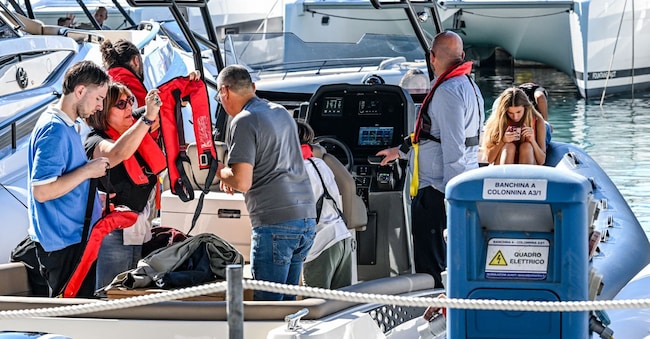
The Italian boating industry, and the tourism linked to the sector, “need modern regulations, not money”. This was emphasised by Massimo Caputi, president of Federturismo, at the 12th National Conference on Coastal and Maritime Tourism, held yesterday at the Genoa Boat Show. The event was also attended by the Minister for Tourism, Gianmarco Mazzi, the head of Confindustria Nautica, Piero Formenti, and Confindustria’s special adviser on the maritime economy, Mario Zanetti.
“Against the backdrop of an extremely severe geopolitical crisis,” explained Caputi, “we are not asking for money, but simply – and with the utmost urgency – for modern regulations, at no cost, that can cut through the layers of laws and decrees which make it extremely difficult for businesses in the tourism and boating sectors to operate. I am calling on politicians to help us overcome the bureaucracy that is killing us: we need rules that help businesses survive and compete. Today, taking action to modernise and redevelop a marina is more complicated than building a new one, whilst constructing a slipway to facilitate small craft is extremely difficult. For this reason, we strongly hope that Minister Matteo Salvini, when issuing the Infrastructure Decree, will take on board the legitimate demands long put forward by Confindustria Nautica and Assomarinas (the association representing marinas), not least to bring more and more boats under the Italian flag.”
In his speech, Zanetti stated that tourism “is an industry, because it generates and shares value far beyond the tourism sector itself, driving various ‘Made in Italy’ supply chains. Tourism’s contribution to GDP doubles when indirect effects are taken into account; and coastal tourism is an essential part of the sector and the maritime economy. The latter generates almost 225 billion euros in total added value, equivalent to 11.4 per cent of GDP, with over 1.13 million people directly employed. Cruises represent the most obvious intertwining of the sea, tourism and industry. In 2026, Italian ports will handle 15.4 million cruise passengers, with 5,680 port calls across 60 ports: an all-time record.”
The overall economic impact, Zanetti continued, “is 18.1 billion euros, the highest in Europe, whilst the contribution to GDP is 7.3 billion, supporting 113,000 jobs. Direct expenditure is broken down into 3.4 billion in investment in shipyards, 2.9 billion in purchases by cruise lines, 1.7 billion spent by passengers and crew at destinations, and 400 million in wages. However, the value extends beyond this and reaches the local areas: 64 per cent of cruise passengers stay overnight in the ports of call, seven out of ten take part in excursions, and 60 per cent return to the destinations they discovered whilst on board. The port is the gateway, but the value increases when, beyond that gateway, there are transport links, services, businesses and a well-organised range of high-quality offerings. This is how the competitiveness of the entire sector grows.”
At the end of the meeting, Minister Mazzi stated that he had received, ‘during the discussion, clear proposals and requests – some of which were self-evident – and it is my top priority to get to work straight away to understand the reasons behind the regulatory delays of recent years and to speed up the process of simplification, as well as the decrees and regulations required. I shall work closely with this business community, comprising leading manufacturers and industrialists, in the run-up to a season in which the Italian seas will take centre stage on the world stage, thanks in part to major international sailing events, such as those linked to the America’s Cup, which will involve Naples, Genoa and other Italian cities’.


