Hospitality industry

Caputi: ‘Turning Italia’s appeal into widespread prosperity’

End-of-term agreement with the Government, together with a simplification decree

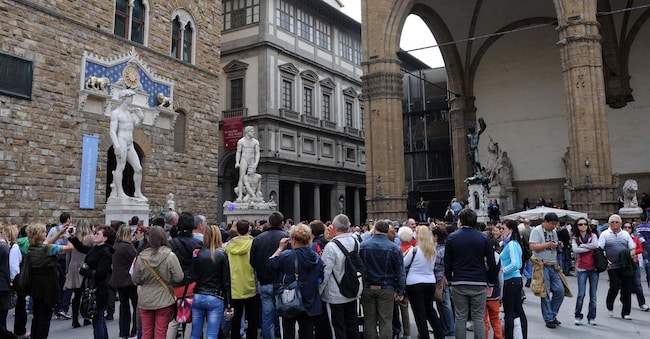
Piazza della Signoria a Firenze presa d'assalto dai turisti a pochi giorni dalla Pasqua, 5 Aprile 2012. ANSA /CARLO FERRARO ANSA

4' min read

Translated by AI
Versione italiana

4' min read

Translated by AI
Versione italiana

To engage all key players in the Italian tourism industry in order to lay the foundations for a coordinated and integrated policy to develop the sector and bring prosperity to the country as a whole. This is the aim of Massimo Caputi, president of Federturismo Confindustria – a federation comprising 23 trade associations, six corporate members and numerous regional associations – which is drawing up a coordinated long-term strategy.

The key is to deseasonalise the sector in order to spread visitor arrivals across all 365 days of the year and throughout the entire peninsula. The programme also includes the use of artificial intelligence to tackle the issue of employment, as tourism is a labour-intensive industry. In fact, the aim is to move beyond the ‘summer-beach, winter-mountain’ equation and encourage a wide variety of holiday options throughout the year across the whole of Italia.

Loading...

On the eve of World Tourism Day, established by UNWTO, and following the postponement of the celebrations scheduled for tomorrow at the Colosseum – which were suspended as a mark of mourning following the tragic workplace accident that claimed the life of young Andrea Moretti – President Caputi presents the strategic vision to be implemented to transform the country’s appeal into wealth spread across all regions. This represents a substantial shift from what has been done and seen from the post-war period to the present day.

“The challenge facing Italian tourism as we look towards 2030 is to transform the country’s appeal into widespread prosperity across the regions, through sustainable investment and skilled, stable employment,” explains Massimo Caputi. “We need an industrial policy capable of bringing together and enhancing the entire sector, to support businesses in developing ‘new forms of tourism’ ranging from culture to wellbeing, as well as sport, nature, conferences, gastronomy, major events, mountain tourism, wellness and much more.”

A plan aimed at maximising the sector’s potential following a successful summer of 2026 which, according to figures from the Ministry of Tourism, saw a 2 per cent increase between June and August compared with the same period in 2025, thanks to more than 72.4 million arrivals and over 276 million overnight stays. “These are positive figures, but we must not rest on our laurels under any circumstances, because other European countries are just as strong,” the president points out. “We must act swiftly, in collaboration with the Government and the Ministry of Tourism, to reposition the tourism industry.”

For travellers, the way they organise their holidays and their travel experiences is changing. Today, people are looking for sustainability, quality, safety and experiences, as well as effective and efficient transport. Major online platforms have accelerated the way in which people choose their destination and accommodation, whilst artificial intelligence will soon bring about another revolution in the way holidays are chosen and planned. Target markets are also evolving, with the rise of the middle classes in the Far East and emerging economies seeking travel and experiences. ‘Our aim is to generate more value for everyone, because this is what distinguishes a country that is merely a tourist destination from one that has a major tourism industry, as Spain does today,’ Caputi insists. ‘This is the cultural leap we must make. We must make it now: tourism must be regarded as an industry to be managed 365 days a year.” Hence the vision for 2030, which envisages seasonality being overcome, offering the possibility and opportunity to holiday in Italia all year round, alongside digital and more sustainable tourism that generates widespread added value across regions and throughout supply chains – such as, for example, the agri-food sector, creating skilled job opportunities, as well as attracting investment and enabling those on lower incomes to enjoy a holiday too.

According to the president of Federturismo Confindustria, achieving these objectives will require an end-of-legislature pact for tourism to be drawn up with Minister Mazzi, accompanied by a simplification decree modelled on the most advanced European examples. “It will be at no cost to the state and will have a positive impact on the competitiveness of businesses, which are currently held back by overlapping and archaic regulations,” Caputi points out. It is necessary to introduce a regulatory framework that encourages mergers and acquisitions between businesses and to consider “the new supply-chain contract that the Ministry of Tourism is launching, aimed at developing the entire supply chain, which is the true driving force behind tourism”.

Looking to the long term, the president aims to launch, together with the ministry and all stakeholders in the sector, a structural strategy that recognises tourism as a major national industry, on a par with other strategic sectors, whilst also introducing innovative financial instruments and fostering industrial collaboration with entities such as the CDP Group. The aim is to ensure that the whole country benefits from the growth of the tourism industry. Particular attention must also be paid to tourism’s most valuable asset: human capital – the workers. Since the post-Covid period, businesses have been complaining about a shortage of qualified staff, which is a major weakness for the sector. “We need greater job security, attractive career paths, effective training and practical solutions for living and working in tourist destinations,” concludes Caputi.

Copyright reserved ©
Loading...

Brand connect

Loading...

Newsletter

Notizie e approfondimenti sugli avvenimenti politici, economici e finanziari.

Iscriviti