Objects of desire

Car & device: when four-wheelers become emotional architectures

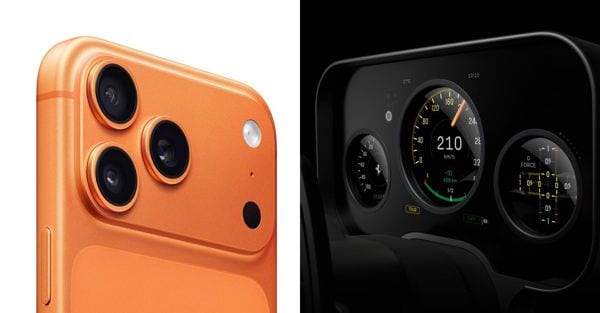
The tactile perfection of a premium smartphone, reinterpreted with the sensory depth of a car. The game of luxury in interior design is played on the balance between digital obsolescence and the fascination of analogue durability.

by Giulia Paganoni and Mario Cianflone

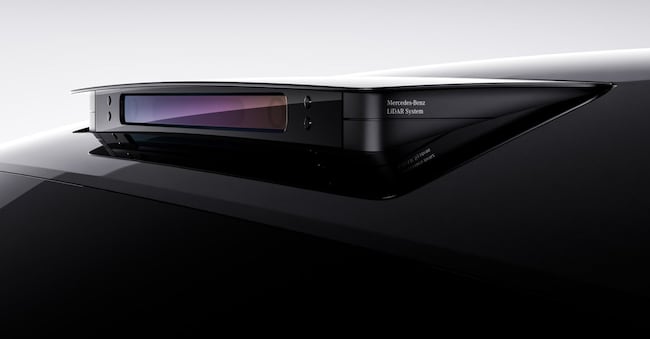
Sistema LIDAR (Laser Imaging, Detection, and Ranging) per la guida autonoma di una MERCEDES Vision Iconic. Mercedes-Benz AG

4' min read

Translated by AI
Versione italiana

4' min read

Translated by AI
Versione italiana

The car is a smartphone on wheels. How many times have we heard this statement? It is actually not true, at least not entirely. However, in the contemporary automotive world, the boundary between design, interior layout and technology has now dissolved into a sophisticated osmosis. No longer simple ergonomic seats or functional dashboards, today's cockpits are digital microcosms, immersive environments where aesthetics, interaction and matter merge with a naturalness that is more reminiscent of a technological flagship than a means of transport. And it is no coincidence that models such as the BMW iX3 or the Volvo ES90 interpret this transition with aristocratic ease, transforming the on-board experience into pure style.
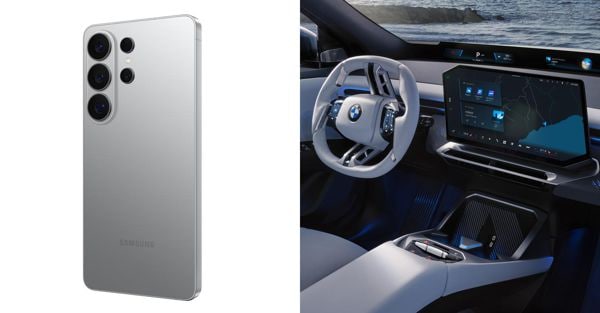
Smartphone e automobili esibiscono un legame profondo che spazia dalla tecnologia allo studio delle forme. Sopra un SAMSUNG Galaxy S26 Ultra e la plancia della nuova BMW iX3 che introduce inediti linguaggi tech.

Take, for example, the Ferrari Luce: the Cavallino's new creation, developed with the sensitivity of a former Apple designer, Jony Ive, ignited an elitist debate already in its embryonic stages. The end result, apart from the overt lack of adherence to the brand's DNA, has one merit, which must be acknowledged: having created a user interface that limits touch controls and re-proposes Apple stylistic cues (perhaps in an excessive déjà vu) and above all having introduced truly premium materials such as aluminium turned from solid. All this seems to mean no more supercars with utilitarian buttons and levers because in luxury, touch and detail are everything.
Loading...

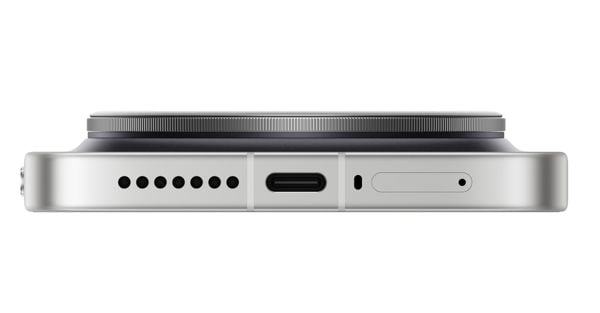
Leizphone, lo smartphone LEICA sviluppato con XIAOMI, che consente di controllare selezione dell’obiettivo, lunghezza focale, messa a fuoco e bokeh.

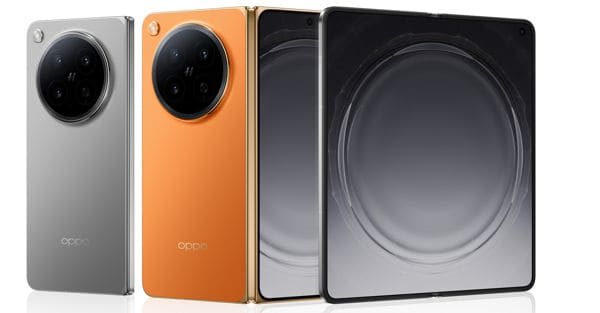
Not only technologies, but also design solutions and choice of materials define the true positioning. For example, last year Samsung and Apple were competing on titanium, while today they are relaunching on aluminium and colours as confirmed by the new S26 Ultra. If you love mechanics and technical finesse, the magical hinges of the folding Oppo Find N6 or the craftsmanship of the Leizphone, Leica's smartphone signed Xiaomi, a brand that, not surprisingly, plays in the two worlds of tech: devices and electric cars.
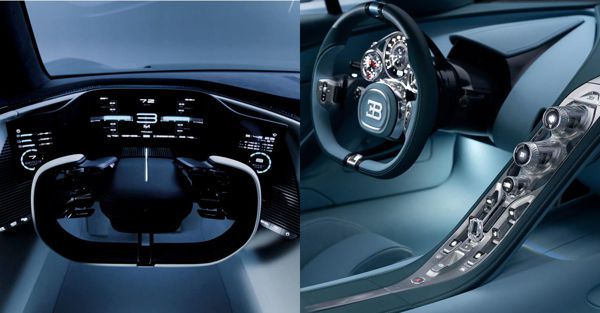
Da sinistra, volante della concept car LEXSUS LFA che non richiede riposizionamento delle mani e con disposizione dei comandi per un utilizzo intuitivo; l’interno della Turbillon, in cui la componente digitale è ridotta al minimo. L’intera interfaccia uomo-macchina e l’esperienza di guida sono deliberatamente analogiche, BUGATTI (da 3,8 milioni di €).

It is not a matter of trivially integrating screens and touch surfaces, but of orchestrating a cockpit capable of speaking the language of technology without giving in to its obsolescence, which is too ephemeral for a car. Here, every curve, every reflection, every light line is conceived as part of a coherent composition, where ergonomics must be interwoven with an aesthetic destined to survive time and, above all, fashion.

The language of displays, now an inseparable stylistic feature, finds expression as much in the digital architecture of the Mercedes CLA as in the more radical visions of the Mercedes Vision. Wide surfaces, fluid interfaces, extreme customisation: everything contributes to an immediate, almost intuitive experience. Yet beneath this apparent perfection lies a more subtle, almost uncomfortable question for the luxury segment: can a display age as gracefully as a solid wood dashboard or a steering wheel covered in hand-tanned leather?
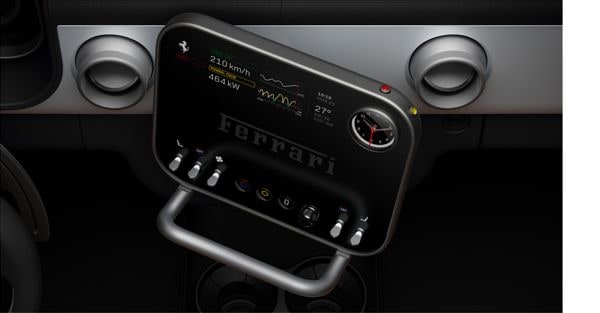
Sistema di infotainment e cluster della FERRARI Luce, prima supercar elettrica di Maranello, al cui sviluppo stilistisco ha contribuito Jony Ive, ex designer di Apple. La vettura debutterà a Roma a fine maggio, il prezzo non è ancora noto. Spicca l’interfaccia utente basata su comandi fisici, non touch come ci si aspetterebbe.

Gli elementi della plancia sono in alluminio tornito dal pieno, secondo una tecnica ampiamente utilizzata da APPLE anche negli ultimi modelli come iPhone 17 Pro Max (da 1.489 €) realizzato con telaio unibody in alluminio.

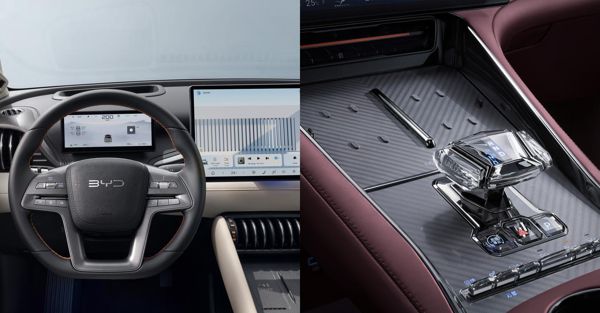
It is precisely in this interstice that the most complex game is played. Emerging and traditional brands, from surprising maturity such as Byd Atto 3 evo and especially refined objects such as Denza 9 to the technological ambition of the Xiaomi SU7, are redefining the very concept of the premium cabin. No longer a simple technological display, but a search for an almost philosophical balance between function and permanence, between innovation and memory.

Smartphone pieghevole Find N6, OPPO (da 1.248 €)

The luxury side of this transformation is, inevitably, the most demanding. Designing an interior today means building an emotional architecture, an environment capable of resisting programmed obsolescence and preserving the pleasure of ownership and personalisation. Leather worked with sartorial precision, satin-finished metals, carbon fibre inserts: each material becomes a statement of intent. In this sense, Ferrari Amalfi represents an ideal, almost ideological continuity, while Mazda 6e surprises with a formal cleanliness that verges on the most cultured minimalism.

The choice of materials, moreover, looks more and more explicitly to high-end consumer electronics. Glazed surfaces, anodised aluminium, soft-touch textures: elements that evoke the tactile perfection of a luxury device, but reinterpreted with a sensory depth that only the automobile can offer. It is a slower, more conscious seduction.

A manifesto of this philosophy is undoubtedly the Bugatti Turbillon. Here, technology does not dominate: it dialogues. The deliberately durable analogue element sits alongside digital solutions with disarming naturalness. It is the same fascination that distinguishes a fine watch from a smartwatch: one evolves, the other remains. The Turbillon does not reject progress, it tames it and makes it worth enduring.

Plancia della Atto 3 Evo con un touchscreen da 15,6 pollici, BYD (37.600 €); cambio trasmissione della Z9GT, DENZA (da 70.000 €)

The world of concept cars is also moving in this direction, with styling exercises such as the Lexus LFA Concept or the sophisticated Denza Z9GT, which explore new ergonomic and sensory languages. Here, the man-machine interface becomes almost invisible, leaving room for natural, fluid, rather instinctive interaction.

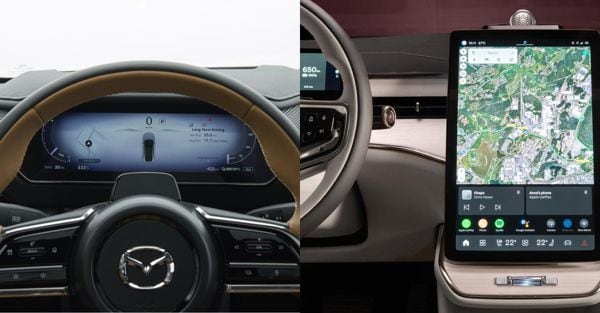
Da sinistra, volante in pelle in due tonalità della MAZDA 6e (da 43.850 €); schermo centrale touchscreen da 14,5 pollici dell’ES90 Electric, VOLVO (da 73.500 €).

This contamination between technology and the automobile is obviously not limited to displays: it is a holistic approach. From knobs to integrated audio systems, from ambient lighting to the haptic response of controls, everything is designed to convey consistency, control and a certain idea of silent perfection. Luxury, today, is no longer ostentation: it is precision.

One might go so far as to say that automotive interior design has moved beyond the aesthetic dimension into the cultural one. It is a fragile and refined balance between innovation and permanence, between tech seduction and intrinsic value. To embody this paradigm, a simple interior is not enough, but we need an object that strikes both the instinctive immediacy of desire and the long memory of icons.

Copyright reserved ©
Loading...
Loading...

Newsletter

Notizie e approfondimenti sugli avvenimenti politici, economici e finanziari.

Iscriviti