
Dream cars on show at Villa d'Este: when past meets future
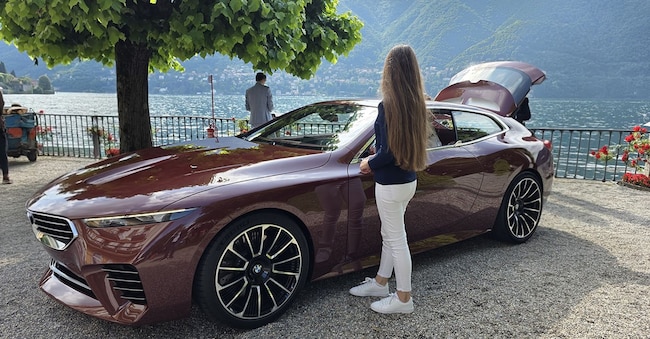
The 2025 edition of the Concorso d'Eleganza on Lake Como saw a parade of extraordinary and historically rich cars.BMW, on the stage organised by the Classic division, unveiled the 500,000 euro Speedtop, the M2 Cs and the Concept RR superbike

3' min read
3' min read
CERNOBBIO (COMO)
A journey through the past, present and future of BMW and automotive history. The Concorso d'Eleganza of Villa d'Este in Cernobbio has once again proved to be an unmissable moment for the world of heritage with extraordinary cars on display during the two days between 23 and 25 May on Lake Como between Villa d'Este and Villa Erba, in the parade where rare glories of the past competed for the Coppa d'Oro and Best of the Show titles. But that is not all, the Larian kermesse, organised for over twenty years by the BMW group's Classic division, has in fact, between emulation attempts and collateral initiatives, created with the parallel FuoriConcorso a sort of Woodstock dedicated to car enthusiasts, whether new, young timer or decidedly vintage. A demonstration of the cultural, historical and social role of the car, which, contrary to the storytelling that wants it to become a mobility device or a sort of smartphone on wheels, is anything but: design, emotion, dream and refined engineering.
The Cup title for the first time ever went to a BMW: it was won by the legendary 507 roadster, and an example owned by the American collector Dirk de Groen was awarded the prize.
Designed by Albrecht Graf von Goertz, the 507's elegant and balanced bodywork, coupled with a 3.2-litre V8 engine, made it an overnight icon. Unfortunately, the car's astronomical production costs proved too much for BMW and the beautiful spider was produced in only 254 units between 1956 and 1960.
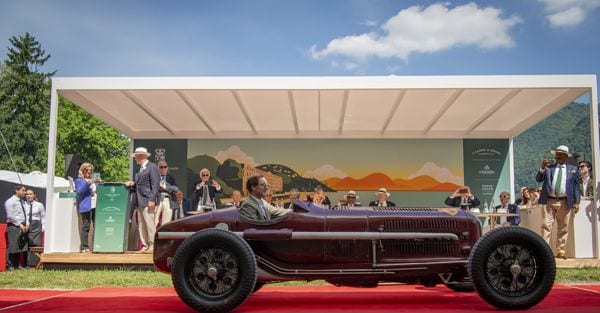
The Best of The Show award, the most prestigious of the awards given by the jury at the Concorso d'Eleganza Villa d'Este, went to the 1933 Alfa Romeo P3 (or Tipo B). This speedster redefined the Grand Prix concept at the time. Designed by designer Vittorio Jano, the car was the first true single-seater racing car. In fact, it was initially conceived as a direct evolution of another legendary Alfa Romeo, the 8C 2300 Monza. The Tipo B (P3) was at the centre of a historic switch from the Biscione brand that had produced it to the Scuderia Ferrari Corse.


