
Cars: EU market grows in July and August; fully electric vehicles account for over 21 per cent of the market
Among car manufacturers, Volkswagen’s sales are falling whilst Stellantis’s are rising; China’s Geely has reached eighth place by volume, behind Mercedes

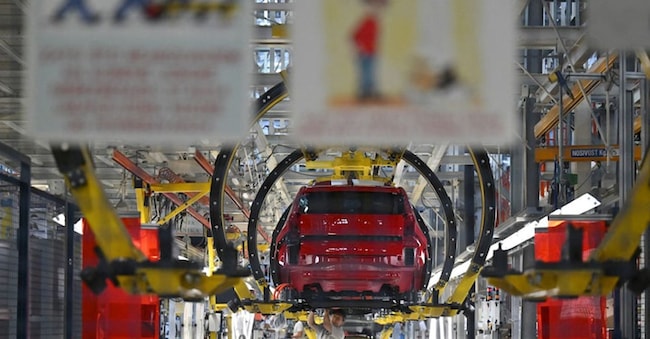
The car market in Europe continues to grow even during the summer months, July and August, as highlighted by ACEA, the European association representing car manufacturers, despite the worsening international crises and rising fuel prices. Last month in the EU (plus EFTA and the UK), new car registrations rose by 5.3 per cent, following a further increase of 3.9 per cent in July, contributing to the positive trend recorded by the European market since the start of the year (+5.8 per cent).
The recovery in sales volumes is therefore continuing, thanks in part to the performance of electric car sales, which rose by over 50 per cent during the month and by 38.8 per cent since the start of the year, whilst hybrid models are showing positive, albeit more modest, growth, in contrast to petrol and diesel cars, which continue to lose ground.
Among car manufacturers, Volkswagen saw its sales volumes fall by 3.5 per cent over the month, whilst Stellantis saw its registrations rise by 3.6 per cent, with a positive year-to-date growth of 4.4 per cent. Renault, Hyundai and BMW are seeing a slowdown. Among Chinese manufacturers, Geely is climbing the rankings and, with 289,000 registrations since the start of the year, has moved into eighth place in the rankings, behind Mercedes.
Among the newcomers, however, the fastest-growing are Chery, which has tripled its market share in the space of a year, and BYD, which has more than doubled its market share. Leapmotor has also seen exponential growth; it is the latest of the Chinese manufacturers to have entered the European market, operating under the Stellantis brand, but still with a limited market share.
Fully electric vehicles have therefore consolidated their market share at 21 per cent, compared with 15 per cent a year ago, taking into account the significant differences between markets, with Germany recording a share of around 25 per cent and Italia – which saw the highest sales volumes driven by last October’s incentives – standing at around 6 per cent.


