
Carbon capture and storage: Aalborg Portland signs agreement with the Danish Energy Agency
Cementir Holding's subsidiary will receive a EUR 146 million subsidy per year for 15 years for its project in Denmark
Key points
Aalborg Portland, a subsidiary of Cementir Holding, scores an important milestone in Denmark. The company has in fact signed an agreement with the Danish Energy Agency to receive a CO₂ capture subsidy of around EUR 117 per tonne of CO₂ captured, up to 1.25 million tonnes of CO₂ per year from 2030, when the CO2 capture plant is expected to be operational.
Subsidy for fifteen years
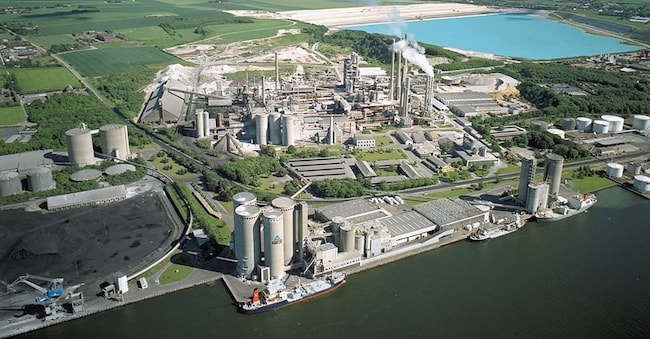
The subsidy amounts to EUR 146 million per year for 15 years, for a maximum cumulative total of about EUR 2.2 billion, and concerns Accsion, one of the first and largest onshore carbon capture projects in Europe, the completion of which will depend on the timely and coordinated deployment of capture, transport and storage infrastructure. The agreement therefore represents a milestone in the industrial decarbonisation of one of the main hard-to-abate sectors and will also enable the development of a new Danish value chain for onshore CO₂ capture, transport and storage.
Caltagirone: decisive step
With the Accsion project, the Cementir Group pursues its climate strategy, contributing to the achievement of carbon neutrality for direct Scope 1 emissions in European cement plants. "With this agreement, we can take a decisive step towards the completion of one of the largest industrial CO₂ capture projects in Europe, which will allow Cementir to take the lead in decarbonisation and demonstrate how hard-to-abate sectors can be transformed on a large scale," commented Francesco Caltagirone, Chairman and CEO of Cementir Holding.
The project's contribution to the Danish plans
As soon as it becomes fully operational, the project is expected to contribute almost half of the Danish Fund's overall target of capturing 2.3 million tonnes of CO₂ per year, making a significant contribution to Denmark's climate targets while strengthening the country's long-term industrial competitiveness in the green transition.


