
Fuel prices, Meloni: ‘We are considering variable excise duties. There is interest from the EU in flexibility.’
The Prime Minister: “In September, there will be an extra VAT revenue of 160 million, but we are considering whether it would be more effective to keep it as a reserve.” Price caps: “I hope they can be reinstated.” Is she confident about the electoral law? “Always.”
from our correspondent in Split Manuela Perrone
 Aggiungi Il Sole 24 Ore
ai preferiti su Google
Key points
The flexibility Italy is seeking regarding the spending rule in light of rising inflation? “I have spoken with von der Leyen and with our other EU partners in the Mediterranean; there is a willingness to listen.” A further cut in excise duties? “We are always ready to intervene using the flexible excise duty mechanism. In September, the additional VAT revenue amounted to around 160 million, but we are considering whether it would be more effective to spend it now or to keep it in reserve for when the other containment measures currently in place come to an end.”
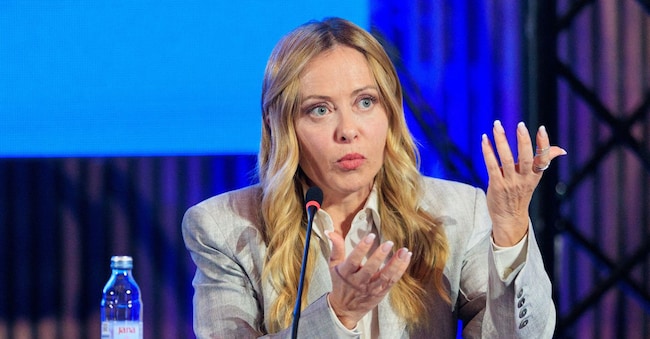
Giorgia Meloni speaks at the conclusion of the Med9 summit in Split, which saw the nine Mediterranean member states of the European Union discuss the major European challenges – energy costs, climate change and international crises. The outgoing Spanish Prime Minister Pedro Sánchez was absent, whilst French President Emmanuel Macron was present, among others; he left before the press conference, partly due to the protests that are currently rocking the country.
Meloni steps up pressure on Von der Leyen
As previously reported, the Prime Minister sought the support of the other eight Member States on the issue of energy prices and the need for a thorough overhaul of the ETS system. But it was in her face-to-face meeting with the President of the European Commission, Ursula von der Leyen, that Meloni stepped up the pressure following the letter sent last Friday calling for a relaxation of the expenditure rule to take account of the effects of inflation on national budgets.
“We’re not asking for unrestricted spending”
“We are not alone” in calling for flexibility in relation to inflation, the Prime Minister emphasised, citing Greece. “The issue concerns the impact that higher inflation is having on national budgets compared with the inflation rate forecast three years ago, when the national plans were agreed. We are incurring higher costs due to automatic adjustments affecting pensions, the universal child allowance, and also the raw materials used, for example, in the implementation of the National Recovery and Resilience Plan (PNRR). These are billions more that we will be required to spend without having decided to do so.” “We are not asking for unrestricted spending, but for an objective assessment,” Meloni clarified, addressing the ‘frugal’ member states who are already putting the brakes on. She acknowledged that “the debate will be a long one” and will involve the Council, the Commission and individual member states.
The willingness to introduce mobile excise duties
When asked about high fuel prices in Italia, the Prime Minister confirmed her willingness to reintroduce the system of variable excise duties. However, she made it clear that a further cut in excise duties is still on hold. And, in fact, she appealed to Eni when she expressed the hope that the price cap could be fully restored to 2.19 euros per litre – a ceiling that had risen following the suspension of the 6.1-cent excise duty cut.


