
Cardinal Pizzaballa: 7 October marks a turning point; the future must be rebuilt. The Holy Land is in a very grave situation
The cardinal spoke on the sidelines of the ceremony at which he was awarded an honorary doctorate in human rights at the Sant’Anna School in Pisa

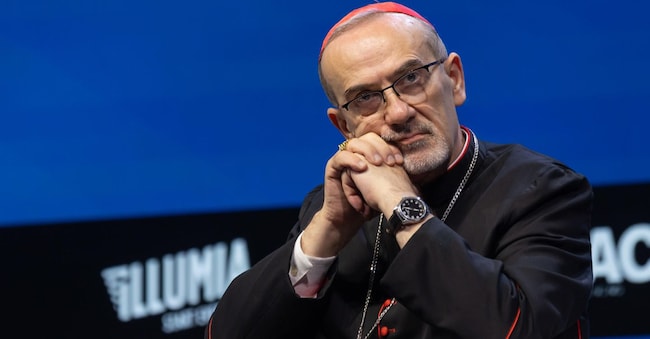
“7 October was, and still is, a deeply tragic event. What happened in the south of Israel three years ago certainly marked a watershed in the life of Israel, but also for the nation as a whole and amongst the Palestinians. The future certainly needs to be rebuilt from scratch at this point, not only in terms of infrastructure, but also in terms of relationships and humanity, which need to be re-examined in the light of everything that has happened.”
This was stated by Cardinal Pierbattista Pizzaballa on the sidelines of the ceremony at which he was awarded an honorary doctorate in human rights by the Sant’Anna School of Advanced Studies in Pisa. “The situation,” he observed, “remains difficult. We have not yet emerged from it: we are in a phase of neither peace nor war, in this limbo where there is still a great deal of violence. In Gaza, in Jordan, political debates are underway, including within Israel itself, now on the eve of the elections. In short, we are in a period of great upheaval, which is nonetheless very significant.”
“Since the start of this war, the Holy Land has been plunged into a situation whose gravity we still struggle to fully comprehend. Violence has permeated the lives of families, destroyed places and ways of life, and changed the way people look to the future. In a land already familiar with conflict, we have witnessed a profound rupture, which has also shattered what seemed to be firmly established in relations between people and between communities,” said the cardinal in Pisa during his keynote lecture.
“In my meetings with Israelis and Palestinians,” he added, “I have seen how much this war has undermined confidence in the possibility of living in safety and of still having a future in one’s own land. This devastation has also affected relationships. Years of meetings and dialogue have been called into question. People who knew one another have found it difficult to speak to one another. Relationships we thought were solid have proved more fragile than we realised. The war has entered schools, through the images and words brought into the classroom by the pupils. It has entered our Christian communities, which are themselves characterised by very different national affiliations, languages and experiences.”
Finally, according to the Patriarch of Jerusalem, “the humanity of others does not place a limit on our freedom or our security; on the contrary, it is a condition of our very own humanity, and when we forget this truth, we not only hurt others, but we also jeopardise our own future”.

