Space economy

Samantha Cristoforetti: 'Cargo shuttle to the space station decisive for Europe'

Esa astronaut reiterates need for mission to and from the International Space Station by 2029
by Leopoldo Benacchio

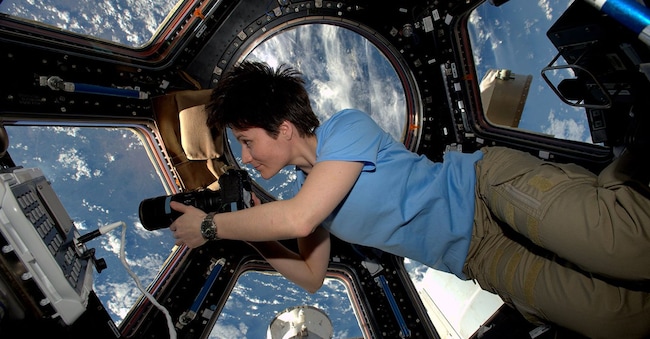
L’astronauta dell’ESA Samantha Cristoforetti sulla Stazione Spaziale Internazionale. (credit ESA/NASA)

3' min read

Translated by AI
Versione italiana

3' min read

Translated by AI
Versione italiana

"It is imperative that the Leo Cargo Return Service mission, with which we are developing a European service for transport to and from the International Space Station, Iss, departs absolutely by mid-2029," says Esa astronaut Samantha Cristoforetti decisively in an interview with Il Sole 24 Ore, in Rome, also attended by Daniel Neuenschwander, Director of Human Exploration and Robotics at the European Space Agency (ESA).

Cristoforetti has participated in two missions on the ISS, in 2014, Futura, and then in 2022, Minerva, and is the first European to both hold the role of commander and to perform an Eva, an extra-vehicular activity in open space. Her example has motivated many girls to apply for the latest European astronaut selections in 2022.

Loading...

Towards the Bremen Ministerial

We are approaching the ministerial meeting on 26 and 27 November in Bremen, Germany, where the space ministers of the member states participating in Esa will have to decide on the future plan for the next three years. There is a lot of talk about money, because in the end that is the 'fuel', but above all it will be decided which course the old continent will have to take in the great race of the space economy, which is currently seen as lagging behind the other global players, but which has great potential, thanks to large national companies and many innovative start-ups.

The Iss will be decommissioned by 2030

On the point of the Leo Cargo Return Service mission, which has already been approved by the previous ministerial in 2022, Cristoforetti is very adamant that it is fundamental to a point that she considers vital: 'to guarantee Europe an autonomous transport capacity in low orbit'.

The date is the key point: mid-2029, as the Iss will be decommissioned by 2030 and will eventually sink to the 'nemo' point, in the middle of the ocean between Chile and New Zealand.

"Using the Iss as a test is crucial for us, to prove that our cargo works perfectly. We want to go there because we know the environment well, we have been there. It's really a vital step,' Cristoforetti further emphasises, pointing out that Thales Alenia Space and the European start-up The Exploration Company are currently working on it with an initial contract. The financing model is also new for Esa: private individuals will participate at 40%, 'The real aim is to be ready for the post-Iss, we think that there will be an ecosystem in low orbit with various platforms to reach and serve and then return to Earth'.

Space accessibility

Leo Cargo Return Cargo Service is, yes, an ambitious challenge, especially since 2029 is just around the corner, but it is also crucial to ensure that Europe can also retain its sovereignty in access to space, a point that both interviewees reiterate several times.

Even the choice of the rocket, which will carry the Leo Cargo Return into orbit, is left to the company that is awarded the service, assures director Neuenschwander, as long as there is no surcharge. "For the tonnage of this project what we need is an Ariane 6-class launcher," the largest European launcher, but it could also be another supplier, which is also new. In short, this is an experimental project outside the regional return policy.

The positioning of Europe

Europe today is at the top in Earth observation with Earth observation programmes such as Copernicus, or in geo-positioning with Galileo, both funded by the European Commission itself, but 'it is crucial that today we go to the next step, space exploration will be done with or without Europe and increasingly so, for reasons including, but not limited to, economic reasons'.

There has also been talk of a European strategic vision, in space exploration, and the European Space Agency is deployed, in this field, on three pillars: towards low orbit, on the lunar programmes, with the development of a European lander, and on the return to Mars, with the second phase of the Exomars programme, which has been at a standstill for years due to the Russian-Ukrainian war. It is precisely this programme that shows how difficult it can be to regain the technological autonomy required for such complex and important exploration missions.

'Space exploration makes sense if and when we reach a certain level of capability, which allows us to propose and tackle new challenges,' Cristoforetti concludes, implicitly reaffirming that we are at a turning point, while Neuenschwander drives the point home with a friendly comparison: 'We have to sit at the table of the Space Economy and not be on the menu.

Copyright reserved ©
Loading...

Brand connect

Loading...

Newsletter

Notizie e approfondimenti sugli avvenimenti politici, economici e finanziari.

Iscriviti