Interview

Carlo Calenda: 'Without nuclear power, decarbonisation is impossible'

by Emilia Patta
4' min read

4' min read

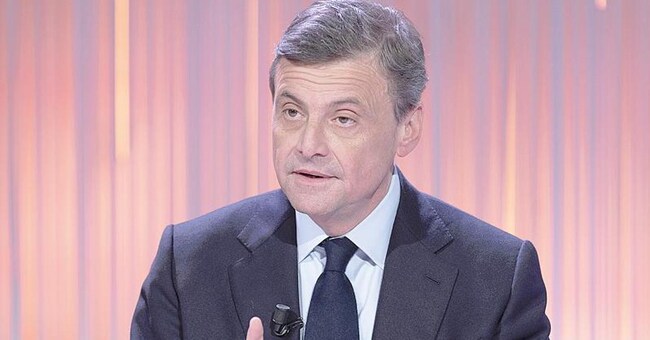
'Our goal is first of all to start a public opinion battle: all polls show that the majority of Italians are in favour of nuclear power. It is time to bring this technology back to Italy'. This is how Carlo Calenda, leader of Azione and former Minister of Development, launches the popular law proposal to reinsert nuclear power into the Italian energy mix developed with the Einaudi Foundation, the Radicals and a number of associations. 'In 24 hours we reached half of the 50,000 requests. An unexpected response'.

Let's take a step back, Senator Calenda. Why nuclear power?

Loading...

The first reason is that without nuclear power Italy will never achieve its decarbonisation goals, for the simple reason that to do so with renewables alone would require covering an area like Campania entirely with solar panels. Over the life of a power plant, 60 years, the cost difference between using only renewables and a renewables-nuclear mix is 800 billion, 13 billion a year. Secondly, nuclear is today in the European green taxonomy. Thirdly, nuclear power would solve the fundamental issue of energy dependency, otherwise we have to go on gas. The average construction time for a nuclear power plant, considering that 60 are being built around the world and that already a quarter of Europe's energy is produced by nuclear power plants, is seven years. Now we may take 15 years, but if we never start, we will always be unprepared.

And yet in 2011 there was a referendum won by the anti-nuclearists. They put forward security reasons.

The abandonment of nuclear power, without reason and on the wave of emotion, was the first act of true populism in this country. Fortunately, the orientation of public opinion has changed since then. As for safety, today nuclear power is considered by the United Nations Energy Agency to be the safest energy of all. And I repeat: there is no chance of achieving the decarbonisation goals without nuclear power, so much so that in the United Arab Emirates they are building their second power plant despite being full of gas and oil. By now there is also this awareness in the international green movement. Without nuclear power it is not possible to decarbonise electricity and we are moving towards ever greater electrification, think of cars.

We are talking about the dead line of 2035, when cars with combustion engines can no longer be produced.

It is clear that we will not manage to shut down endothermic production by 2035, unless we spend an amount equivalent to the superbonus to buy Italians new cars. And there is still the huge problem of infrastructure, i.e. the recharging stations to be distributed throughout the territory, including small villages and historic centres. Before 2035 there is still 2025, which is now. The EU Commission has stipulated that from next year one fifth of production, and consequently of sales, must be electric vehicles. The problem is that people do not buy them, electric vehicles: today we are at 15% at European level (4% in Italy), and 20% of owners already want to return to traditional cars for lack of infrastructure. If this legislation is not changed next year there will be 15 billion in fines for manufacturers, who have thrown themselves into electrics even though there is no market for them. And now changing the platforms is very expensive. Hence the demand for incentives to cover the cost gap, not only here but also in Germany. So we will have a dramatic problem next year in the automotive sector, which is worth 2,200 companies: they have run out of redundancy funds and need a support plan with incentives that must be structured as the French have done, that is, linked to production in Europe, otherwise we will incentivise Chinese companies. Which our government has not done. The money is there, because the Draghi government has put 8 billion on automotive, yet there is no response. If we don't do something, the automotive industry will blow up. That is why the opposition has presented the government with a plan to support the automotive industry: we may have - and have - different ideas on the Green Deal, but we have focused on the plan to avoid redundancies from January. What we are asking from the Meloni government is the development of an industrial policy strategy, which is clearly not working.

Even on Transition 5.0 everything is still...

As we said from the outset, there is too little time to use those incentives and there are too many bureaucratic steps, as many as thirteen. The mechanism as it is does not work, we need to restore the same process that existed with Industry 4.0, namely the possibility to start using the incentives immediately without waiting for authorisations and expertise. Now instead, to get these incentives, the entrepreneur must first apply for authorisation, then send an expert opinion, and then wait for approval. In short, the checks before and during the investment are enormous, and the system has become bogged down, not least because it took seven months to issue the implementing decrees, with the result that 50 million out of over 6 billion have been used. If we go on like this, a perfect storm is looming next year: industrial production continues to fall, the 2025 deadline for the automotive industry and the risk of tariffs if Donald Trump wins the US elections.

Senator Calenda, today you are voting in Liguria and Action is in the alliance supporting Andrea Orlando. Will you also be in the wide camp in the next political elections?

We are committed to building a liberal centre. The end. For the next three years we have to work on concrete proposals, because the citizens don't really care about the discussion on alliances and perimeters.

What will you do on Wednesday about the election of the missing constitutional judge? You criticised the Pd's choice of Aventino.

We will be in the Chamber and we will not withdraw the ballot. But our proposal, which I have also personally made to Prime Minister Giorgia Meloni, remains the same: an agreement to elect by the end of the year, when their term of office ends, three more members of the Consulta, two judges chosen by the majority, one by the oppositions and one as a guarantee for all.

Copyright reserved ©
Loading...

Brand connect

Loading...

Newsletter

Notizie e approfondimenti sugli avvenimenti politici, economici e finanziari.

Iscriviti