
“Carnaval de Luz” explained by U2: “A political album against cynicism”
The band are back with an album that brings the series of EPs released in early 2026 full circle. Bono, The Edge, Adam Clayton and Larry Mullen talk about how it came about

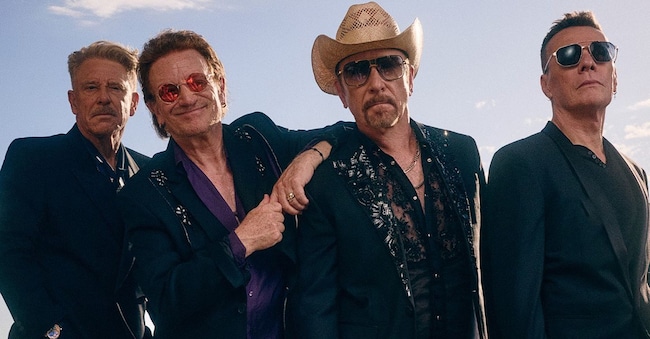
You probably learnt the correct sequence at catechism: after Carnival comes Ash Wednesday and then, once Lent is over, it’s finally time for Easter. U2, children of Catholic Ireland with a few not entirely painless touches of Protestantism, know this well but for once they turn the chronology on its head: after the EPs Days of Ash and Easter Lily, released earlier this year, today they are releasing Carnaval de Luz, their sixteenth studio album, which is ideally intended as the first part of a double album ‘completed’ by the tracks released in two instalments on 18 February and 3 April 2026.
“Typical of U2: we do everything the other way round,” says Bono. “But now you can see how Carnival leads to Days of Ash and then to Easter. There’s Can’t Stop Us Now, which is about friendship. The album could end there, but then you hear voices, you sense a boundary being crossed, and you find Dolly Parton singing Torn to you as you cross it. The real turning point is the transition from Torn to American Obituary’, the beautiful yet angry song that opened Days of Ash, when we all still had the martyrdom of Renée Good and Alex Pretti, innocent victims of the violence perpetrated by ICE, the enforcement arm of Maga’s rambling policies. “U2 carry weight,” the frontman continues. ‘And these songs carry weight. If we consider the whole thing as a double album, there’s more substance here than in anything else we’ve done. But there’s also more light, much more light. Because it’s against the darkness that light shines most brightly.’
Any reference to how Donald Trump has brought America to its knees is no coincidence, because the four most famous ‘Dubliners’ in rock history have just celebrated their 50th anniversary (exactly on 20 September 1976 when drummer Larry Mullen Jr. put up the famous ‘Drummer Wants Band’ notice at school, which is where it all began) and throughout all this time, both on stage and in the recording studio, they have always made a point of stating very clearly where they stood: from the Irish ‘Troubles’ of 1972 (Sunday Bloody Sunday) to US intervention in Nicaragua (Bullet The Blue Sky), from apartheid in South Africa (Silver and Gold) to Bono/MacPhisto’s phone call to the Hotel Raphael to speak to Bettino Craxi, right in the middle of the 1993 concert in Rome, at the height of the Tangentopoli scandal. Carnaval de Luz is a political album: from the persistent use of Spanish, the language of the Latinos persecuted in supremacist America – for whom Bono asked for a little help via WhatsApp from the Catalan pop star Rosalía, repaying the favour with The Mirror Maker (Rosalía), a track on the album dedicated to her (and that’s no small thing).
The return of civic engagement
In short, this new phase – characterised by a return to social activism – began with Days of Ash: ‘It felt like the right time to write these protest songs,’ explains the singer. “Within the band, we’ve reached a point where, normally, the things we protest against concern our own lives or our conscience. But there are times when you have to write about the times we’re living through.” For years, U2 had turned their attention to more introspective or spiritual themes. This time, however, external reality has once again made a strong comeback in their songwriting.
The entire project, produced by Jacknife Lee, began, in a sense, as a single creative session spread across several recording studios, but the band soon realised that the material they’d accumulated couldn’t be contained within a single album. “It’s all part of the same cycle of songs,” says Bono. “There wasn’t room for everything, so we released key parts of the story across two EPs.”


