
Carney and the new doctrine of the West

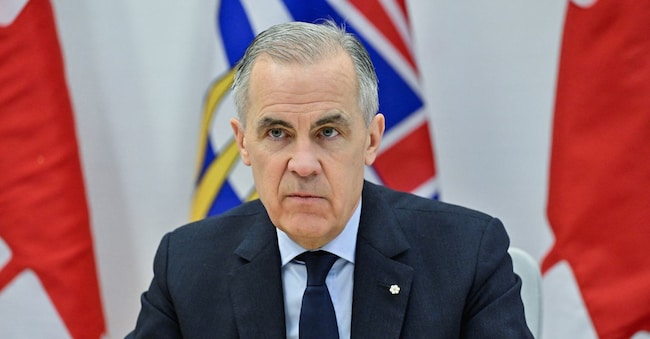
On 20 January, Canadian Prime Minister Mark Carney's speech in Davos quickly went viral, only to be elevated to the status of a new 'doctrine' by which the West, frightened and bewildered by the current occupant of the White House, could and should have been inspired. The cornerstones of the doctrine are: 1) the order established by World War II is over (as Mario Draghi reiterated a few days ago) and the United States is no longer the beacon and model for the free world, perhaps not even an ally; 2) the liberal democracies must take note of this without renouncing their values, but adopting a pragmatic approach that takes the balance of power very seriously and recognises the inevitability of making themselves strong and independent so as not to have to hope for anyone's benevolence; 3) the medium-sized powers, such as Canada, must band together with three objectives to avoid humiliating and in the long run damaging downward competition to wrest some advantage from Trump (never mentioned in the speech, but equally ubiquitous); to establish variable-geometry agreements, of varying ambition depending on whether the partners share values (such as Canada, the UK and the EU) or only strategic economic interests in certain sectors (from China to Qatar); finally, to become together a force big enough to have a voice where it counts, since "if you're not at the table, you're on the menu", as Carney effectively quoted.
Anyone who believes that the free world (an expression I prefer to 'the West') is anything but perfect, at times even hypocritical, as Carney himself acknowledges when speaking of the good old American-driven times that once were, but that it is still a more civilised and just place than those dominated by authoritarianism, greeted Carney's words with a mixture of relief and hope. A leader had been able to name things unambiguously, but he had also articulated a vision to break the deadlock. With his speech, Carney has, moreover, repeated his lesson on how 'the Donald' should be dealt with. A year ago, during his campaign to become premier - a race that many believe he would go on to win precisely because of his firm and dignified posture towards the Washington 'bully' - Carney sent a calm and firm message: tariffs will weaken the US economy, but in any case we will respond in kind (https://www.youtube.com/watch?v=yV101ei8mu8). As PM he did so, avoiding backroom deals like the one Ursula von der Leyen signed in Scotland. It should also be noted that the Canadian economy is much more dependent on the United States than the European economy: for two out of three Canadian exporters, the United States is the only market, and almost one in ten Canadians is employed in sectors that depend on American customers.
Again a year ago, Carney also hinted at what would later become his invitation to the liberal-democratic middle powers (mind you, not just the UK and the EU, but the entire G7 except the US, with the addition of other countries such as the Commonwealth countries) to join together in particularly close cooperation precisely because of their shared basic moral and political values. In my view, the most fascinating feature of the Carney doctrine is right here: we must not abandon the project of international relations not governed exclusively by force, but 'infiltrated' by quotas of legality dependent on the degree of economic and cultural integration that the world comes to assume. The idea was to start down this road again with those who wanted to be there, to reconstruct the ideal of 'peace through law' at the basis of the Kantian model and to do so in the manner suggested by the German philosopher. Not by chasing utopias and irenic dreams, but with a firm anchorage to reality, including a clear disposition to be 'cunning as serpents' in order to ultimately be 'innocent as doves'. Carney's value-based realism is exactly the disposition Kant wants in his ideal of a politician, which he calls 'moral politician'. Realism, Machiavellianism if need be, but always with a publicly defensible ideal to ennoble political action: peace built through a confederation of free states at the centre of other leagues and communities of variable geometry revolving around them, bound by common interests if not common values, which will perhaps slowly assert themselves spontaneously and unforced globally. Carney made it clear that such a world can be pursued even without the US and that we can and must do so, out of principle and interest.
*University of Catania

