
Fuel costs: new excise cut by Saturday, then targeted aid for workers
Government at work on incentives for companies to support employees. Giorgetti: 'On the use of EU flexibility debate in Parliament'. Italian accounts with margins of 1.4-2 billion on net expenditure
Key points
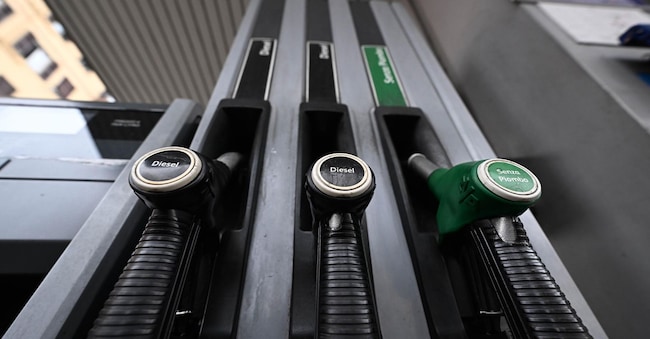
In the government's plans the new intervention against high fuel prices, which as planned will arrive by tomorrow with another interministerial decree to finance the 'mobile excise duties' with May's extra VAT, will represent the last round of generalised discounts. Then it will move on to 'targeted' aid, demanded by the EU (but also by the IMF and OECD) and also considered most effective by the Ministry of the Economy. The aim is to focus the interventions on workers who need them because they are forced to use the car to go to the office or the factory; in particular on employees, whose income, fixed, is most affected by the extra cost of petrol and diesel, especially when it is medium-low.
Giorgetti confirms arrival of new ministerial decree by 6 June
The address was given to the technicians in Via XX Settembre, who are working on solutions that will take shape in the coming weeks. "Now there is no need for a regulation or the council of ministers," explained Giancarlo Giorgetti yesterday before the government meeting where fuel was not discussed. The economy minister also confirmed the arrival of the new ministerial decree by 6 June, when 'the discounts on excise duties expire' that the last decree of a fortnight ago reduced to 12.2 cents per litre for diesel, maintaining instead the 6.1 cents per litre for petrol. The extent and duration of the new cut will depend on the VAT from inflation collected in May, which will be accounted for in the coming hours. The last decree with mobile excise duties, on 8 May, had used 191.2 million, but then the most generous cut of 24.4 cents per litre was still in place for diesel. Now smaller sums might suffice to keep prices under or around the psychological threshold of two euro per litre (yesterday the average cost of diesel was 1.988 euro per litre, 1.93 euro for petrol).
Government working on business incentives for employee support
The next move, that of selective measures for workers, will come through the companies, the only ones able to pinpoint the target group to whom they will most effectively reserve aid on a case-by-case basis. There is no shortage of precedents on this, either; starting with the measures of 2022, when in order to counter the last wave of energy inflation the Draghi government introduced a €200 fuel bonus in March, which companies could grant to their employees in exchange for a tax-free and decontribution of the sum. And then a tightening of the limits on fringe benefits raised first to EUR 600 and then to EUR 3,000 per year. This highroad is more flexible, because it allows companies to also recognise aid for energy bills, thus intercepting the price increases that will occur in the coming months.
Such a measure will be part of the broader range of measures that can be activated once the European 'flexibility' announced by the EU Commission on Wednesday is finally approved. But there is not only that: because the accounts released by the Commission (page 56 of the fiscal statistics of the spring package) show that Italy's net spending is 2 billion below the agreed ceiling for 2026, and 1.4 billion below the limit in the cumulative calculation with last year. Even from here there could be room for intervention, taking into account the delicate balance on the deficit (now at 2.9 per cent).
On the things to be done with the budget margins opened up by the derogation, 'a confrontation in Parliament' will be needed,' Giorgetti explained yesterday in the Senate, claiming to be 'satisfied after having travelled halfway around Europe and having brought this result for Italian families and businesses. We will have to use these resources wisely,' the minister warned.


