Festivaletteratura

Carol Ann Duffy: scandalous my poetry? No, surprising

The celebrated Scottish poet talks about her latest collection and regales readers with an unpublished

by Lara Ricci

(Photo by Guillem Lopez / NurPhoto / NurPhoto via AFP)

3' min read

3' min read

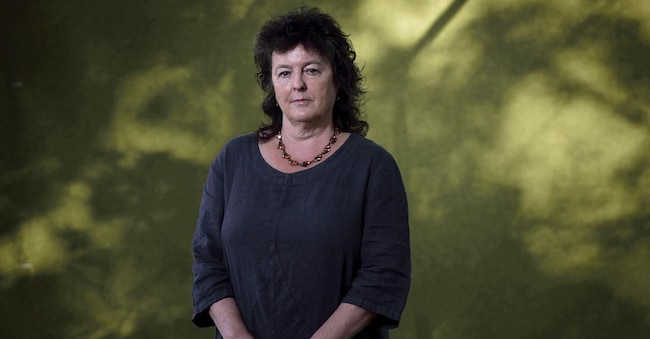
"I wanted to tell all aspects of love, because poetry is made of truth, not fairy tales". Carol Ann Duffy, born in Glasgow in 1955, was the first woman to hold the position of 'Poet laureate', the poet entrusted with the role of composing verse for the official ceremonies of the UK monarchy. A position established in 1668: the first was John Dryden, successors included Wordsworth and Tennyson. Duffy has been a celebrity ever since. In 2023 he published four anthologies devoted to the most important themes of his poetry: Love, Elegies, Nature and Politics. Love Poems is the title of the Italian version, published these days by Crocetti, edited by Floriana Marinzuli and Bernardino Nera. One hundred and one poems, one of which is unpublished, exploring Sapphic love in all its aspects. We met her at Festivaletteratura, in Mantua. Prompted by the ironic look she reserves for her interlocutors, we asked her in the same vein:

Do you consider some of his poems provocative?

Loading...

No, perhaps surprising.

This book is a selection of what you have composed over forty years, how did you choose the poems?

I started from the beginning, from my debut, it was 1985, but some poems had been written earlier. I chose them according to the path the poems had taken, and the various aspects of love they dealt with.

Are they in chronological order?

Yes, from 1985 to 2022, with the last one being unpublished. And it is my favourite.

With the agreement of the author, translators Floriana Marinzuli and Bernardino Nera, and publisher Nicola Crocetti, I share it with readers:

When then

I knelt in the garden then,

trying to cultivate a flower from your name;

where flowers languished on the stems,

as long as you gave permission to rain.

Hiding in the bush, a wren -

When it was time, I wished my heart had done the same.

Do you think your way of writing poetry has changed in the last 40 years?

I think so. I think I have acquired a kind of hard simplicity, I have become more economical.

And has your thinking on love changed since then?

Yes. When I was a teenager I guess my ideas were similar to those of my parents, my model was a very traditional and Catholic family, as my parents were. There was the idea of getting married and being with someone for the rest of your life. I was changed by life.

Do you think there is something different when it is a woman, or a lesbian woman, who writes a poem?

No, love is universal.

And the way to express it? .

It is the same. I think romantic, passionate love between two people is the same whether it is two women, two men, a man and a woman. Love for children or parents is different. Many of Shakespeare's sonnets are about homosexual love, but people read them to heterosexual marriages, because they are universal. The most popular is the sonnet CXVI, in the collection Love Poems is my version, which bears the same title.

Is poetry a form of knowledge?

It is a form of exploration. When I write, I do not know something that I might discover when I reach the end of the poem. Perhaps the reader can say 'I recognise this', but for a writer it is more a form of discovery. Finding words for something that has no words, bringing something to light.

Yes, that's what I wanted to ask, does poetry give knowledge?

Yes, but sometimes it also gives doubts. All I know is that I know nothing.

I put the last question to the translators Floriana Marinzuli and Bernardino Nera. What was it like translating your poetry? .

(Nera) We immediately caught his voice and found very familiar themes, which aroused great interest in us. (Marinzuli) It is difficult to reproduce the sound, the sensorial, rhythmic aspect of the poems, we worked on the content also because a dialogue was created in three voices, there was always a very direct contact with Carol Ann to dispel any doubts. For these love poems, we aimed neither at fidelity nor infidelity - if you let us get past these puns - but at recreating the creative process through the Italian texts. (Nera) They are very different languages and it was difficult to reproduce rhymes, assonances, puns. (Marinzuli) In some cases we created new puns in Italian. What is said in 'translatology' to be faithful to the text does not make much sense in poetry.

Copyright reserved ©
  • Lara Ricci

    Lara Riccivicecaposervizio curatrice delle pagine di letteratura e poesia

    Luogo: Milano e Ginevra

    Lingue parlate: Inglese e francese correntemente, tedesco scolastico

    Argomenti: Letteratura, poesia, scienza, diritti umani

    Premi: Voltolino, Piazzano, Laigueglia, Quasimodo

Loading...

Brand connect

Loading...

Newsletter

Notizie e approfondimenti sugli avvenimenti politici, economici e finanziari.

Iscriviti