
Carpineto opens a museum dedicated to wine machines
Almost two centuries of oenology for the permanent installation that will be part of the Fondazione Musei Senesi

3' min read
3' min read
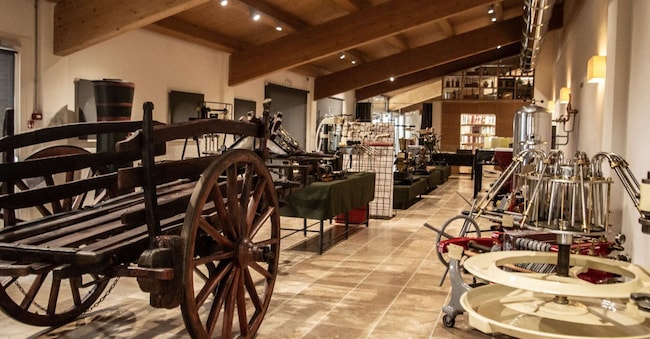
A permanent installation dedicated to the "Machines of Wine" to emphasise that wine is not born on the plant but is the fruit of man's work, of his hand, a hand that over the centuries has equipped itself with machines and technologies to increasingly improve the quality of the final product. This isthe new oenological museum inaugurated in Valdichiana, a stone's throw from Montepulciano in a landscape of great value by the Tuscan company Carpineto. A new exhibition, in one of the most vocated areas for quality wines such as Tuscany and the province of Siena, an area among others at great wine tourism vocation and that is a candidate to become a point of reference for wine lovers on a par with other wine museums set up by historic Italian wineries such as Ricci Curbastro in Franciacorta or Lungarotti in Umbria..
The 'Wine Machines' museum is in fact located in the Vino Nobile di Montepulciano estate in Carpineto - Great Wines of Tuscany and was opened to the public today, 20 May.
It is a small cross-section of almost two centuries of oenology put together by a winegrower who has dedicated his entire life to making wine and has experienced the most dynamic sixty years of wine history in Tuscany.
Carpineto, a company registered in the National Register of Historical Trademarks, was founded in 1967 by Antonio Mario Zaccheo together with his partner Giovanni Carlo Sacchet. Antonio Mario Zaccheo then collected testimonies and objects collected over the years in the Carpineto museum, emblematic of an entire life dedicated to agriculture and wine in particular.
A museum, moreover, that has just been inaugurated and already part of the Fondazione Musei Senesi. "We welcome the museum in Carpineto," commented the president of the Foundation, Alessandro Ricceri, "for its ability to tell a story that starts from the territory, from the community that inhabits it, and from the production activities typical of the Siena lands.
"I am honoured," commented Antonio Mario Zaccheo, "that this collection of mine has become part of the Foundation, and very happy to make a small contribution to a region that counts among its most precious assets a very prestigious wine production.


