Cars and corporate mobility

Cars, one million Nlt cars on the road in 2025

The corporate segment has been stuck at one thousand vehicles under one million for two years, a quota it cannot break through: blame taxation

by Pier Luigi del Viscovo

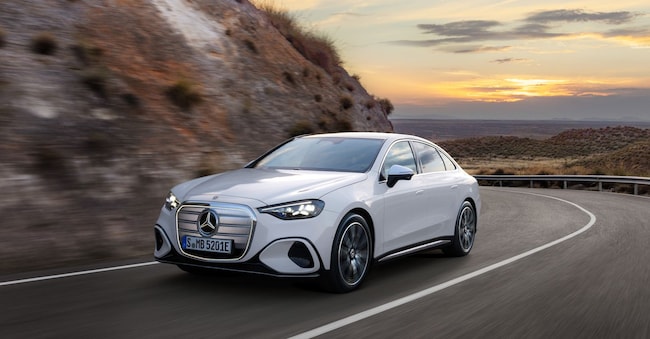
Mercedes Classe C elettrica, in alto, è una berlina lunga quasi 490 metri, arriva a 762 chilometri di autonomia e segue lo stile introdotto da GLC a zero emissioni. A bordo debutta uno schermo da ben 39 pollici

4' min read

Translated by AI
Versione italiana

4' min read

Translated by AI
Versione italiana

At the end of 2025, more than one million cars in Italy were on the road thanks to a long-term rental (Nlt) contract. This is what emerges from the Aniasa report, edited as every year by the Fleet&Mobility Study Centre.

Including vans the figure exceeds 1.3 million, up 2.5 per cent on the previous year. For another industry this would have been a good year, but the Nlt has accustomed us to much more, so a look inside that number is worthwhile.

Loading...

So we discover that the corporate segment has been planted at one thousand vehicles under the one million mark for the past two years, still unable to break through. Then we notice that the public administration (Pa) has added around 25 thousand vehicles, a robust plus 22%, which is always good news.

Finally, private citizens, technically tax codes and VAT numbers, whose vehicles in Nlt increased by 4.5 per cent to close to 185,000 units: few or many, we shall see.

First let's think about the big target, the fleets. There had been years of stops and even declines, of course, but in correspondence with deep crises in the country and the economy, which were not in the news last year. So what is it that has slowed this sector down so much?

Yes, because in reality there has been a retreat, not a stalemate, which can be understood by looking at registrations. Long-term rental in 2025 bought 350 thousand cars, an increase of 37 thousand over 2024. All well, then? Not at all. The 'non-captive' companies, i.e. not part of a car group, bought 15 thousand fewer cars, a sign that there has been some cooling of demand.

On the other hand, the captives registered as many as 50,000 more. How come, who ordered them? Most, if not all, no one. That is, no customers. But the manufacturer did, perhaps to secure a certain quota of low-emission cars that will come in handy when counting fines for emissions exceeding the impossible targets set by the Commission. The proof lies in the first four months of this year.

The captives are now travelling at minus 15%, so much so that they have come out loaded since 2025; on the other hand, the others are up 9%, a sign that a light is beginning to show. But who had turned out the light? The regulator, by intervening in the tax legislation of company car assignees. We have said it at length, but it is worth remembering.

Those who order an electric or plug-in hybrid car receive a benefit in the pay packet of up to 600 euros, whereas if they order a plug-in hybrid they will receive a beating of over a thousand euros. The combination (minus 600 and plus one thousand) looks a lot like 'an offer you can't refuse'.

And yet, there are those who have made the big refusal: choosing to keep their old car. For now, of course, but the signal has come through loud and clear to the higher ups at Aniasa: if you pull the rope too far, it could snap.

That is why the newly elected president Italo Folonari, an enlightened entrepreneur, is mobilising the association so that Brussels does not proceed with the idea of imposing draught fuels on fleets.

The aim would be to force penetration and ensure some return for the car industry, which has been in it for tens of billions in investment. The result, however, risks being a return for many to their own car with mileage reimbursement: without the ball, there is no match.

Now back to private individuals, whose fleet in Nlt last year increased by 8 thousand units, perfectly in line with the average annual growth since pre-Covid: Cagr +4 per cent.

In six years, however, their share of the total fleet in Nlt has fallen from 15 to 14 per cent: at this rate, it will take twenty years to reach one million managed vehicles. In terms of turnover it is even worse, with the share at 12 per cent.

Yes, because if the average annual fee for companies and the PA is 7,200 euros, private individuals are close to six thousand. It is difficult to keep pretending that everything is fine and that there is nothing to fix. Many renters are convinced that one point is the ability to explain the product to these new customers.

Considering that half of the sales are now made by the indirect network of brokers, it seems a comfortable way to move the problem out of the way. Maybe so, but besides knowing how to sell there is also a question of knowing how to manage and deliver a service that is satisfactory and in line with a client's expectations. Such is the homework for this year.

Copyright reserved ©
Loading...

Brand connect

Loading...

Newsletter

Notizie e approfondimenti sugli avvenimenti politici, economici e finanziari.

Iscriviti