
Cars, now Europeans chase the Chinese leaders
The Chinese market is expellingWestern manufacturers that from leadersbecome followers

Year 2010, in conquest Bmw inaugurates a new plant to produce SUVs in a joint venture with China's Brilliance. These were the years of VW's dominance in China, and BMW's was yet another example of Germany's long-standing domination of the ever-growing Chinese market: a prey to be colonised since the 1990s, those of the VW Santana, the unique and national car of China modernised and almost capitalist by Deng Xiaoping. Year 2025, the China of the car, for years now the leading market with more than 30 million cars sold every 12 months whizzing along the streets and highways, is a different world: the Germans, who before Covid were depopulating, are losing share in a haemorrhage of sales. And it is a problem that concerns above all the brands of the VW, BMW and Mercedes groups, because the brands of the former Fca and former Psa (now Stellantis) in China have never made numbers, but a series of strategic errors that have taken them out of the country. Now we are at the epilogue: the models of Western brands, built locally, with those JVs (which have since lapsed) that gave away intellectual property to Chinese partners (who were then able to outbid the masters), are no longer pulling. For German manufacturers, those most exposed in China and confident of conquering a huge market, it is a shock.
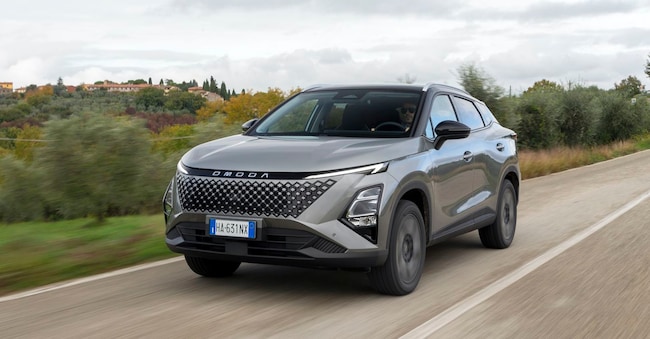
The rich and increasingly young Chinese are not fascinated by Teutonic premium brands, including Porsche. On the contrary, they prefer their own premium brands: from Byd (with Denza and Yangwang) to Xpeng, from Chery to Nio. They are more modern cars, more technological, electric or hybrid, indeed super hybrid. And in the eyes of Chinese drivers, they look cooler than Western (but still made in China) models. Chinese cars win at home because of that digital-automobile gamification generated by the dominance of software over hardware in accordance with the 'software defined vehicle' paradigm that Chinese manufacturers have espoused in the not too distant past. Audi, last April, was the first to wake up from the torpor, from the somewhat arrogant illusion that luxury and premium with a German passport is always and in any case attractive, and launched at the Shanghai motor show a range designed for China and for the Chinese who want lots of tech, space on board, super-screens, manic finishes and lots of wow effect. The new Audis designed and built for China are no longer German and European models assembled there. They are different cars displaying different styling and layout. And there are no Four Rings on the bonnet and even the lettering changes and is all caps: AUDI. It is a radical transformation and a success for the VW group struggling in the rich Chinese market on which depend the fate of the big manufacturers unable to perceive that China was moving towards Nev vehicles (New energy vehicles, electric or hybrid), seeking more technology (not necessarily autonomous driving) and a style consistent with the tastes of the younger generations.The numbers, highlighted by AlixPartners' latest report, entitled Global Automotive Outlook, are clear and confirm the trend of recent years: the share of local manufacturers will rise to 76% by 2030, driven by leadership on Nev and digital innovation. And so, while Westerners try to recover from pandemics, wars and chip shortages and face rickety transitions to electrics with EU dictates that are hardly consistent with reality, in China the car market is becoming autarkic. In practice, it is ejecting Western manufacturers from leaders to followers, losing technological and engineering leadership in a débâcle of culture and industrial know-how.
Suffice it to say that the Volkswagen group is allied with Xpeng on technology, that the VW brand is following the example of Audi (also VAG) in creating China For China models, and it should not be forgotten that at the top of the storytelling on the Chinese car there are also brands such as Xiaomi, which has moved from smartphones to electrics and in less than two years has produced 500,000 cars with a revolutionary technological approach. A lost game for the Europeans, then? Not really: the Chinese are making super-tech cars that however on the road behave in a way that can be improved (but the Chinese learn quickly) and for the European brands (we talk about this on the page with the Renault case) opportunities are also opening up for capacity swaps in processes and platforms (including batteries) to reduce times and costs. In short, in a few years China's car industry is no longer a factory country to be exploited, but an example to be followed, while producing in China to bring cars to Europe makes less and less sense. In this regard, suffice it to say that, again according to AlixPartners, it is precisely the assembly of Chinese brands in the old continent that will drive a slight increase in production in Europe, which today stands at 76% of 2017 levels. In short, Byd & Co. will help save jobs in Europe.
Finally, looking at the immediate future, analysts at AlixPartners estimate that China will face an overcapacity of some 30 million vehicles that cannot be absorbed. And to this must be added the selection of the species of the many brands springing up overnight and pushing into Europe as well. Only about 15 of the 130 or so manufacturers in the country are likely to survive. While in Europe, the legacy brands arouse more than an appetite for shopping by Asian groups.


